Rendete Brass Bulletin disponibile nella vostra università, nel vostro conservatorio o nella vostra biblioteca Scoprite l’accesso istituzionale

5 min di lettura

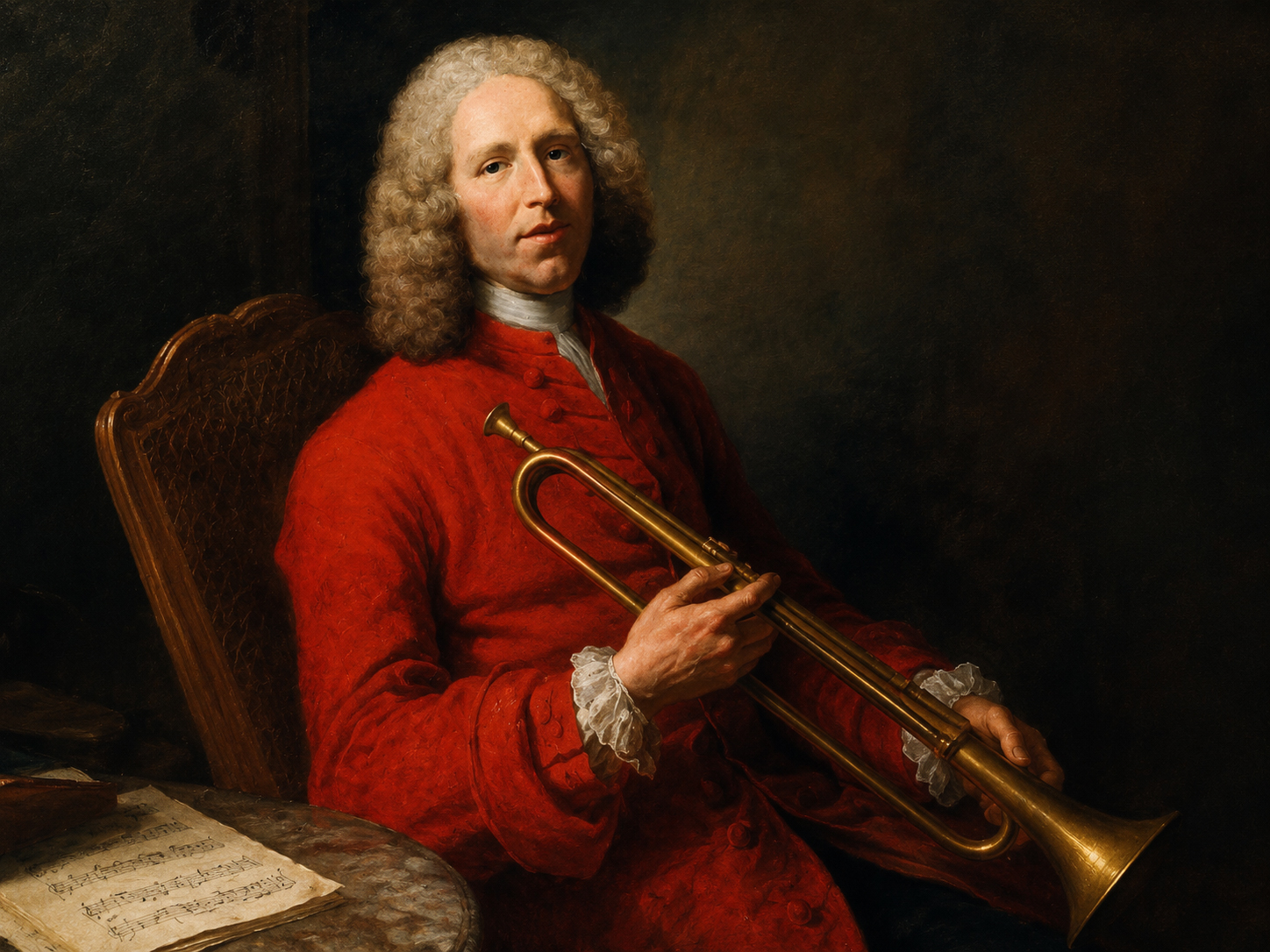
The Trumpet in the Works of Jean-Philippe Rameau

The Trumpet in the Works of Jean-Philippe Rameau

It is now fourteen years since I began, as a schoolboy, to take an interest in early trumpet music and to collect it in the form of tape recordings and records. That is how I acquired the record entitled Trumpet Music at the Court of the Sun-King (a Decca special issue for the German Book League), unfortunately no longer obtainable. It contains a performance by the Orchestre Jean Louis Petit, with trumpeters Roger Delmotte and André Garreau, of a divertimento Bruits de trompettes by Jean Baptiste Lully (1632-1687) and a suite in D major by Jean Philippe Rameau (1683-1764).

Since I could not find either work in the Bibliothèque nationale in Paris, I assume that they had been put together by Petit or Delmotte (I could not find out any more) from instrumental pieces (from operas and ballets) by these composers. When, last year, in the course of my work at the university library in Regensburg, I came across a complete edition of the works of Rameau, I immediately remembered the trumpet suite — which in my opinion is one of the finest trumpet pieces in the French Baroque — and looked through Rameau's complete works for trumpet parts.

This is the moment to say a few brief words about the composer. Jean Philippe Rameau was born in Dijon in 1683, the son of an organist. In 1702 his father sent him to Italy for training. Subsequently he worked as an organist in Avignon, Clermont and Lyon before finally moving to Paris in 1732. Louis XV appointed him compositeur de cabinet. He died in Paris in 1764.

We know Rameau as a master of opera and harpsichord music; he was also a pioneer of musical theory (his book Traité de l'harmonie... of 1722, for example).

Let us now take a closer look at the Suite no. 1 in D major for 2 trumpets, 2 oboes, 2 bassoons, strings and basso continuo ("Suite no. 1", as there is still ample material for further arrangements). I have listed the exact sequence and origin of the movements in the appendix to this article.

The suite opens with a jubilant Air de triomphe which shows us immediately that Rameau knew how to write interesting trumpet tunes:

Brass Bulletin image

The original of the second movement (Contredanse) is in E major. In several of his compositions Rameau calls for the E pitch in addition to the then usual D pitch.

Brass Bulletin image

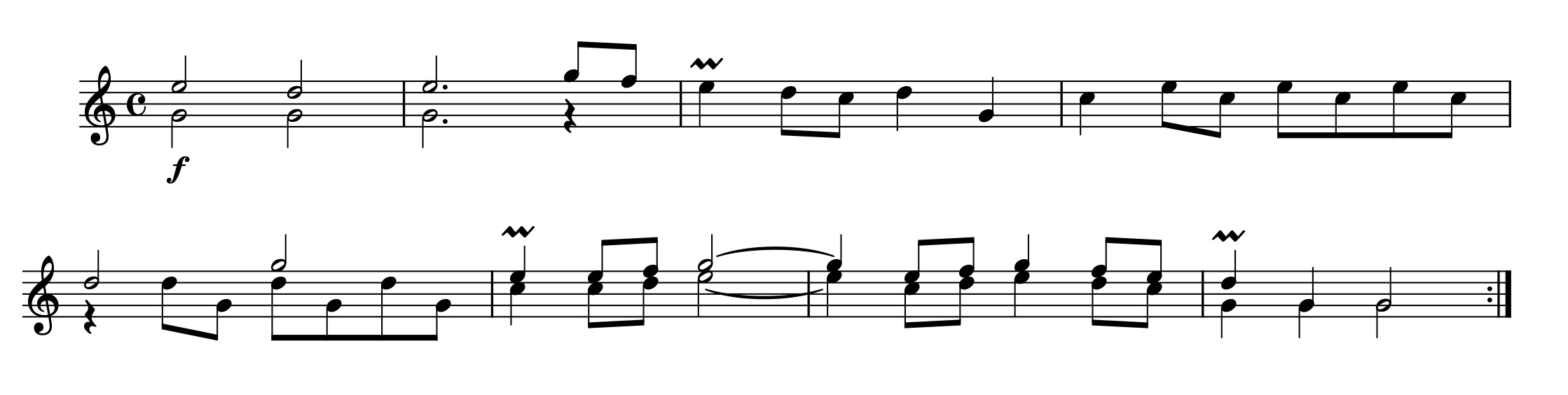
In the third movement ob. I, tpt I, vln. I and harpsichord first play a motif in unison. Not until bar 3 do the orchestral parts divide:

Divertissement gai
Brass Bulletin image

The fourth movement is a short Passepied in which the following trumpet melody (both trumpets playing the same part) forms the framework for a central section without trumpets:

Brass Bulletin image

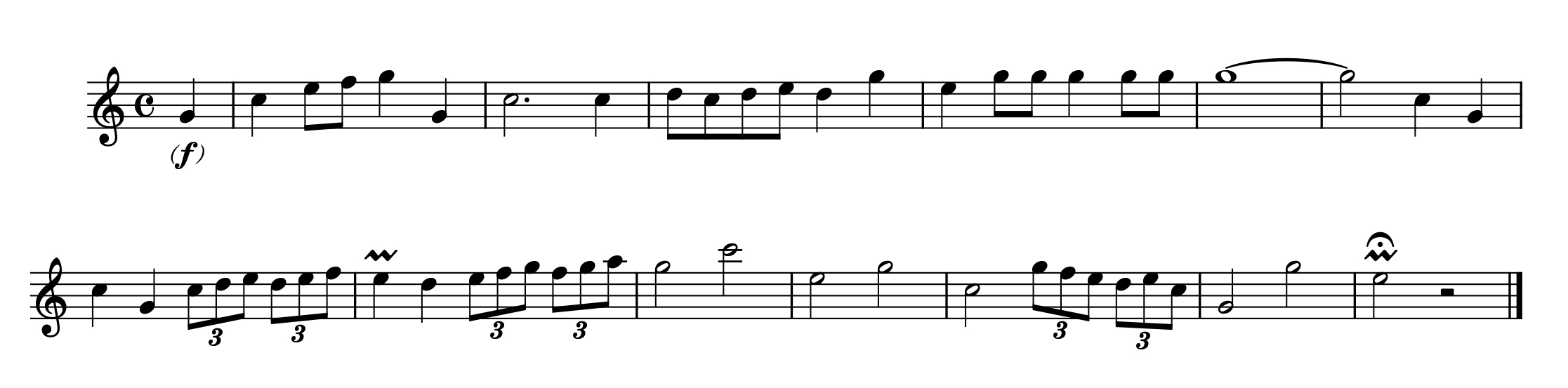
No. 9, an Air vif (Danse des Lacédémoniens) from the opera Les Fêtes d'Hébé, contains very tricky trumpet passages. The movement begins with a sounding top D (!) and contains wide-interval leaps requiring great accuracy:

Brass Bulletin image

The following passage is a puzzle:

Brass Bulletin image

Sections a) and c) are intended for a D trumpet. Section c) cannot be played on the same trumpet, however, since the notes B, G# and E (sounding) do not lie within its natural harmonic sequence and can scarcely be produced even by forcing. Rameau otherwise writes only natural harmonics.

The following solutions are possible:

  1. Copyist's error: the trumpet rests, and the oboe plays this passage alone.
  2. Sections a) and c) are played on a D trumpet, and section b) on an E trumpet, which has these notes. It may be adduced in support of this theory that, as I have already mentioned, Rameau used the E pitch as well as the D.

I have in my collection a copy from the Paris Conservatoire library of the collection Pièces de trompettes de M. de la Lande, Rebelle et Philidor (Res 921) made by André Danican Philidor which contains on pages 60/61 a piece with the title Pièce à double trompette et de différent ton et le gros basson de Philidor (for 2 "double trumpets" and bassoon), in which a C trumpet and a low G trumpet take the melody alternately (for further details see Brass Quarterly, vol. VI, no. 1: "New Light on Some Unusual Seventeenth Century French Trumpet Parts" by Mary Rasmussen).

Clearly the idea of combining trumpets of different pitches, which was taken up in the second half of the 18th century by Starzer, W. A. Mozart and Dessary amongst others, was also around in France in the first half of the century. The sounding C# in section c) may be a slip of the pen.

The same movement also includes the following passage:

Brass Bulletin image

The initial top E is, as far as I know, the highest trumpet note to be found in the French Baroque.

The remaining movements contain many fine trumpet tunes. A few excerpts:

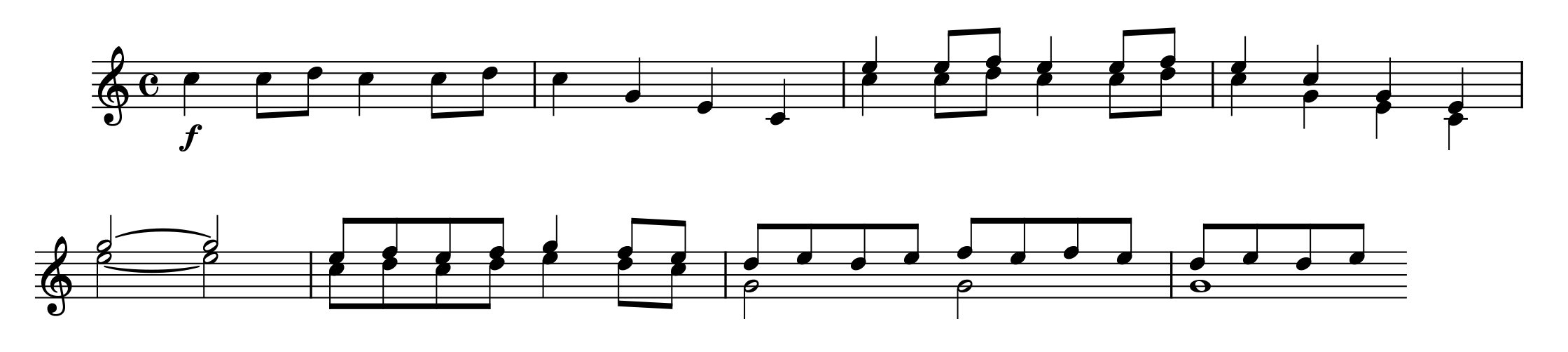
No. 10 Entrée gai
Brass Bulletin image

The second motif is taken up again in the 11th movement (both movements come from the same opera) and modified:

No. 11 Gavotte en rondeau
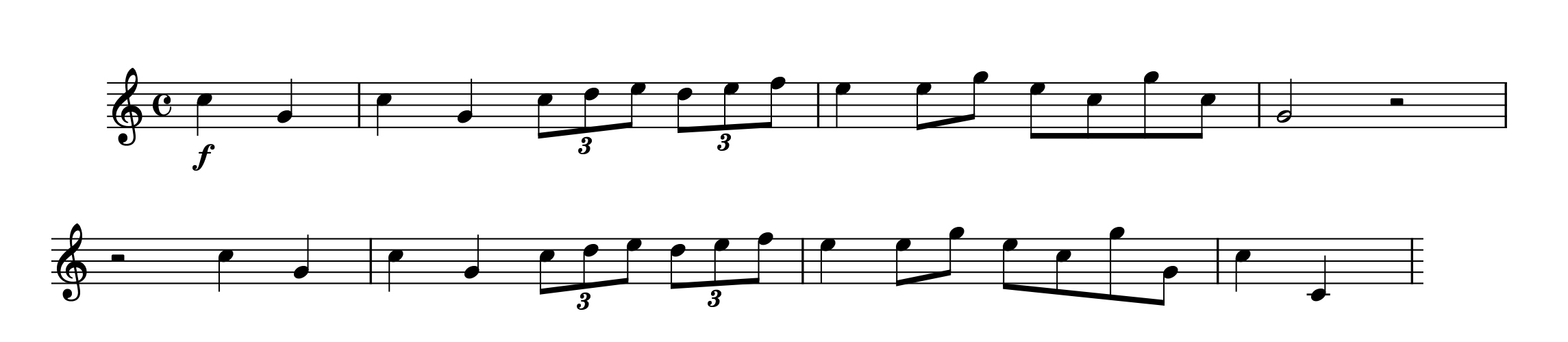
Brass Bulletin image

Menuet I (no. 12) contains only simple passages

Brass Bulletin image

No. 14, a brilliant Air de triomphe, forms the conclusion:
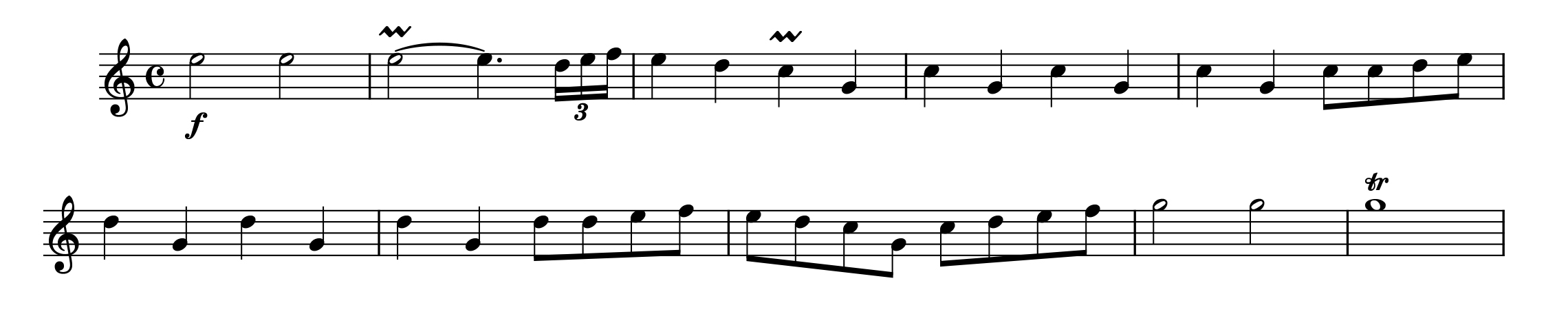
Brass Bulletin image

All these pieces — distinguished by their dance-like grace and liveliness from the solemn, stately and often rather ponderous trumpet pieces of Lully, and so representing the mentality of this gallant age of the French Rococo, as do the paintings of Boucher, Watteau and Fragonard — show that Rameau must have had excellent trumpeters at his disposal.

In the appendix I have listed Rameau's other instrumental pieces containing trumpets. Since the list contains few slow movements, I have also included instrumental movements with horns; these could serve as slow movements if necessary. I hope I may hereby have done some small service to our horn players, even if these horn movements scarcely provide material enough for a horn suite.

The operas of Lully and Rameau are seldom performed nowadays. One reason for this may be that few people nowadays have an educational grounding in ancient mythology, which provides most of the material for the action of the operas. It would be a pity, on the other hand, if the fine instrumental movements from these operas were also to pass unnoticed.

We should realise that the procedure of arranging suites and divertimentos from instrumental pieces of diverse origins was quite normal in the French Baroque — as we know from the examples of Philidor and Francoeur. There should therefore no longer be any reservations about this, not even from the musicological point of view, if there is a chance of bringing valuable music back to life.

Appendix

Suite No. 1 in D Major for 2 Trumpets, 2 Oboes, 2 Bassoons, Timpani, Strings and Basso Continuo

  1. Air de Triomphe (Le Temple de la Gloire)
  2. Contredanse (Les Fêtes de l’Hymen)
  3. Divertissement gai (La Princesse de Navarre)
  4. Passepied vif (La Princesse de Navarre)
  5. Air de Triomphe (Naïs)
  6. Entr’acte gai (Naïs)
  7. Passepied I (Les Fêtes de l’Hymen)
  8. Passepied II (Les Fêtes de l’Hymen)
  9. Air vif (Les Fêtes d’Hébé)
  10. Entrée gai (Les Fêtes de Polymnie)
  11. Gavotte (Les Fêtes de Polymnie)
  12. Menuet I (Les Fêtes d’Hébé)
  13. Menuet II (Les Fêtes d’Hébé)
  14. Air de Triomphe (Les Fêtes de l’Hymen)

Other Instrumental Movements with Trumpets

  • Ritournelle gaie (Les Indes Galantes)
  • Menuet (Les Indes Galantes)
  • Prélude (Les Indes Galantes)
  • Chaconne (Les Indes Galantes)
  • Menuet (Les Indes Galantes)
  • Air II (Castor et Pollux)
  • Combat vif (Castor et Pollux)
  • Entr’acte (Castor et Pollux)
  • Air très vif (Les Fêtes d’Hébé)
  • Prélude (Les Fêtes d’Hébé)
  • Prélude gai (Les Fêtes d’Hébé)
  • Air vif (Les Fêtes d’Hébé)
  • Menuet vif (Les Fêtes d’Hébé)
  • Annonce (Les Fêtes de Ramire)
  • Entrée de Triomphe (Les Fêtes de Ramire)
  • Chaconne (Les Fêtes de Ramire)
  • Ouverture (Les Fêtes de Polymnie)
  • Chaconne (Les Fêtes de Polymnie)
  • Air (Le Temple de la Gloire)
  • Annonce (Les Sybarites)
  • Ouverture (Naïs)
  • Entrée (Naïs)

For Trumpets and Horns

  • Ouverture (Le Temple de la Gloire)

Instrumental Movements with Horns

  • Air vif (Les Indes Galantes)
  • Loure gaie (Les Fêtes d’Hébé)
  • Musette (Les Fêtes d’Hébé)
  • Gavotte (Les Fêtes d’Hébé)
  • Ouverture (La Princesse de Navarre)
  • Gracieux (La Princesse de Navarre)
  • Contredanse (Zephyre)
  • Air de Chasseurs I (Les Fêtes de Polymnie)
  • Air de Chasseurs II (Les Fêtes de Polymnie)
  • Chaconne (Le Temple de la Gloire)
  • Air (Le Temple de la Gloire)
  • Ouverture (Les Surprises de l’Amour)
  • Rondeau (Les Surprises de l’Amour)
  • Gai (Les Surprises de l’Amour)

Brass Bulletin 35, III / 1981 pagine 59–66

Tutti i contenuti sono protetti dal diritto d’autore © Brass Bulletin 1981–2026

Condividi questo articolo

Facebook LinkedIn
Loading…

Domande e risposte

Come funziona l’edizione digitale

Che cosa comprende l’edizione digitale?

L’edizione digitale riunisce gli articoli già digitalizzati sotto forma di testi leggibili e ricercabili online — non semplicemente come scansioni o file PDF — insieme alle illustrazioni originali, alle note, agli autori, alle informazioni sul numero della rivista e alle traduzioni disponibili. I suggerimenti di articoli correlati comprendono attualmente solo questo materiale digitalizzato.

Gli articoli digitali sono identici agli originali?

Conserviamo il più fedelmente possibile il testo originale, la lingua, le illustrazioni, le didascalie, le note e il contesto editoriale. La presentazione viene adattata per una lettura confortevole online e gli evidenti errori di trascrizione o scansione possono essere corretti. Il contenuto e il carattere dell’articolo pubblicato rimangono invariati.

Quali lingue sono disponibili?

Brass Bulletin è stato pubblicato in inglese, francese e tedesco nel corso di tutta la sua storia. Le traduzioni italiane e spagnole sono state aggiunte a partire dal numero 60. Sui siti italiano e spagnolo, gli articoli dei numeri da 1 a 59 vengono quindi mostrati in inglese per impostazione predefinita.

Con quale frequenza vengono aggiunti nuovi articoli?

Nuovi articoli vengono aggiunti quasi ogni giorno, con circa un numero completo digitalizzato ogni settimana. Il ritmo può variare in base al lavoro di preparazione, elaborazione delle immagini e verifica editoriale necessario.

Perché non tutti gli articoli sono disponibili in formato digitale?

La collezione completa di Brass Bulletin comprende 1.246 articoli pubblicati tra il 1971 e il 2003. L’indice completo è già disponibile online e consente di scoprire tutti gli articoli della collezione, compresi quelli il cui testo integrale non è ancora stato digitalizzato.

La digitalizzazione è iniziata nel febbraio 2026. Ogni articolo viene accuratamente preparato per la lettura online, verificato e collegato al relativo numero, agli autori, agli argomenti e alle illustrazioni. Al ritmo attuale di digitalizzazione, la collezione completa dovrebbe essere disponibile online entro febbraio 2028.

Perché alcuni riferimenti citano articoli che non sono ancora disponibili?

I riferimenti presenti negli articoli originali vengono conservati anche quando il materiale a cui rimandano non è ancora stato digitalizzato. In questo modo si preserva l’integrità storica ed editoriale della rivista. Man mano che nuovi numeri vengono aggiunti all’edizione digitale, un numero crescente di questi riferimenti condurrà ad articoli leggibili online.

Posso suggerire un articolo o segnalare un errore di trascrizione?

Sì. Se desiderate che un determinato articolo venga digitalizzato, oppure se notate un possibile errore di trascrizione o un’informazione mancante, contattateci. I riscontri dei lettori ci aiutano a migliorare l’edizione digitale e a stabilire priorità utili all’interno dell’archivio.

Come posso sostenere Brass Bulletin?

Il vostro sostegno contribuisce a finanziare la preparazione, la verifica e la pubblicazione online dell’intera collezione.

Abbonati all’Edizione digitale

Preferite sostenerci senza abbonarvi?

Fate una donazione

Come procede la digitalizzazione?

Stiamo rendendo Brass Bulletin disponibile online gradualmente, articolo per articolo. Potete leggere gli articoli appena digitalizzati non appena sono pronti, anche prima che un intero numero sia completato.

Consultate il nostro calendario di digitalizzazione per scoprire le ultime aggiunte e le date di disponibilità stimate dei prossimi numeri. Le stime si basano sul nostro ritmo recente e possono cambiare.

Cerca in Brass Bulletin.
