Rendete Brass Bulletin disponibile nella vostra università, nel vostro conservatorio o nella vostra biblioteca Scoprite l’accesso istituzionale

10 min di lettura

The Euphonium in America

A Short History
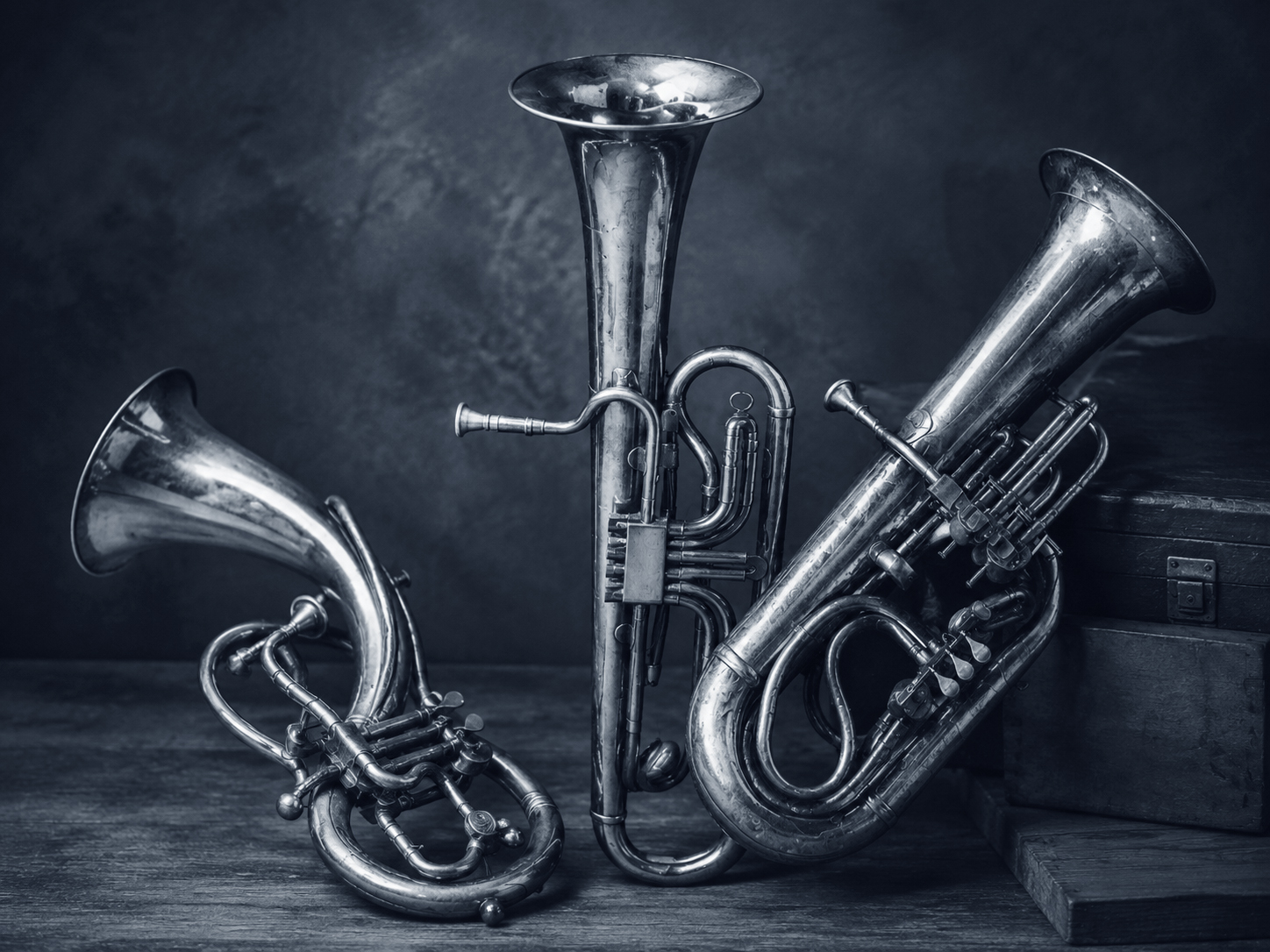
Euphonium terminology, bore sizes, and band instrumentation shifted across Europe and America, from Sax and Conn to Gilmore, Sousa, and Fennell.
The Euphonium in America

Dr. Reifsnyder is a member of the faculty at Indiana State University in Terre Haute, Indiana (USA). As a performer on the euphonium, he has been a member of the USMA Band at West Point, and soloist with the Goldman Band in New York City. The following article is taken from his document, The Changing Role of the Euphonium in Contemporary Band Music, written for the Doctor of Music degree at Indiana University, Bloomington, Indiana (USA).

From the beginning of its development, there has been great confusion regarding proper terminology for the euphonium. In this country, for example, the names "tenor", "baritone horn", "euphonium", and "Bb bass" have at different times been applied to instruments in the same range¹. A brief look at the various stages of the euphonium's European history helps explain this confusion.

The first documented ancestor of the modern instrument was the tenor tuba, introduced in 1838 by Moritz of Berlin², a collaborator with Wilhelm Wieprecht (1802–1872), the famous Prussian bandmaster. Moritz designed the instrument to serve as a substitute for the keyed ophicleide in the Bb bass range, thus enabling Wieprecht's ensemble to have a valved instrument in all registers of the brass family.

A more important figure among early brass instrument makers was Adolph Sax, who around 1840 manufactured a complete family of brass instruments. His "saxhorns" consisted of seven conical bore instruments, in six different ranges:³

— petit saxhorn in Eb
— saxhorn soprano in Bb
— saxhorn alto in Eb
— saxhorn baryton in Bb
— saxhorn basse in Bb
— saxhorn contrabasse in Eb
— saxhorn contrabasse in BBb

Of great importance is the fact that he had two instruments in the Bb bass range, which caused much of the confusion in terminology.

In France, Sax was eventually able to obtain an almost complete monopoly on the outfitting of brass sections for the military. All seven saxhorns were part of the French formations by 1854, and with only slight alterations remain there today. The two instruments in the bass range were known as the Bb baryton (smaller bore) and the Bb basse (larger bore), and by 1867, French infantry bands commonly contained two of the former and five of the latter⁴.

In Germany, the idea of two instruments in the bass range was quickly adopted, but most of the instruments were manufactured by German makers, resulting in a different terminology. In this case the larger bore instrument was called the "bariton", whereas the smaller bore instrument was known as the tenorhorn. A typical Prussian ensemble in 1867 consisted of four tenor horns and two baritons⁵.

In England, the small-bore instrument became known as the baritone horn, after the French terminology, but the larger-bore instrument was called the euphonium. This was the result of an appearance in England by Sommer, a German instrument-maker from Weimar, who performed on an instrument he called the euphonium at the English Exposition of 1851⁶. Although Sommer's instrument was never used in England, its name was adopted by English brass instrument makers. The instrument's bore was widened in 1859 by Phasey, Professor of euphonium and baritone horn at Kneller Hall, thus making it closer in size to the present-day English euphonium⁷.

When Americans began to manufacture instruments of this type, the terminology was borrowed from all three countries. No less than four instruments in the Bb bass range were made:

— Bb tenor (German)
— Bb baritone (English and French)
— Bb euphonium (English)
— Bb bass (French)

Continue reading

Accedi all’edizione digitale completa.

Brass Bulletin 35, III / 1981 pagine 13–21

Tutti i contenuti sono protetti dal diritto d’autore © Brass Bulletin 1981–2026

Condividi questo articolo

Facebook LinkedIn
Loading…

Domande e risposte

Come funziona l’edizione digitale

Che cosa comprende l’edizione digitale?

L’edizione digitale riunisce gli articoli già digitalizzati sotto forma di testi leggibili e ricercabili online — non semplicemente come scansioni o file PDF — insieme alle illustrazioni originali, alle note, agli autori, alle informazioni sul numero della rivista e alle traduzioni disponibili. I suggerimenti di articoli correlati comprendono attualmente solo questo materiale digitalizzato.

Gli articoli digitali sono identici agli originali?

Conserviamo il più fedelmente possibile il testo originale, la lingua, le illustrazioni, le didascalie, le note e il contesto editoriale. La presentazione viene adattata per una lettura confortevole online e gli evidenti errori di trascrizione o scansione possono essere corretti. Il contenuto e il carattere dell’articolo pubblicato rimangono invariati.

Quali lingue sono disponibili?

Brass Bulletin è stato pubblicato in inglese, francese e tedesco nel corso di tutta la sua storia. Le traduzioni italiane e spagnole sono state aggiunte a partire dal numero 60. Sui siti italiano e spagnolo, gli articoli dei numeri da 1 a 59 vengono quindi mostrati in inglese per impostazione predefinita.

Con quale frequenza vengono aggiunti nuovi articoli?

Nuovi articoli vengono aggiunti quasi ogni giorno, con circa un numero completo digitalizzato ogni settimana. Il ritmo può variare in base al lavoro di preparazione, elaborazione delle immagini e verifica editoriale necessario.

Perché non tutti gli articoli sono disponibili in formato digitale?

La collezione completa di Brass Bulletin comprende 1.246 articoli pubblicati tra il 1971 e il 2003. L’indice completo è già disponibile online e consente di scoprire tutti gli articoli della collezione, compresi quelli il cui testo integrale non è ancora stato digitalizzato.

La digitalizzazione è iniziata nel febbraio 2026. Ogni articolo viene accuratamente preparato per la lettura online, verificato e collegato al relativo numero, agli autori, agli argomenti e alle illustrazioni. Al ritmo attuale di digitalizzazione, la collezione completa dovrebbe essere disponibile online entro febbraio 2028.

Perché alcuni riferimenti citano articoli che non sono ancora disponibili?

I riferimenti presenti negli articoli originali vengono conservati anche quando il materiale a cui rimandano non è ancora stato digitalizzato. In questo modo si preserva l’integrità storica ed editoriale della rivista. Man mano che nuovi numeri vengono aggiunti all’edizione digitale, un numero crescente di questi riferimenti condurrà ad articoli leggibili online.

Posso suggerire un articolo o segnalare un errore di trascrizione?

Sì. Se desiderate che un determinato articolo venga digitalizzato, oppure se notate un possibile errore di trascrizione o un’informazione mancante, contattateci. I riscontri dei lettori ci aiutano a migliorare l’edizione digitale e a stabilire priorità utili all’interno dell’archivio.

Come posso sostenere Brass Bulletin?

Il vostro sostegno contribuisce a finanziare la preparazione, la verifica e la pubblicazione online dell’intera collezione.

Abbonati all’Edizione digitale

Preferite sostenerci senza abbonarvi?

Fate una donazione

Come procede la digitalizzazione?

Stiamo rendendo Brass Bulletin disponibile online gradualmente, articolo per articolo. Potete leggere gli articoli appena digitalizzati non appena sono pronti, anche prima che un intero numero sia completato.

Consultate il nostro calendario di digitalizzazione per scoprire le ultime aggiunte e le date di disponibilità stimate dei prossimi numeri. Le stime si basano sul nostro ritmo recente e possono cambiare.

Cerca in Brass Bulletin.