Ofrezca Brass Bulletin en su universidad, conservatorio o biblioteca Descubra el acceso institucional

10 min de lectura

The Euphonium in America

A Short History
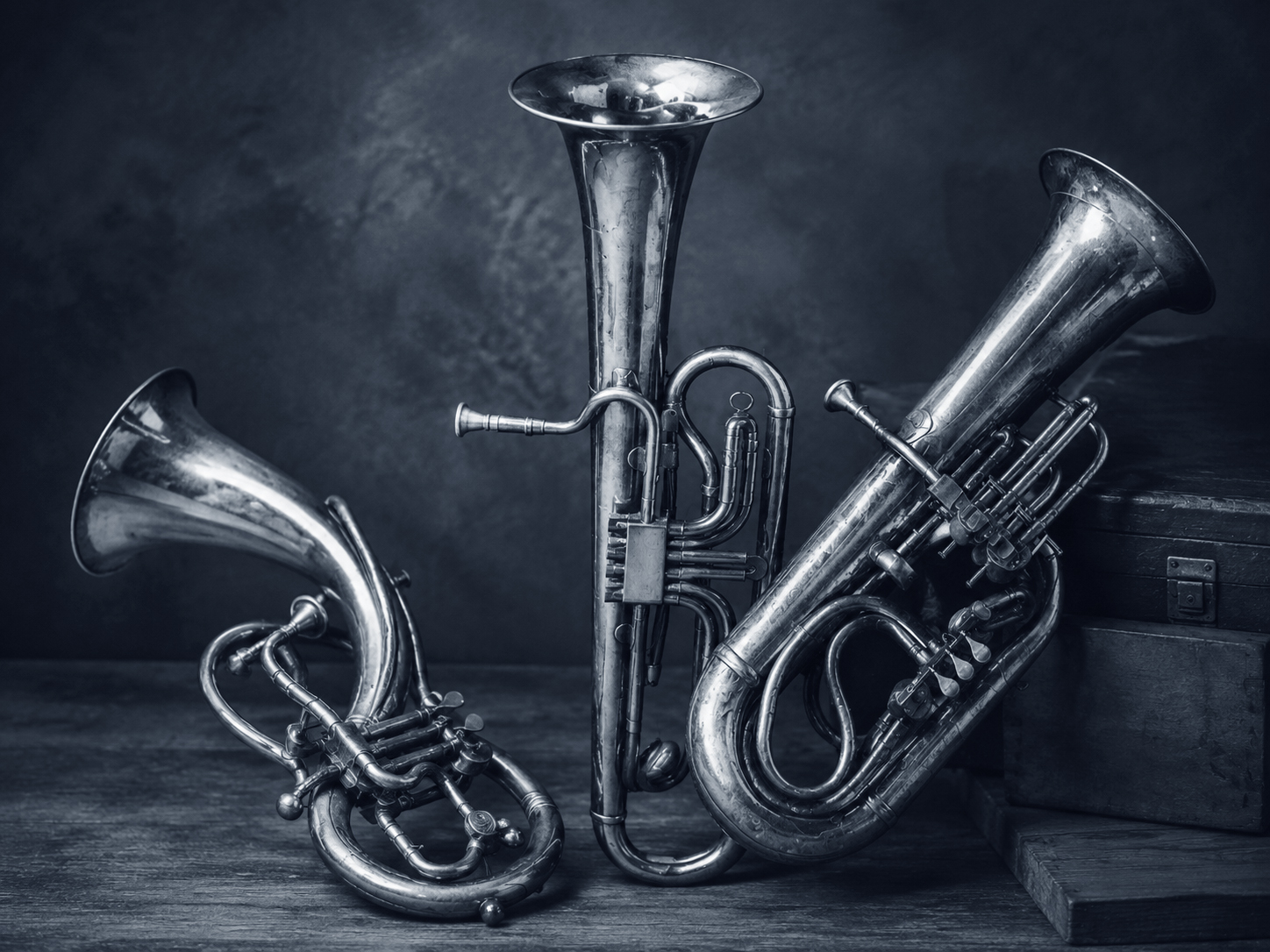
Euphonium terminology, bore sizes, and band instrumentation shifted across Europe and America, from Sax and Conn to Gilmore, Sousa, and Fennell.
The Euphonium in America

Dr. Reifsnyder is a member of the faculty at Indiana State University in Terre Haute, Indiana (USA). As a performer on the euphonium, he has been a member of the USMA Band at West Point, and soloist with the Goldman Band in New York City. The following article is taken from his document, The Changing Role of the Euphonium in Contemporary Band Music, written for the Doctor of Music degree at Indiana University, Bloomington, Indiana (USA).

From the beginning of its development, there has been great confusion regarding proper terminology for the euphonium. In this country, for example, the names "tenor", "baritone horn", "euphonium", and "Bb bass" have at different times been applied to instruments in the same range¹. A brief look at the various stages of the euphonium's European history helps explain this confusion.

The first documented ancestor of the modern instrument was the tenor tuba, introduced in 1838 by Moritz of Berlin², a collaborator with Wilhelm Wieprecht (1802–1872), the famous Prussian bandmaster. Moritz designed the instrument to serve as a substitute for the keyed ophicleide in the Bb bass range, thus enabling Wieprecht's ensemble to have a valved instrument in all registers of the brass family.

A more important figure among early brass instrument makers was Adolph Sax, who around 1840 manufactured a complete family of brass instruments. His "saxhorns" consisted of seven conical bore instruments, in six different ranges:³

— petit saxhorn in Eb
— saxhorn soprano in Bb
— saxhorn alto in Eb
— saxhorn baryton in Bb
— saxhorn basse in Bb
— saxhorn contrabasse in Eb
— saxhorn contrabasse in BBb

Of great importance is the fact that he had two instruments in the Bb bass range, which caused much of the confusion in terminology.

In France, Sax was eventually able to obtain an almost complete monopoly on the outfitting of brass sections for the military. All seven saxhorns were part of the French formations by 1854, and with only slight alterations remain there today. The two instruments in the bass range were known as the Bb baryton (smaller bore) and the Bb basse (larger bore), and by 1867, French infantry bands commonly contained two of the former and five of the latter⁴.

In Germany, the idea of two instruments in the bass range was quickly adopted, but most of the instruments were manufactured by German makers, resulting in a different terminology. In this case the larger bore instrument was called the "bariton", whereas the smaller bore instrument was known as the tenorhorn. A typical Prussian ensemble in 1867 consisted of four tenor horns and two baritons⁵.

In England, the small-bore instrument became known as the baritone horn, after the French terminology, but the larger-bore instrument was called the euphonium. This was the result of an appearance in England by Sommer, a German instrument-maker from Weimar, who performed on an instrument he called the euphonium at the English Exposition of 1851⁶. Although Sommer's instrument was never used in England, its name was adopted by English brass instrument makers. The instrument's bore was widened in 1859 by Phasey, Professor of euphonium and baritone horn at Kneller Hall, thus making it closer in size to the present-day English euphonium⁷.

When Americans began to manufacture instruments of this type, the terminology was borrowed from all three countries. No less than four instruments in the Bb bass range were made:

— Bb tenor (German)
— Bb baritone (English and French)
— Bb euphonium (English)
— Bb bass (French)

Continue reading

Accede a la edición digital completa.

Brass Bulletin 35, III / 1981 páginas 13–21

Todo el contenido está protegido por derechos de autor © Brass Bulletin 1981–2026

Compartir este artículo

Facebook LinkedIn
Cargando…

Preguntas y respuestas

Cómo funciona la edición digital

¿Qué incluye la edición digital?

La edición digital reúne los artículos ya digitalizados como textos legibles y consultables en línea —no simplemente como escaneos o archivos PDF— junto con sus ilustraciones originales, notas, autoría, información del número y traducciones disponibles. Las sugerencias de artículos relacionados incluyen actualmente solo este material digitalizado.

¿Los artículos digitales son idénticos a los originales?

Conservamos con la mayor fidelidad posible el texto original, el idioma, las ilustraciones, los pies de imagen, las notas y el contexto editorial. La presentación se adapta para facilitar la lectura en línea y pueden corregirse errores evidentes de transcripción o escaneado. El contenido y el carácter del artículo publicado permanecen inalterados.

¿Qué idiomas están disponibles?

Brass Bulletin se publicó en inglés, francés y alemán a lo largo de toda su historia. Las traducciones al italiano y al español se añadieron a partir del número 60. Por este motivo, en los sitios italiano y español los artículos de los números 1 a 59 se muestran en inglés de forma predeterminada.

¿Con qué frecuencia se añaden nuevos artículos?

Se añaden nuevos artículos casi a diario, con aproximadamente un número completo digitalizado cada semana. El ritmo puede variar según el trabajo de preparación, tratamiento de imágenes y revisión editorial necesario.

¿Por qué no están disponibles todos los artículos en formato digital?

La colección completa de Brass Bulletin contiene 1.246 artículos publicados entre 1971 y 2003. El índice completo ya está disponible en línea y permite descubrir todos los artículos de la colección, incluidos aquellos cuyo texto íntegro todavía no ha sido digitalizado.

La digitalización comenzó en febrero de 2026. Cada artículo se prepara cuidadosamente para la lectura en línea, se revisa y se vincula con su número, sus autores, sus temas y sus ilustraciones. Al ritmo actual de digitalización, se prevé que la colección completa esté disponible en línea en febrero de 2028.

¿Por qué algunas referencias mencionan artículos que todavía no están disponibles?

Las referencias de los artículos originales se conservan aunque el material al que remiten aún no haya sido digitalizado. De este modo se mantiene intacto el contexto histórico y editorial. A medida que se incorporen más números a la edición digital, un número creciente de estas referencias conducirá a artículos que podrán leerse en línea.

¿Puedo sugerir un artículo o informar de un error de transcripción?

Sí. Si hay algún artículo que le gustaría especialmente ver digitalizado, o si detecta un posible error de transcripción o algún dato que falta, póngase en contacto con nosotros. Los comentarios de los lectores nos ayudan a mejorar la edición digital y a establecer prioridades útiles dentro del archivo.

¿Cómo puedo apoyar a Brass Bulletin?

Su apoyo ayuda a financiar la preparación, verificación y publicación en línea de la colección completa.

Suscríbase a la Edición Digital

¿Prefiere apoyarnos sin suscribirse?

Haga una donación

¿Cómo avanza la digitalización?

Estamos poniendo Brass Bulletin a disposición de los lectores en línea, artículo por artículo. Pueden leer los artículos recién digitalizados en cuanto estén listos, incluso antes de que se complete un número entero.

Consulten nuestro calendario de digitalización para descubrir las últimas novedades y las fechas estimadas de disponibilidad de los próximos números. Estas estimaciones se basan en nuestro ritmo reciente y pueden cambiar.

Busca en Brass Bulletin.