Rendete Brass Bulletin disponibile nella vostra università, nel vostro conservatorio o nella vostra biblioteca Scoprite l’accesso istituzionale

1 min di lettura

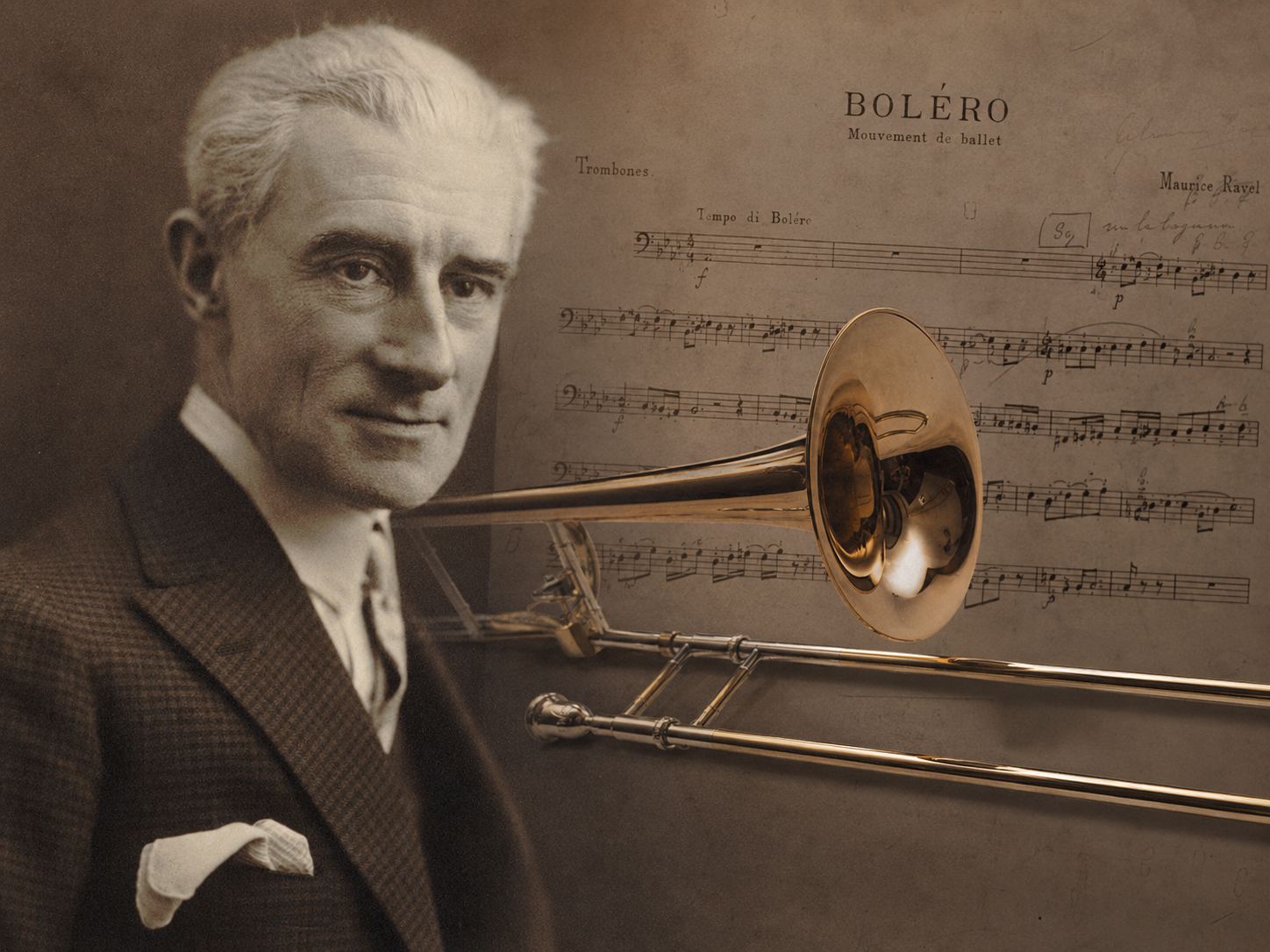
The trombone in Maurice Ravel's Boléro

Parte 2 – Fine

Di Jean Douay

The trombone in Maurice Ravel's Boléro

In the first part of this article (Brass Bulletin 13) Jean Douay dealt with general aspects of this subject, here he reports on his own personal experiences. Finally he will be talking about the execution of this orchestral solo (Ed.).

Recently I had the opportunity of listening to the recording of Bolero which I had played on a concert tour about ten years ago. While I did this, I became aware of a certain stylistic development and change in sound. Not only is my instrument different, but also the execution of this solo has changed. Through time and experience one grows to maturity. This is also true here, especially when you have to play this piece frequently, on foreign tours or in France under the direction of various conductors, each with his own interpretation of the work. I played my first Bolero during a gala concert at the ceremonial opening of a concert hall in front of numerous music critics and distinguished personalities. Therefore it was a question of holding one's own against the most demanding reviewers. On that day I was successful in carrying it off. Nevertheless a bitter taste was left in my mouth: the memory of the worst stage fright of my career.

Bolero was on the program of my first concert tour with the Orchestre National as first trombonist. According to the effect the news of this had on me, I was able to ascertain that there was a great danger of being afraid of playing this solo every time it came around. Accordingly I had to choose: either I accepted this post with all its risks and duties and subjected myself to the corresponding psychological and artistic preparation involved (see part 3 of this article in a coming issue), or I relinquished it... You know what I decided to do... Luckily I have, in the meantime, gotten over this fear. I was especially glad of this when we had to play Bolero with Leonard Bernstein. He had intended to play the piece as an encore. But because he didn't like it particularly, he assured us before every concert that it wouldn't be played. Under the pressure of the successful performance and the wishes of the audience he first of all hesitated and then finally announced it to the delight of the audience. Such situations are difficult for the trombonist, especially when the concert has already been so demanding, and you have already given your best. In a few minutes you have to get all your power of concentration together again. Bernstein's direction is pleasantly comforting for the performers: his bearing does not betray any tension, one even has the impression that the progression of the orchestral playing releases him. He allows the Bolero to develop with the orchestra, as opposed to Paul Paray whose main interest is the tempo which he forces on everyone. It is «his» Bolero, in his hands the orchestra is only a tool.

Other conductors, for example Jean Martinon, beat a very comfortable tempo, between the extremes of Pierre Dervaux and Paul Paray. Jean Martinon really knew how to impose a rhythmic unit on everybody, which was especially convenient for the trombonist because he is the last one to make his appearance (after the Eb clarinet, the bassoon and the saxophone). A central conception of the work is necessary if one intends to attain a synthesis of sound balance and a musical uniformity. If the trombone solo wasn't at the end of the piece, then the problem would probably be different.

The responsibility of the solo trombone is very large in this piece. If it is played successfully then the whole orchestra shares in it — but the opposite is also true.

Brass Bulletin 19, III / 1977 pagine 29–30

Tutti i contenuti sono protetti dal diritto d’autore © Brass Bulletin 1977–2026

Condividi questo articolo

Facebook LinkedIn
Loading…

Domande e risposte

Come funziona l’edizione digitale

Che cosa comprende l’edizione digitale?

L’edizione digitale riunisce gli articoli già digitalizzati sotto forma di testi leggibili e ricercabili online — non semplicemente come scansioni o file PDF — insieme alle illustrazioni originali, alle note, agli autori, alle informazioni sul numero della rivista e alle traduzioni disponibili. I suggerimenti di articoli correlati comprendono attualmente solo questo materiale digitalizzato.

Gli articoli digitali sono identici agli originali?

Conserviamo il più fedelmente possibile il testo originale, la lingua, le illustrazioni, le didascalie, le note e il contesto editoriale. La presentazione viene adattata per una lettura confortevole online e gli evidenti errori di trascrizione o scansione possono essere corretti. Il contenuto e il carattere dell’articolo pubblicato rimangono invariati.

Quali lingue sono disponibili?

Brass Bulletin è stato pubblicato in inglese, francese e tedesco nel corso di tutta la sua storia. Le traduzioni italiane e spagnole sono state aggiunte a partire dal numero 60. Sui siti italiano e spagnolo, gli articoli dei numeri da 1 a 59 vengono quindi mostrati in inglese per impostazione predefinita.

Con quale frequenza vengono aggiunti nuovi articoli?

Nuovi articoli vengono aggiunti quasi ogni giorno, con circa un numero completo digitalizzato ogni settimana. Il ritmo può variare in base al lavoro di preparazione, elaborazione delle immagini e verifica editoriale necessario.

Perché non tutti gli articoli sono disponibili in formato digitale?

La collezione completa di Brass Bulletin comprende 1.246 articoli pubblicati tra il 1971 e il 2003. L’indice completo è già disponibile online e consente di scoprire tutti gli articoli della collezione, compresi quelli il cui testo integrale non è ancora stato digitalizzato.

La digitalizzazione è iniziata nel febbraio 2026. Ogni articolo viene accuratamente preparato per la lettura online, verificato e collegato al relativo numero, agli autori, agli argomenti e alle illustrazioni. Al ritmo attuale di digitalizzazione, la collezione completa dovrebbe essere disponibile online entro febbraio 2028.

Perché alcuni riferimenti citano articoli che non sono ancora disponibili?

I riferimenti presenti negli articoli originali vengono conservati anche quando il materiale a cui rimandano non è ancora stato digitalizzato. In questo modo si preserva l’integrità storica ed editoriale della rivista. Man mano che nuovi numeri vengono aggiunti all’edizione digitale, un numero crescente di questi riferimenti condurrà ad articoli leggibili online.

Posso suggerire un articolo o segnalare un errore di trascrizione?

Sì. Se desiderate che un determinato articolo venga digitalizzato, oppure se notate un possibile errore di trascrizione o un’informazione mancante, contattateci. I riscontri dei lettori ci aiutano a migliorare l’edizione digitale e a stabilire priorità utili all’interno dell’archivio.

Come posso sostenere Brass Bulletin?

Il vostro sostegno contribuisce a finanziare la preparazione, la verifica e la pubblicazione online dell’intera collezione.

Abbonati all’Edizione digitale

Preferite sostenerci senza abbonarvi?

Fate una donazione

Come procede la digitalizzazione?

Stiamo rendendo Brass Bulletin disponibile online gradualmente, articolo per articolo. Potete leggere gli articoli appena digitalizzati non appena sono pronti, anche prima che un intero numero sia completato.

Consultate il nostro calendario di digitalizzazione per scoprire le ultime aggiunte e le date di disponibilità stimate dei prossimi numeri. Le stime si basano sul nostro ritmo recente e possono cambiare.

Cerca in Brass Bulletin.