Rendete Brass Bulletin disponibile nella vostra università, nel vostro conservatorio o nella vostra biblioteca Scoprite l’accesso istituzionale

4 min di lettura

A talk with Rolf Quinque

A talk with Rolf Quinque

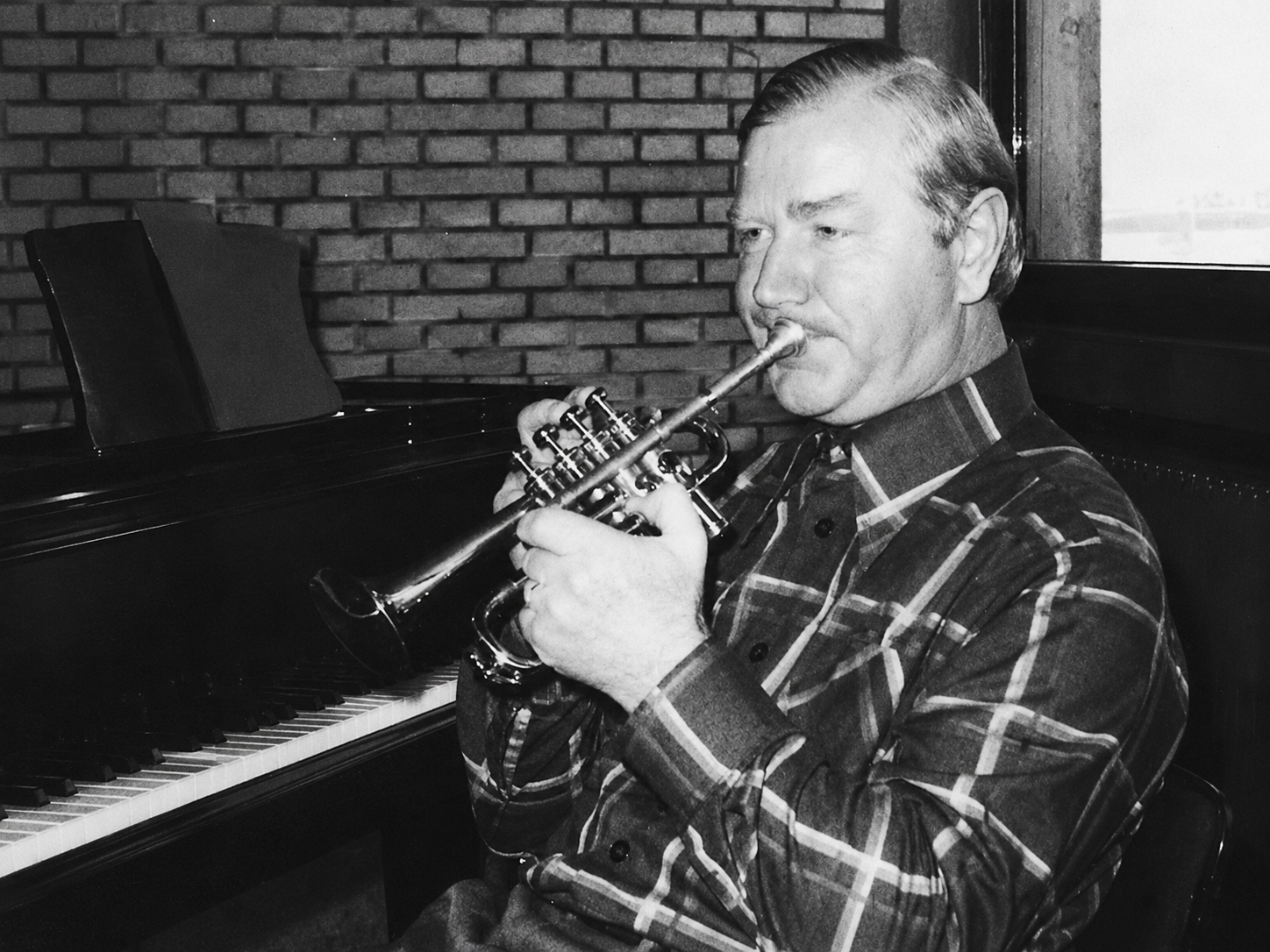
Rolf Quinque

Rolf Quinque, the well-known trumpeter, is at present one of the greatest specialists of the high trumpet. As a student he was a forceful trumpeter, playing almost everything by sheer strength, even Bach’s 2nd Brandenburg Concerto — with a normal B♭ trumpet mouthpiece!

This talk is about his change-over to a completely different kind of playing: the art of blowing in a conscious, disciplined and, above all, relaxed way.

Rolf Quinque was born near Leipzig (GDR) in 1927. He studied and graduated at the Leipzig Academy with Prof. Heinrich Täubig, a specialist of the high trumpet. Already during his studies he played with the Leipzig Philharmonic Orchestra, then in Erfurt and in the Gewandhaus Orchestra Leipzig; finally, in 1956, with the Munich Philharmonic. He also started his pedagogical activities quite early: at the State Conservatory “Loh” in Sondershausen and simultaneously at the Erfurt Conservatory as a teacher. For several years he has been teaching at the R. Strauss Conservatory in Munich (dir. Peter J. Korn) and has many private pupils. As a soloist, Rolf Quinque has given a great number of concerts and made innumerable recordings at home and abroad. Many trumpet concertos have been written for him, and he gave their first performances. In 1971 he left orchestral work in order to dedicate himself entirely to his activities as a soloist.

BB: Rolf Quinque, you are one of the brass players of whom it is said that «they know exactly how». Can you describe the path that led you to that point?

RQ: It has been a long way. Already as a child I was interested in the trumpet and at the age of 14 had my first regular lessons. But as a student I realized how strenuous trumpet playing is and I said to myself: «If you have to do this all your life, it won’t be so pleasant.» Furthermore, my teacher confronted me, as a student, with Bach’s difficult trumpet parts. This led me to reflect on embouchure and endurance, because endurance with the high trumpet is limited. In spite of zealous practising I needed every possible rest (for instance in Bach’s B minor Mass). I then began reading all the literature I could find on the subject and spent much time in libraries, learning everything I could about Reiche (J. S. Bach’s trumpeter), Altenburg and other famous trumpeters of past times. Without any doubt they knew how to play very high notes, and they must have played them with ease, otherwise they would never have been able to perform the difficult parts written for them. Thus I found a few indications that led to my present knowledge.

BB: How did you discover the skill of the Old Ones?

RQ: By reading and trying over and over again. Of course, the Old Ones’ methods were not the same as ours. For instance, their diaphragm support was different, because they did not need the strength required to play Bruckner or Strauss. Their tone could be thinner; they did not have to play so loudly. It is along these lines that my thoughts guided my efforts …

BB: And how could you know if you were on the right path with your «new» embouchure?

RQ: First I began to train like a sportsman, in order to strengthen the so-called trumpeter’s muscles (the cheek muscles) and those of the abdomen (diaphragm). For this purpose I developed compulsory exercises, some of which already existed in similar form. I repeated these exercises daily, constantly developing them. Strengthening the abdominal muscular system greatly relieves the lips. But the much-quoted expression «pressureless embouchure» is, in my opinion, nonsense. It should be called: embouchure with gentle pressure.

BB: When were you sure that you were on the right path?

RQ: At first I really believed I was on the wrong path, because the embouchure I had acquired in the traditional way deteriorated instead of improving. I could no longer play the high notes! The transition to the new embouchure was very difficult and not without risks. That is the main reason why many colleagues with fixed engagements cannot afford to attempt such a change, although a few have shown that it is possible even under those circumstances. But I had reached a point of no return: I simply had to continue. So I kept practising until finally I knew I was right and that mastery of the high register is based on athletic training.
Rolf Quinque
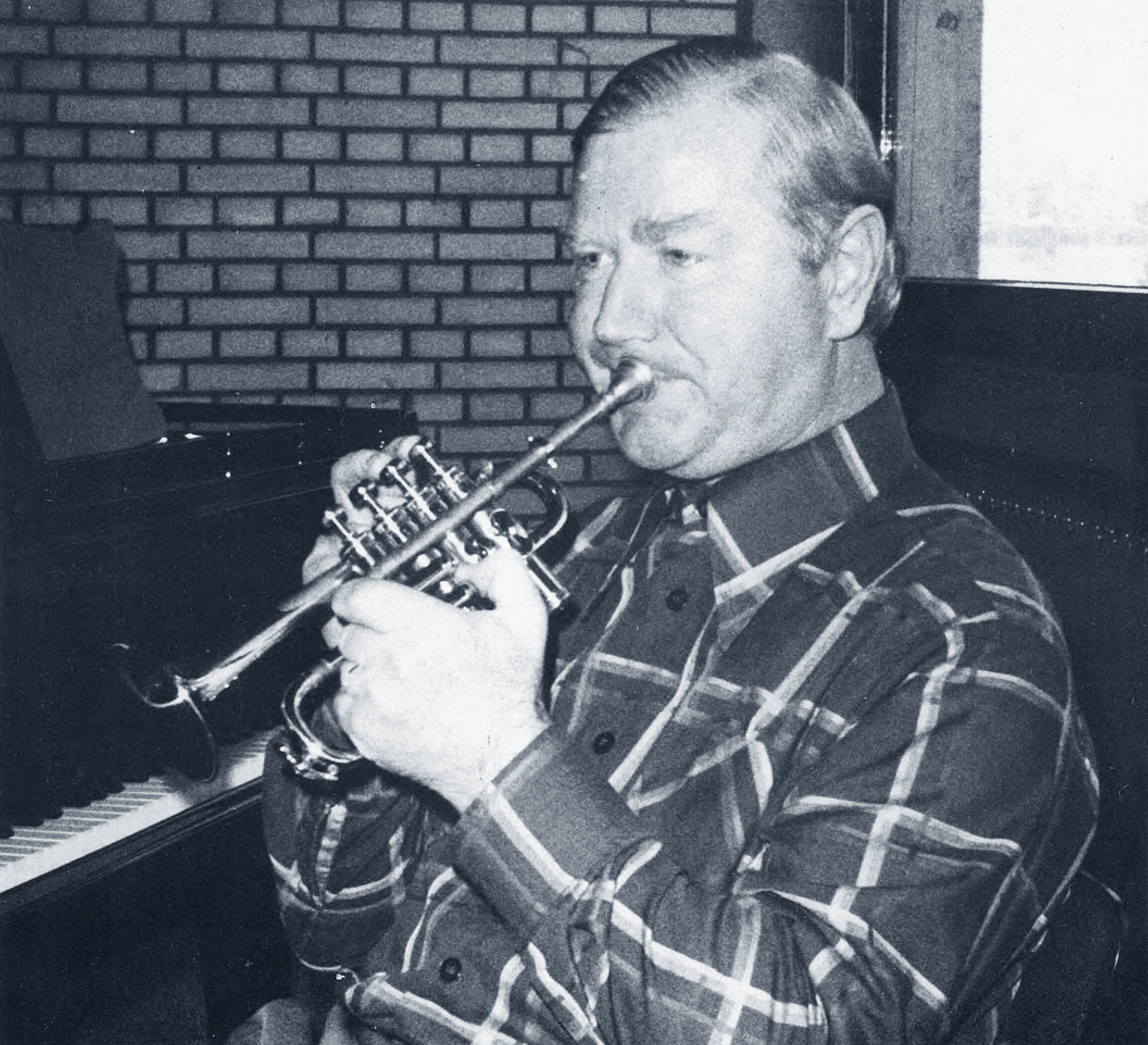
Rolf Quinque

BB: How did your practising differ before and after the change-over?

RQ: Formerly, practising and playing were simply a physical strain. Now, after the change-over, I feel like a well-trained sportsman using well-developed muscles. I work more rationally. And with time one becomes more mature — and also more intelligent …

BB: What is the basic conception of your present system of playing?

RQ: The basic conception is the conscious control of breathing and support. Above all, controlled breathing is essential. Then, of course, the abdominal muscles must be strengthened in order to provide the necessary diaphragm support. There are many exercises to achieve this.

BB: Did you develop your own system of physical training?

RQ: Yes — and not only for the abdominal muscles, but also for the cheek muscles. I intend to compile these «daily exercises» and publish them in a book soon.

BB: That will certainly be of great interest to all brass players. Could one say that, thanks to your change-over, you have developed a new approach to instrumental pedagogy?

RQ: Yes — especially for young people. The proof of my idea that strength is not essential for brass playing lies in my young pupils, who, under my guidance, develop surprising skill through relaxed blowing.

BB: Rolf Quinque, your long search for improvement has already helped many musicians on their way. Your activities, your music-making and, above all, your illuminating discoveries make trumpeters feel that there is hope for them too to abandon a tense way of playing and to attain the joy of relaxed music-making. We shall be happy to announce your books to our readers in the near future.

Thank you, Mr. Quinque, and good luck!

Brass Bulletin 14, II / 1976 pagine 19–21

Tutti i contenuti sono protetti dal diritto d’autore © Brass Bulletin 1976–2026

Condividi questo articolo

Facebook LinkedIn
Loading…

Domande e risposte

Come funziona l’edizione digitale

Che cosa comprende l’edizione digitale?

L’edizione digitale riunisce gli articoli già digitalizzati sotto forma di testi leggibili e ricercabili online — non semplicemente come scansioni o file PDF — insieme alle illustrazioni originali, alle note, agli autori, alle informazioni sul numero della rivista e alle traduzioni disponibili. I suggerimenti di articoli correlati comprendono attualmente solo questo materiale digitalizzato.

Gli articoli digitali sono identici agli originali?

Conserviamo il più fedelmente possibile il testo originale, la lingua, le illustrazioni, le didascalie, le note e il contesto editoriale. La presentazione viene adattata per una lettura confortevole online e gli evidenti errori di trascrizione o scansione possono essere corretti. Il contenuto e il carattere dell’articolo pubblicato rimangono invariati.

Quali lingue sono disponibili?

Brass Bulletin è stato pubblicato in inglese, francese e tedesco nel corso di tutta la sua storia. Le traduzioni italiane e spagnole sono state aggiunte a partire dal numero 60. Sui siti italiano e spagnolo, gli articoli dei numeri da 1 a 59 vengono quindi mostrati in inglese per impostazione predefinita.

Con quale frequenza vengono aggiunti nuovi articoli?

Nuovi articoli vengono aggiunti quasi ogni giorno, con circa un numero completo digitalizzato ogni settimana. Il ritmo può variare in base al lavoro di preparazione, elaborazione delle immagini e verifica editoriale necessario.

Perché non tutti gli articoli sono disponibili in formato digitale?

La collezione completa di Brass Bulletin comprende 1.246 articoli pubblicati tra il 1971 e il 2003. L’indice completo è già disponibile online e consente di scoprire tutti gli articoli della collezione, compresi quelli il cui testo integrale non è ancora stato digitalizzato.

La digitalizzazione è iniziata nel febbraio 2026. Ogni articolo viene accuratamente preparato per la lettura online, verificato e collegato al relativo numero, agli autori, agli argomenti e alle illustrazioni. Al ritmo attuale di digitalizzazione, la collezione completa dovrebbe essere disponibile online entro febbraio 2028.

Perché alcuni riferimenti citano articoli che non sono ancora disponibili?

I riferimenti presenti negli articoli originali vengono conservati anche quando il materiale a cui rimandano non è ancora stato digitalizzato. In questo modo si preserva l’integrità storica ed editoriale della rivista. Man mano che nuovi numeri vengono aggiunti all’edizione digitale, un numero crescente di questi riferimenti condurrà ad articoli leggibili online.

Posso suggerire un articolo o segnalare un errore di trascrizione?

Sì. Se desiderate che un determinato articolo venga digitalizzato, oppure se notate un possibile errore di trascrizione o un’informazione mancante, contattateci. I riscontri dei lettori ci aiutano a migliorare l’edizione digitale e a stabilire priorità utili all’interno dell’archivio.

Come posso sostenere Brass Bulletin?

Il vostro sostegno contribuisce a finanziare la preparazione, la verifica e la pubblicazione online dell’intera collezione.

Abbonati all’Edizione digitale

Preferite sostenerci senza abbonarvi?

Fate una donazione

Come procede la digitalizzazione?

Stiamo rendendo Brass Bulletin disponibile online gradualmente, articolo per articolo. Potete leggere gli articoli appena digitalizzati non appena sono pronti, anche prima che un intero numero sia completato.

Consultate il nostro calendario di digitalizzazione per scoprire le ultime aggiunte e le date di disponibilità stimate dei prossimi numeri. Le stime si basano sul nostro ritmo recente e possono cambiare.

Cerca in Brass Bulletin.