

Ofrezca Brass Bulletin en su universidad, conservatorio o biblioteca Descubra el acceso institucional

5 min de lectura

The early 19th-century invention-posthorn

The early 19th-century invention-posthorn

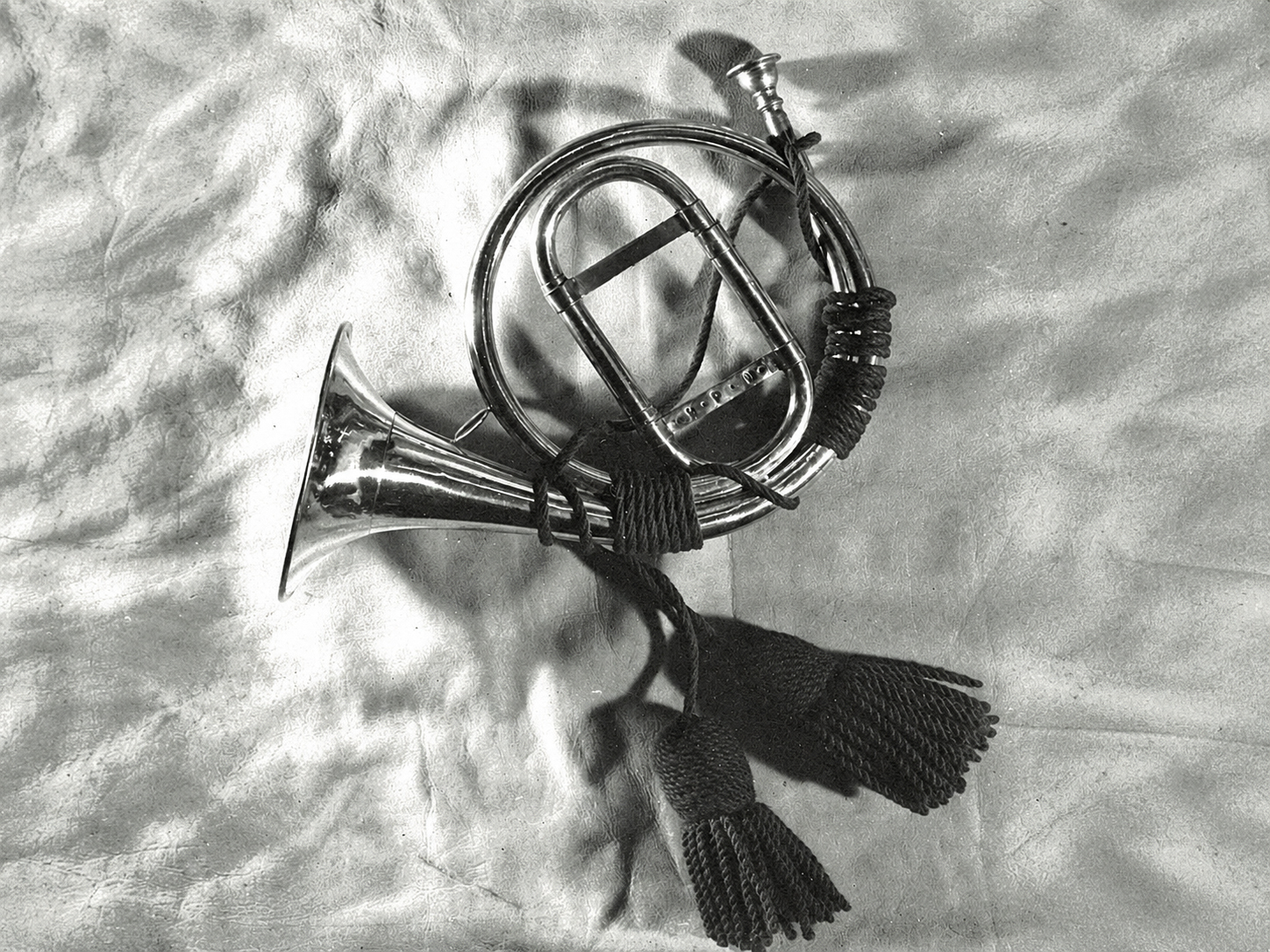
Posthorn in B♭ with invention slide, brass, early 19th century, signed “K.P.W.” on the lower flat brace (does “W” stand for “Wien” - Vienna?).

Body diameter: 17 - 18cm (6 1/2 - 7″)
Bell diameter: 12.8cm (5″)
Tube length: 130cm (51″)

Collection of Uwe Bartels, Buchholz-Dibbersen, West Germany

There was no need to change the pitch of horns used in the postal service since these were used only for the simple purpose of giving signals.

Before 1828 posthorn calls in the German empire were not coordinated; what he should play was more or less left to the postilion. Throughout Europe at that time characteristic horn calls consisted of a simple series of rhythmically accented rising octaves, reflected in classical music only in the form of musical quotations:

Carl Ditters von Dittersdorf (1739-1799)Sinfonia in B♭ major “Der Postzug”, 4th movement, Presto assai

Carl Ditters von Dittersdorf (1739-1799)
Sinfonia in B♭ major “Der Postzug”, 4th movement, Presto assai

Wolfgang Amadeus Mozart (1756-1791)Serenade no. 9 in D major K. 320, 6th movement, Menuetto

Wolfgang Amadeus Mozart (1756-1791)
Serenade no. 9 in D major K. 320, 6th movement, Menuetto

Starting in the second half of the 18th century the posthorn was used more and more in classical music.¹ The best known works are those of Leopold and Wolfgang Amadeus Mozart.

In his “Cassatio ex G” Leopold Mozart (1719-1787) uses a “corno da postiglione” in G along with children’s instruments. Wolfgang Amadeus followed his father’s example and also took up the posthorn. In Trio II of the Menuetto (6th movement) of his Serenade no. 9 in D major K. 320, known as the Posthorn Serenade, he provides one of the most beautiful melodies ever written for this simple postilion’s instrument. In his German Dance no. 3 in C major K.605 (1791) the younger Mozart also used two “corni di posta” (in B♭ and F) in the trio (entitled “Sleighride”) and in the coda. This work probably prompted Beethoven to conclude his twelve German Dances (WoO 8; 1795) with a coda which is likewise highlighted by virtuoso solo passages on a posthorn (in C). Beethoven made the sound of the posthorn fashionable in Vienna. Following his example, Anton Eberl (1765-1807), Joseph Eybler (1765-1846), Adalbert Gyrowetz (1763-1850), Anton Höllmayer, Johann Nepomuk Hummel (1778-1837), Count Wilhelm von Lichnowsky and Friedrich Starke all wrote dances with posthorn solos.

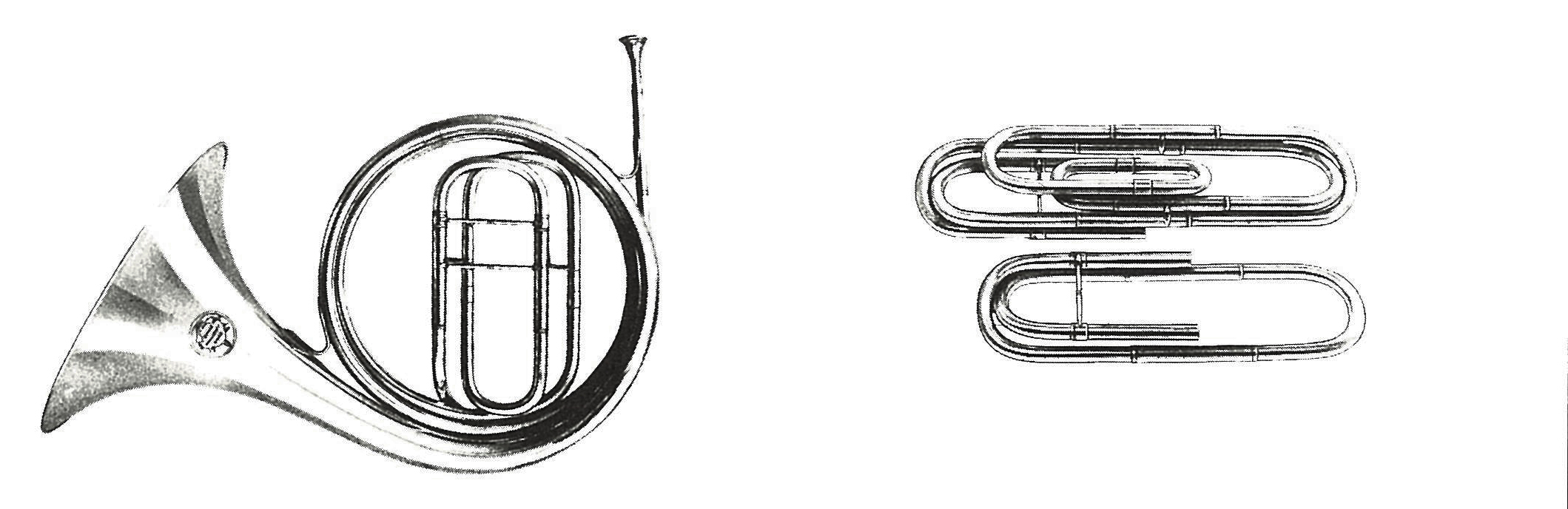
Modern copy of the invention-posthorn by Gebr. Alexander, Mainz.

Modern copy of the invention-posthorn by Gebr. Alexander, Mainz.

With this introduction into classical music it was obviously necessary that the posthorn being used could be tuned correctly. A tuning slide providing rapid, stepless adjustment of the tube length is preferable to tuning bits inserted between instrument and mouthpiece. Posthorns with a tuning slide, imitating the then current invention horn, were therefore produced after 1800, for use in classical, salon and Harmonie (or wind ensemble) music.

Although it has not hitherto been possible to prove it, it is quite probable that, in place of the tuning slide, crooks could be inserted into such posthorns to change the basic pitch of the instrument (from B♭ to A♭ or F, for example).

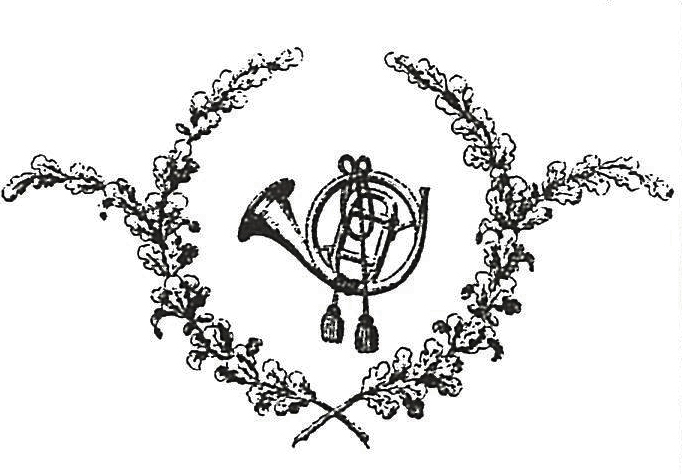
During my research in the postal department of the transport museum in Nürnberg I found the title page to a collection of posthorn calls, decorated with the following motif: (Illustration 2).

Illustration 2

Illustration 2

This volume was published by André in Offenbach am Main in the first half of the 19th century; unfortunately only this title page has survived. The steel engraving shows a posthorn made like the invention horns of the first half of the 19th century. This early posthorn motif was used for the cover illustration of the “1971 Posthorn Calendar”, which Uwe Bartels from Buchholz-Dibbersen, a horn player and collector of instruments (especially horns), happened to obtain. Scarcely four weeks later, in a second-hand shop in Salzburg, Mr. Bartels found a little horn with a striking resemblance to the historical motif. After a story like this a true disciple of parapsychology would never believe in coincidences ever again! As the old instrument immediately won the collector’s heart, and as he knew of no similar existing model, the purchase took place despite an asking price which at first seemed unrealistically high.
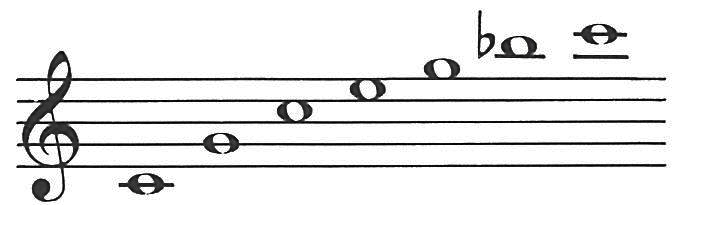
The notes are playable as natural harmonics
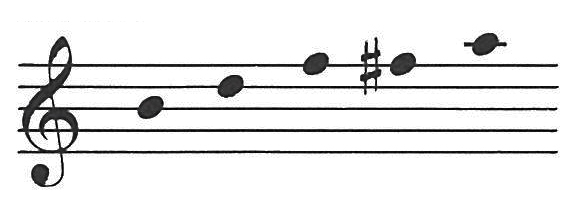
The notes are playable as natural harmonics

but these require the use of stopping.

but these require the use of stopping.

According to the bore this instrument is more like a trumpet. The mouthpipe diameter corresponds to that of an old cornet. The original mouthpiece has not been preserved. In the 18th century cup mouthpieces predominated with posthorns as with trumpets; cornet-type mouthpieces became more common only after 1800. Before 1800 classical music required only that the posthorn should produce the natural harmonics. Around 1810 the desire for a greater range of notes led some composers to call for stopped notes on the posthorn. The bell is so small that the right hand cannot be placed inside it; instead the bell must be covered with the flat of the hand, as Uwe Bartels demonstrates in this photograph:
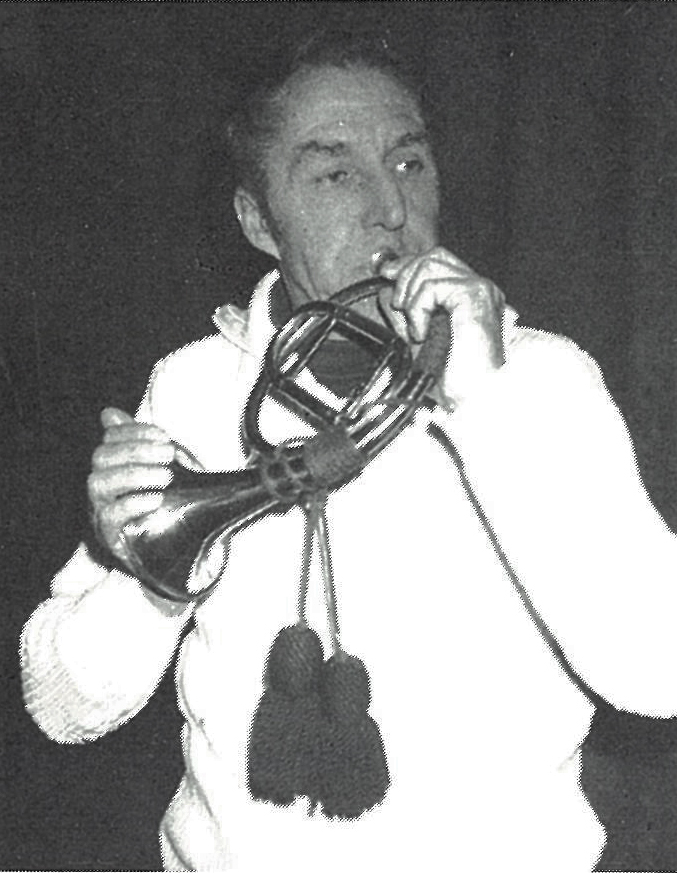
Uwe Bartels

Uwe Bartels

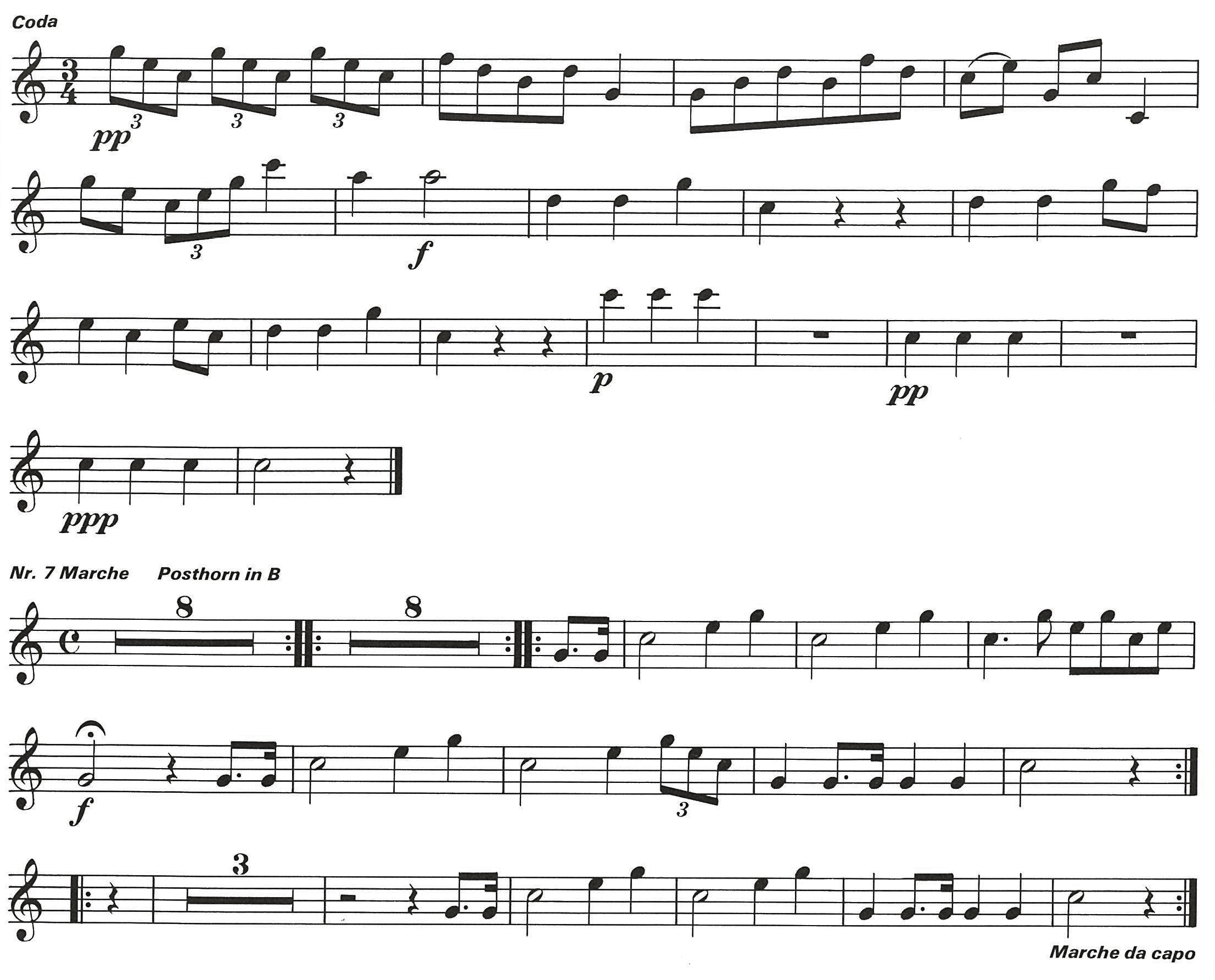
In the Royal Court Library of the house of Thurn and Taxis in Regensburg there are handwritten parts for eight “Quartets for 4 horns [“Waldhorn”; in F] with posthorn solo/ composed and arranged by the Grimm brothers”, possibly dating from around 1810 (no. Rtt Grimm 1). The composers are probably not the brothers Jacob and Wilhelm Grimm, so famous for their fairy tales, but very probably horn players [though probably not so well known as Johann Palsa (1754-1792) and Carl Thürschmidt (1753-1797)] who wrote pieces for horns.²
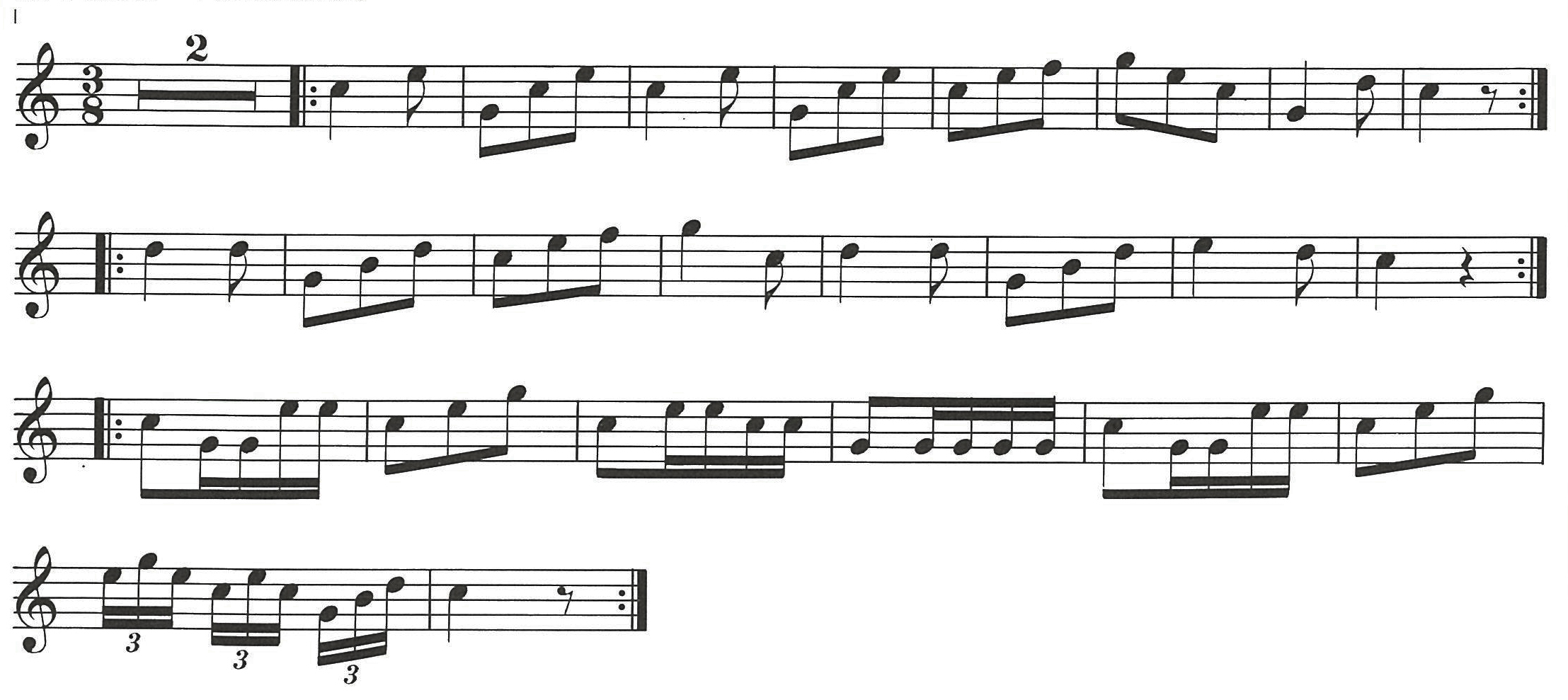
Nr. 4 Walzer, Posthorn in As

Nr. 4 Walzer, Posthorn in As

In nos. 4, 6 and 7 the 3rd player changes from horn to posthorn and in nos. 4 and 6 has to play stopped notes on the posthorn. It is to be assumed that the Grimm brothers played on tour with members of the Thurn and Taxis court orchestra and that they wrote the quartets for that purpose. The use of the posthorn would be a compliment to the Thurn and Taxis postal service of the time.
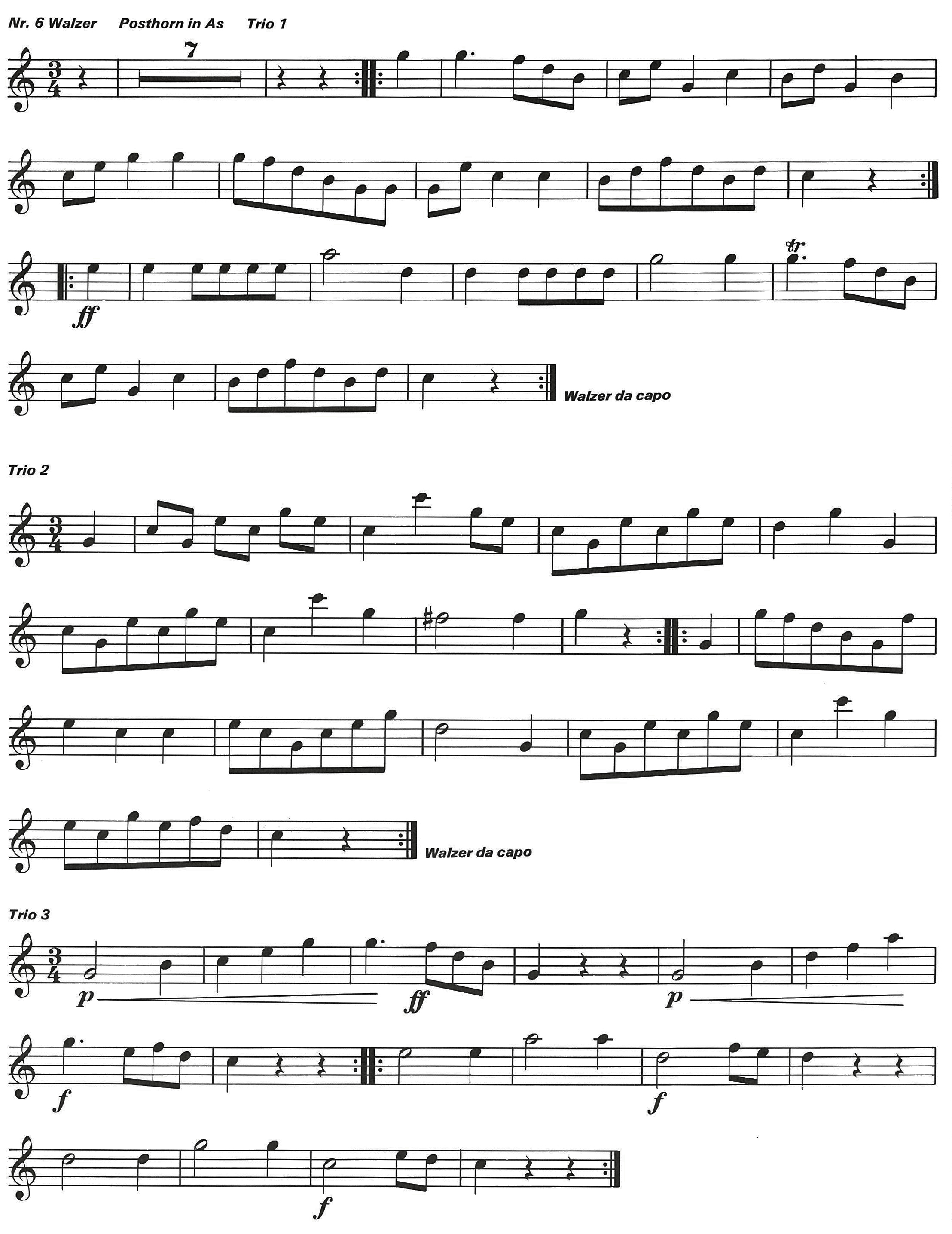
Brass Bulletin image

Kurt Janetzky is about to have the three quartets for posthorn and 3 horns published by Heinrichshofen.

Mr. Bartels’ practical experiments showed that the Grimm parts are quite playable and relatively problem-free on his posthorn with its invention slide. A tape recording, which he kindly placed at my disposal, demonstrates this. In experiments which Mr. Bartels made for the sake of comparison on wider-bored horns the stopped notes could not be played so easily in tune. We may therefore assume that the maker of Uwe Bartels’ instrument chose this trumpet-like bore deliberately so that this posthorn would function well as an invention posthorn.

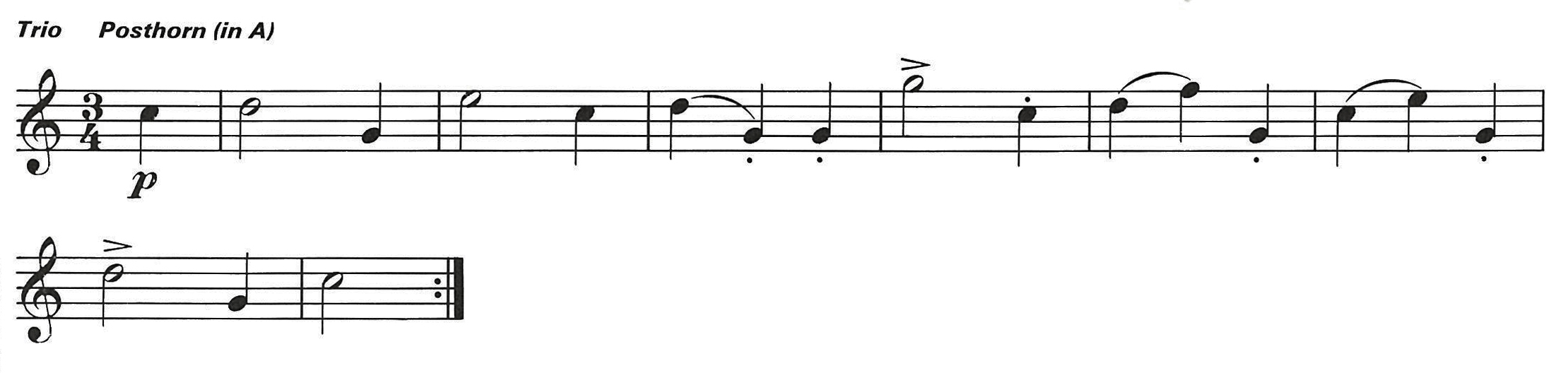
A further example of the use of an invention posthorn may be found in the following work by Johann Nepomuk Hummel: no. 10 from “Twelve German Dances/ composed/ for the opening of the Apollo-Saal in Vienna/ during the carneval in 1808” op. 28. A piano arrangement with “posthorn” of this is preserved in the Österreichische Nationalbibliothek in Vienna (no. M.S. 36529).
Brass Bulletin image

Starting in the 1820’s, to meet increasingly demanding musical requirements, posthorns with four or five keys were built, only to be replaced increasingly after 1850 by valve posthorns. In the course of the 19th century, however, the valve posthorn was replaced by the almost identical sounding cornet. The cornet developed from the posthorn shortly before 1830 when the Frenchman Halary built a posthorn with valves.

Notes

¹ In early classicism and classicism there are, contrary to expectations, many examples of works calling for posthorns. Since a list of all these works would occupy too much space here, I refer the reader to my book “Das grosse Buch vom Posthorn” (Wilhelmshaven 1985, Heinrichshofen; in German), which lists, at least in the bibliography, all such works known to me.

² C.F. Whistling’s “Handbuch der musikalischen Literatur” (Leipzig 1844, 3rd edition, Hofmeister) contains the following pieces by the “Grimm Frères”:

6 pièces p. 3 cors (en Fa) op. 6, Frankfurt, Dunst

6 duos op. 1, 2 [for 2 horns], Frankfurt, Dunst

Potpourri av. (in F) [for 4 horns], Mainz, Schott

In the Royal Court Library in Regensburg there are also, in manuscript, “19 Harmoniestücke für 2 corni con clarino” (no. Rtt Grimm 2; originally written for 3 clarinos) which are to be published by Hans Pizka in Munich. Nos. 2, 10, 12 and 13 have already been published in “Bläsermusik” — “Niederbayerische Blätter für Volksmusik” no. 4 (pp. 46-48), Dingolfing 1984, Fritz Markmiller.

Brass Bulletin 59, III / 1987 páginas 27–34

Todo el contenido está protegido por derechos de autor © Brass Bulletin 1987–2026

Compartir este artículo

Facebook LinkedIn
Cargando…

Preguntas y respuestas

Cómo funciona la edición digital

¿Qué incluye la edición digital?

La edición digital reúne los artículos ya digitalizados como textos legibles y consultables en línea —no simplemente como escaneos o archivos PDF— junto con sus ilustraciones originales, notas, autoría, información del número y traducciones disponibles. Las sugerencias de artículos relacionados incluyen actualmente solo este material digitalizado.

¿Los artículos digitales son idénticos a los originales?

Conservamos con la mayor fidelidad posible el texto original, el idioma, las ilustraciones, los pies de imagen, las notas y el contexto editorial. La presentación se adapta para facilitar la lectura en línea y pueden corregirse errores evidentes de transcripción o escaneado. El contenido y el carácter del artículo publicado permanecen inalterados.

¿Qué idiomas están disponibles?

Brass Bulletin se publicó en inglés, francés y alemán a lo largo de toda su historia. Las traducciones al italiano y al español se añadieron a partir del número 60. Por este motivo, en los sitios italiano y español los artículos de los números 1 a 59 se muestran en inglés de forma predeterminada.

¿Con qué frecuencia se añaden nuevos artículos?

Se añaden nuevos artículos casi a diario, con aproximadamente un número completo digitalizado cada semana. El ritmo puede variar según el trabajo de preparación, tratamiento de imágenes y revisión editorial necesario.

¿Por qué no están disponibles todos los artículos en formato digital?

La colección completa de Brass Bulletin contiene 1.246 artículos publicados entre 1971 y 2003. El índice completo ya está disponible en línea y permite descubrir todos los artículos de la colección, incluidos aquellos cuyo texto íntegro todavía no ha sido digitalizado.

La digitalización comenzó en febrero de 2026. Cada artículo se prepara cuidadosamente para la lectura en línea, se revisa y se vincula con su número, sus autores, sus temas y sus ilustraciones. Al ritmo actual de digitalización, se prevé que la colección completa esté disponible en línea en febrero de 2028.

¿Por qué algunas referencias mencionan artículos que todavía no están disponibles?

Las referencias de los artículos originales se conservan aunque el material al que remiten aún no haya sido digitalizado. De este modo se mantiene intacto el contexto histórico y editorial. A medida que se incorporen más números a la edición digital, un número creciente de estas referencias conducirá a artículos que podrán leerse en línea.

¿Puedo sugerir un artículo o informar de un error de transcripción?

Sí. Si hay algún artículo que le gustaría especialmente ver digitalizado, o si detecta un posible error de transcripción o algún dato que falta, póngase en contacto con nosotros. Los comentarios de los lectores nos ayudan a mejorar la edición digital y a establecer prioridades útiles dentro del archivo.

¿Cómo puedo apoyar a Brass Bulletin?

Su apoyo ayuda a financiar la preparación, verificación y publicación en línea de la colección completa.

Suscríbase a la Edición Digital

¿Prefiere apoyarnos sin suscribirse?

Haga una donación

¿Cómo avanza la digitalización?

Estamos poniendo Brass Bulletin a disposición de los lectores en línea, artículo por artículo. Pueden leer los artículos recién digitalizados en cuanto estén listos, incluso antes de que se complete un número entero.

Consulten nuestro calendario de digitalización para descubrir las últimas novedades y las fechas estimadas de disponibilidad de los próximos números. Estas estimaciones se basan en nuestro ritmo reciente y pueden cambiar.

Busca en Brass Bulletin.