Ofrezca Brass Bulletin en su universidad, conservatorio o biblioteca Descubra el acceso institucional

3 min de lectura

ASA-Method

ASA-Method

This work of mine on minimum pressure playing is intended to show not only the student but also the beginner and the amateur the correct and shortest way to controlled (relaxed) playing. Many orchestral trumpet players who want to change from the so-called pressure method to a controlled (relaxed) embouchure will also find valuable tips. I am certainly neither the first nor the only person to express his views on this problem of minimum pressure playing. As early as the time of Bach, with clarino playing at its greatest, it was a current topic. It was thought about, written about and puzzled over even then. There was no ideal solution but, as we know from old documents, there were trumpet players who certainly had a special technique. In his "Tonkünstler Lexikon 1732" Johann Walther writes of a player, "... Who could have sung like a bird up into the high register without difficulty". But there are some bad points too. Gottfried Reiche, one of Bach's favourite trumpeters, once said, "... several also used the mute to cover the screaming sound". We can therefore be quite sure that even in Baroque times, just as today, there were few trumpet players who could play the high notes that occur in the works of J.S. Bach (2nd Brandenburg Concerto), F.X. Richter or Michael Haydn, to name only a few composers. But our present knowledge of the individual stages of development, methods and knowledge of a physical nature make it possible to pass on to a wide range of interested parties a playing technique which enables one to play in the high register, even up to double high C (as the Americans say).

Naturally this requires a special playing technique. The modern literature, jazz and not least of all piccolo trumpet playing (Baroque music) make such a technique indispensable.

There is of course literature on the subject: tutors, descriptions of the embouchure etc., which differ substantially from one another on important points and without a suitable teacher do more harm than good. Some of these publications get to the heart of the problem but almost always fail to provide a systematically constructed method, which is so exceptionally important for someone studying an instrument. Others on the other hand give some players the impression that one can play entirely without pressure. There is no such thing as "non-press", often wrongly described as non-pressure; one can only say minimum pressure. Of course the pressure of the mouthpiece on the lips should be as little as possible. Then by means of purposeful practice higher registers can be reached with progressive pressure.

The difference between this work of mine and previous ones of its type lies in the fact that I place physical and physiological mastery of the instrument in the foreground and not only talk about the embouchure in the usual sense (connection between lips and mouthpiece) but describe the systematic construction of the whole complex. This includes first of all generating energy by means of continuous support and pushing through by the diaphragm, a most important part of my method. For only perfect teamwork: support — abdominal muscles — diaphragm breathing — diaphragm pressure on the one hand and cheeks — lips — tongue — face muscles on the other, will guarantee an easy high register, endurance and security.

Making people aware of these processes is of fundamental importance. A student's technical progress and also his musical progress depend primarily on the efficiency of his embouchure. Only a phenomenal mastery and control of the physical and physiological structure makes possible the constant and disciplined practice that will sooner or later lead to success.

Let me emphasise, therefore, that the only people to bring this playing technique to complete maturity and perfection will be those who regard the necessary training with much patience and discipline as a task to be performed conscientiously.

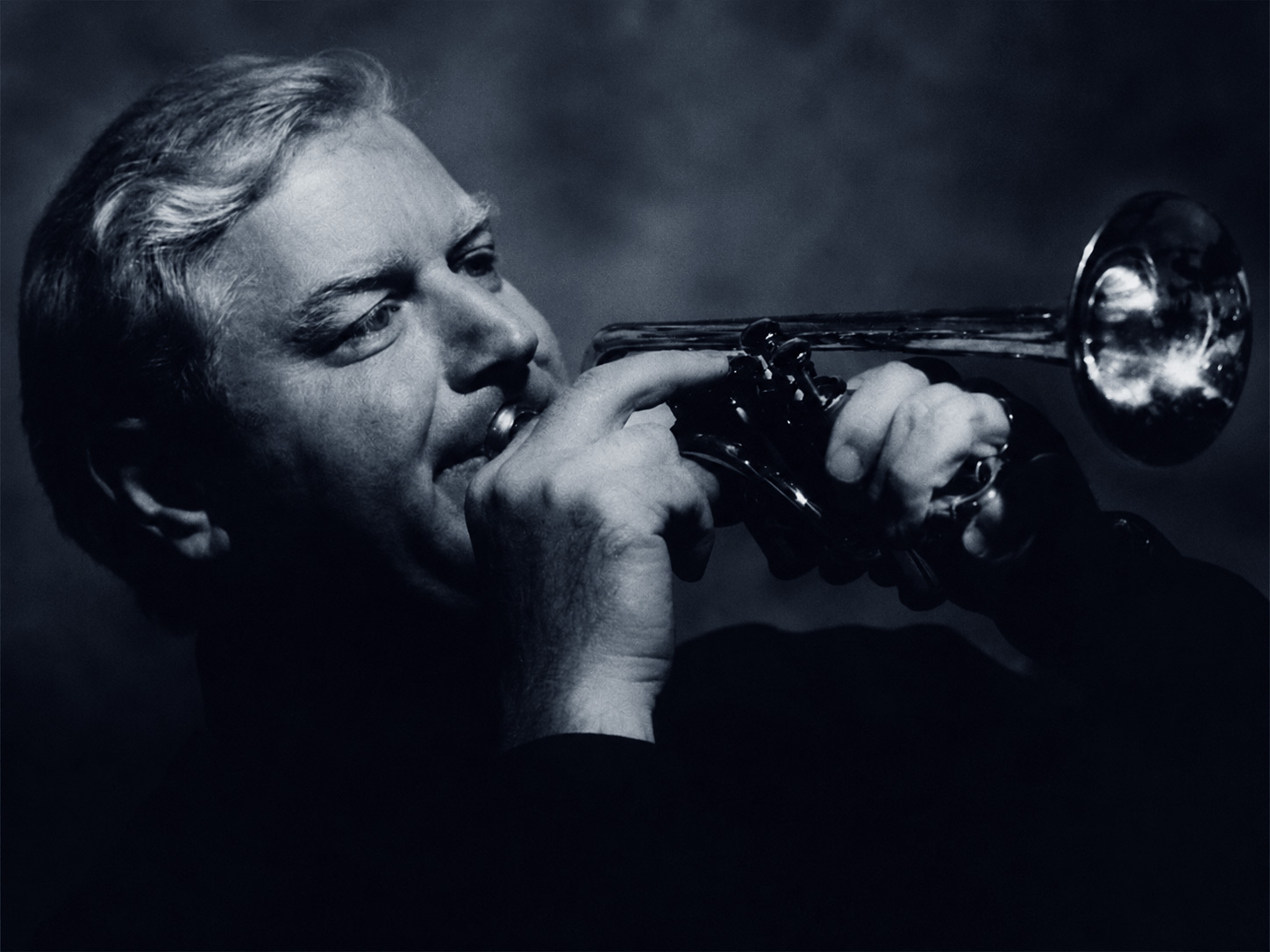
Rolf Quinque is certainly one of the most renowned trumpeters of the 20th century. He will go down in musical history as having accomplished the most amazing feats in the high register of the trumpet (ordinary or piccolo), not only in recordings, like many specialists, but in live performances! He has played and still plays the perilous 2nd Brandenburg Concerto of J.S. Bach with astonishing security (he cannot remember how many times...). What is more, he is the only trumpeter of our age to have mastered in live performance the splendid but awesome Concerto of F.X. Richter (more than 40 public concerts) and the Concerto of Michael Haydn (ditto). He gave the first performance, and has made several public performances and recordings, of the trumpet part of "Vexilla Regis" by Hans Zender, which all trumpet-players specialising in the extreme high register had refused to play, declaring it quite unplayable!

Yes, Rolf Quinque is a virtuoso of the impossible who also has the talent and sensitivity of a real musician.

The "ASA" method which he has written and which Editions BIM is now publishing at the beginning of 1980 is the outcome of the profound reflections he has made on taking up composers' challenges.

His explanatory text is clear, and stripped of all unnecessary thoughts.

Herewith we publish the Preface of his ASA Method (Atmung = breathing, Stütze = support, Ansatz = embouchure).

The Editors

Brass Bulletin 29, I / 1980 páginas 19–22

Todo el contenido está protegido por derechos de autor © Brass Bulletin 1980–2026

Compartir este artículo

Facebook LinkedIn
Cargando…

Preguntas y respuestas

Cómo funciona la edición digital

¿Qué incluye la edición digital?

La edición digital reúne los artículos ya digitalizados como textos legibles y consultables en línea —no simplemente como escaneos o archivos PDF— junto con sus ilustraciones originales, notas, autoría, información del número y traducciones disponibles. Las sugerencias de artículos relacionados incluyen actualmente solo este material digitalizado.

¿Los artículos digitales son idénticos a los originales?

Conservamos con la mayor fidelidad posible el texto original, el idioma, las ilustraciones, los pies de imagen, las notas y el contexto editorial. La presentación se adapta para facilitar la lectura en línea y pueden corregirse errores evidentes de transcripción o escaneado. El contenido y el carácter del artículo publicado permanecen inalterados.

¿Qué idiomas están disponibles?

Brass Bulletin se publicó en inglés, francés y alemán a lo largo de toda su historia. Las traducciones al italiano y al español se añadieron a partir del número 60. Por este motivo, en los sitios italiano y español los artículos de los números 1 a 59 se muestran en inglés de forma predeterminada.

¿Con qué frecuencia se añaden nuevos artículos?

Se añaden nuevos artículos casi a diario, con aproximadamente un número completo digitalizado cada semana. El ritmo puede variar según el trabajo de preparación, tratamiento de imágenes y revisión editorial necesario.

¿Por qué no están disponibles todos los artículos en formato digital?

La colección completa de Brass Bulletin contiene 1.246 artículos publicados entre 1971 y 2003. El índice completo ya está disponible en línea y permite descubrir todos los artículos de la colección, incluidos aquellos cuyo texto íntegro todavía no ha sido digitalizado.

La digitalización comenzó en febrero de 2026. Cada artículo se prepara cuidadosamente para la lectura en línea, se revisa y se vincula con su número, sus autores, sus temas y sus ilustraciones. Al ritmo actual de digitalización, se prevé que la colección completa esté disponible en línea en febrero de 2028.

¿Por qué algunas referencias mencionan artículos que todavía no están disponibles?

Las referencias de los artículos originales se conservan aunque el material al que remiten aún no haya sido digitalizado. De este modo se mantiene intacto el contexto histórico y editorial. A medida que se incorporen más números a la edición digital, un número creciente de estas referencias conducirá a artículos que podrán leerse en línea.

¿Puedo sugerir un artículo o informar de un error de transcripción?

Sí. Si hay algún artículo que le gustaría especialmente ver digitalizado, o si detecta un posible error de transcripción o algún dato que falta, póngase en contacto con nosotros. Los comentarios de los lectores nos ayudan a mejorar la edición digital y a establecer prioridades útiles dentro del archivo.

¿Cómo puedo apoyar a Brass Bulletin?

Su apoyo ayuda a financiar la preparación, verificación y publicación en línea de la colección completa.

Suscríbase a la Edición Digital

¿Prefiere apoyarnos sin suscribirse?

Haga una donación

¿Cómo avanza la digitalización?

Estamos poniendo Brass Bulletin a disposición de los lectores en línea, artículo por artículo. Pueden leer los artículos recién digitalizados en cuanto estén listos, incluso antes de que se complete un número entero.

Consulten nuestro calendario de digitalización para descubrir las últimas novedades y las fechas estimadas de disponibilidad de los próximos números. Estas estimaciones se basan en nuestro ritmo reciente y pueden cambiar.

Busca en Brass Bulletin.