Ofrezca Brass Bulletin en su universidad, conservatorio o biblioteca Descubra el acceso institucional

10 min de lectura

My contacts with the United States

About horns and how to play them

Parte 2 – Fin

Por Michael Höltzel

Double horn, descant, natural horn — which path? This article explores American vs German approaches and what it means to train a complete horn player.
My contacts with the United States

Part II: About horns and how to play them...

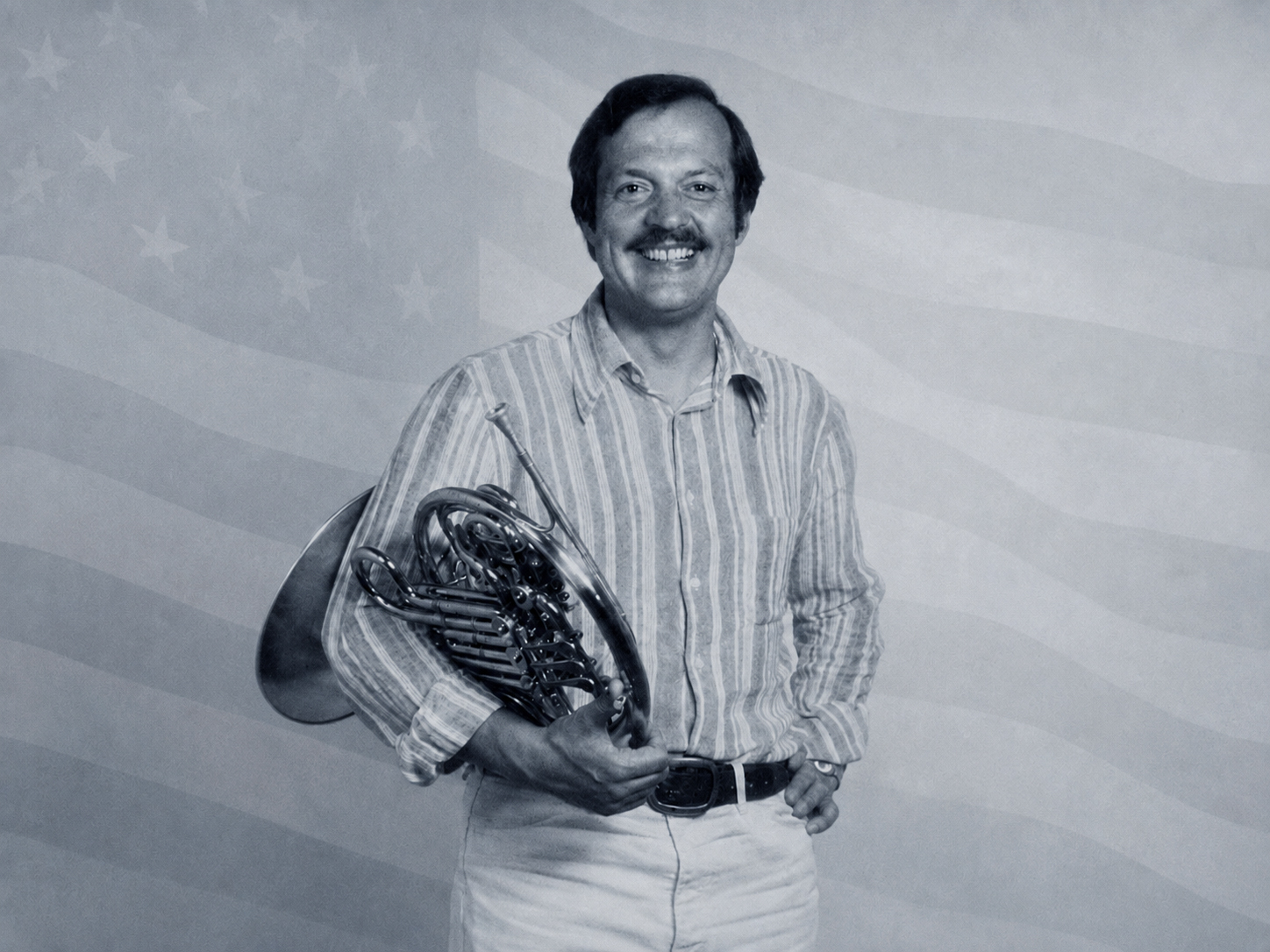
If I speak of the “American way of blowing the horn”, many a horn player will think it an undue exaggeration: those from the East Coast have quite a different way of blowing from those in the West! In a way that is true, but only in a way, because the difference of blowing is comparable with the difference of dialects of one and the same language. Being a foreigner, it was just as difficult for me to distinguish between the various dialects of the American language as it was to distinguish between the various “dialects of American horn playing”.

Philip Farkas’ opinion is that the American style is nothing but the continuation of the good old German school, which was brought over by famous emigrants like Bruno Jaenicke and Anton Horner. Their innumerable pupils established themselves in different parts of the US, continuing their own personal development but, on the whole, remaining true to their master’s instruction. Their main tonal model was the sound of the old Kruspe and Schmidt horns. Then there is Carl Geyer — also an emigrant — who for seventy years made the loveliest horns in Chicago and whose instruments, together with those of Kruspe and Schmidt, are much sought after and highly valued.

As a rule — with few exceptions — all American hornists blow a double horn. And on that double horn almost each one of them plays the F horn as far as g'' (sounding c'') and only from then on the B♭ horn. This technique is used with such consistency that, when playing semiquavers in the middle register, the thumb becomes the main actor, which sometimes impairs the elegance of tone. But, generally speaking, the system makes it possible to obtain a high degree of well-balanced homogeneity of tone.

I highly esteem the Americans’ faithfulness to the double horn, and I do wish that some of the solo hornists (even the low ones!) in our German orchestras would get cured of their high-F-horn neurosis and — at least in the romantic symphonies that live off the large-horn tone — would blow a “real” horn⁴. On the other hand, I would advise the Americans to stop using the double horn for the entire horn literature. Bach’s 1st Brandenburg concerto and similar high parts of Baroque music will always sound too heavy and too clumsy on a Conn, Holton or King, even if all superfluous slides and valve covers are removed (not to speak of the risks one takes). Such parts ought to be blown on a descant horn; therefore, that horn should also be part of the American hornist’s instrumental outfit.

Continue reading

Accede a la edición digital completa.

Brass Bulletin 17, I / 1977 páginas 15–25

Todo el contenido está protegido por derechos de autor © Brass Bulletin 1977–2026

Compartir este artículo

Facebook LinkedIn
Cargando…

Preguntas y respuestas

Cómo funciona la edición digital

¿Qué incluye la edición digital?

La edición digital reúne los artículos ya digitalizados como textos legibles y consultables en línea —no simplemente como escaneos o archivos PDF— junto con sus ilustraciones originales, notas, autoría, información del número y traducciones disponibles. Las sugerencias de artículos relacionados incluyen actualmente solo este material digitalizado.

¿Los artículos digitales son idénticos a los originales?

Conservamos con la mayor fidelidad posible el texto original, el idioma, las ilustraciones, los pies de imagen, las notas y el contexto editorial. La presentación se adapta para facilitar la lectura en línea y pueden corregirse errores evidentes de transcripción o escaneado. El contenido y el carácter del artículo publicado permanecen inalterados.

¿Qué idiomas están disponibles?

Brass Bulletin se publicó en inglés, francés y alemán a lo largo de toda su historia. Las traducciones al italiano y al español se añadieron a partir del número 60. Por este motivo, en los sitios italiano y español los artículos de los números 1 a 59 se muestran en inglés de forma predeterminada.

¿Con qué frecuencia se añaden nuevos artículos?

Se añaden nuevos artículos casi a diario, con aproximadamente un número completo digitalizado cada semana. El ritmo puede variar según el trabajo de preparación, tratamiento de imágenes y revisión editorial necesario.

¿Por qué no están disponibles todos los artículos en formato digital?

La colección completa de Brass Bulletin contiene 1.246 artículos publicados entre 1971 y 2003. El índice completo ya está disponible en línea y permite descubrir todos los artículos de la colección, incluidos aquellos cuyo texto íntegro todavía no ha sido digitalizado.

La digitalización comenzó en febrero de 2026. Cada artículo se prepara cuidadosamente para la lectura en línea, se revisa y se vincula con su número, sus autores, sus temas y sus ilustraciones. Al ritmo actual de digitalización, se prevé que la colección completa esté disponible en línea en febrero de 2028.

¿Por qué algunas referencias mencionan artículos que todavía no están disponibles?

Las referencias de los artículos originales se conservan aunque el material al que remiten aún no haya sido digitalizado. De este modo se mantiene intacto el contexto histórico y editorial. A medida que se incorporen más números a la edición digital, un número creciente de estas referencias conducirá a artículos que podrán leerse en línea.

¿Puedo sugerir un artículo o informar de un error de transcripción?

Sí. Si hay algún artículo que le gustaría especialmente ver digitalizado, o si detecta un posible error de transcripción o algún dato que falta, póngase en contacto con nosotros. Los comentarios de los lectores nos ayudan a mejorar la edición digital y a establecer prioridades útiles dentro del archivo.

¿Cómo puedo apoyar a Brass Bulletin?

Su apoyo ayuda a financiar la preparación, verificación y publicación en línea de la colección completa.

Suscríbase a la Edición Digital

¿Prefiere apoyarnos sin suscribirse?

Haga una donación

¿Cómo avanza la digitalización?

Estamos poniendo Brass Bulletin a disposición de los lectores en línea, artículo por artículo. Pueden leer los artículos recién digitalizados en cuanto estén listos, incluso antes de que se complete un número entero.

Consulten nuestro calendario de digitalización para descubrir las últimas novedades y las fechas estimadas de disponibilidad de los próximos números. Estas estimaciones se basan en nuestro ritmo reciente y pueden cambiar.

Busca en Brass Bulletin.