8 min di lettura
Professor Timofey Dokshitser
Trumpet Virtuoso and Artist from Moscow
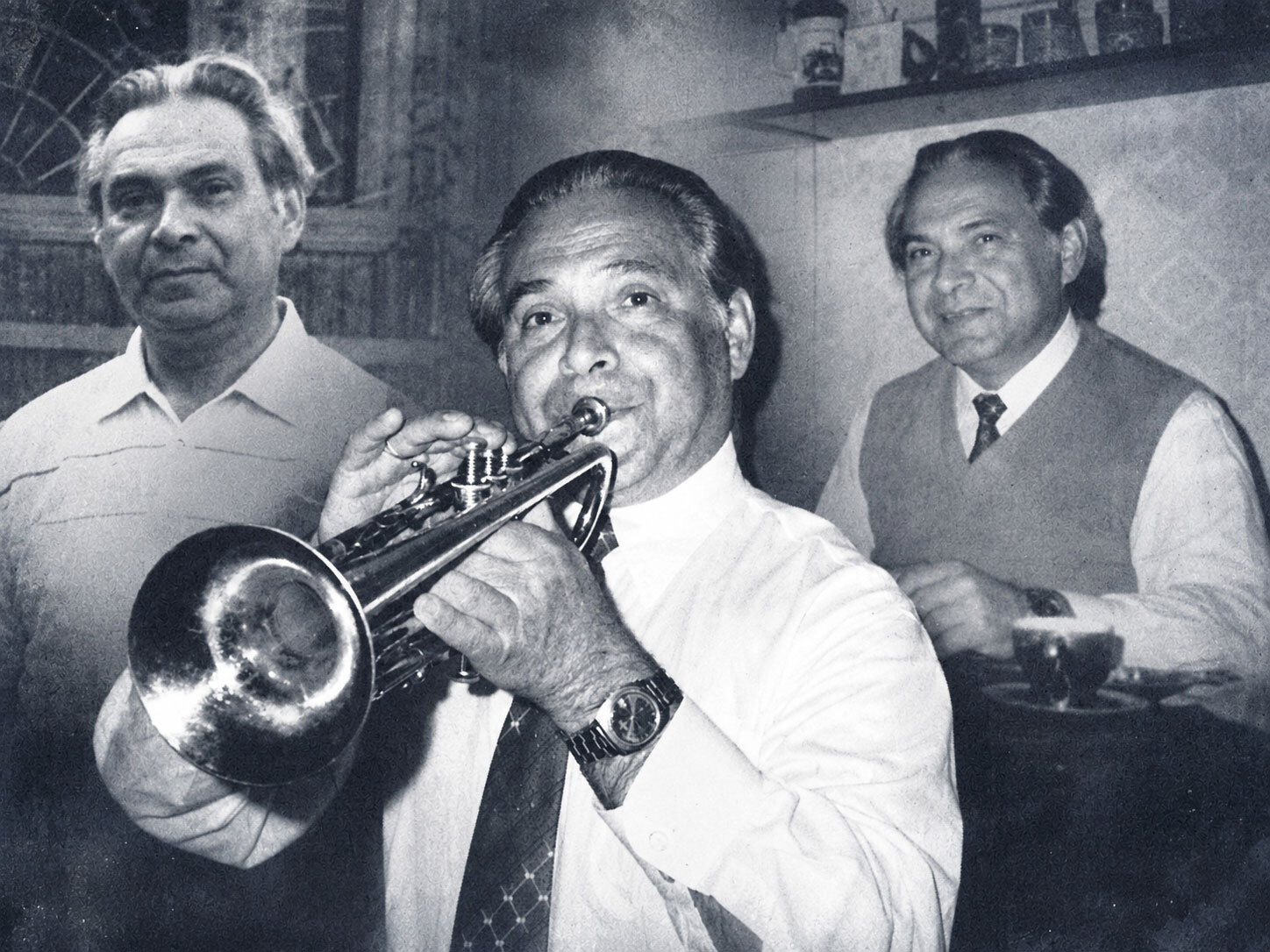
Timofey Dokshitzer
compiled by MARCEL HOLLENSTEIN from interviews between 25th and 30th August 1983.
Professor Timofey Dokshitser, the great trumpet virtuoso from Moscow, no longer needs any introduction. He is known to all trumpeters, or should be. Everyone who is interested in the subject is bound to have got hold of one of his records. But, if you want to hear him live, things become more difficult; then you have to go to Japan, America or, of course, Russia.
All the more reason to be glad of the opportunity to attend a master course with Professor Dokshitser in Dijon (France) in the summer of 1982. Thierry Caens, the young trumpeter from Paris, had succeeded, after prolonged efforts, in engaging the maestro for a seminar in the west.
Prof. Dokshitser’s outstanding, and almost paternal performance as teacher and as soloist with the orchestra was certainly a great experience for all the course participants.
After the course we maintained a lively correspondence. About a year after the seminar in Dijon we agreed on a suitable date for a meeting in Moscow. My account of this friendly and intensive meeting proved illuminating. Our conversations dealt not only with Dokshitser’s wide-ranging activities but also with the trumpet-playing scene in Russia generally.
We began our first serious discussions in the pleasant atmosphere of an apartment where I was warmly greeted by his wife Mona.
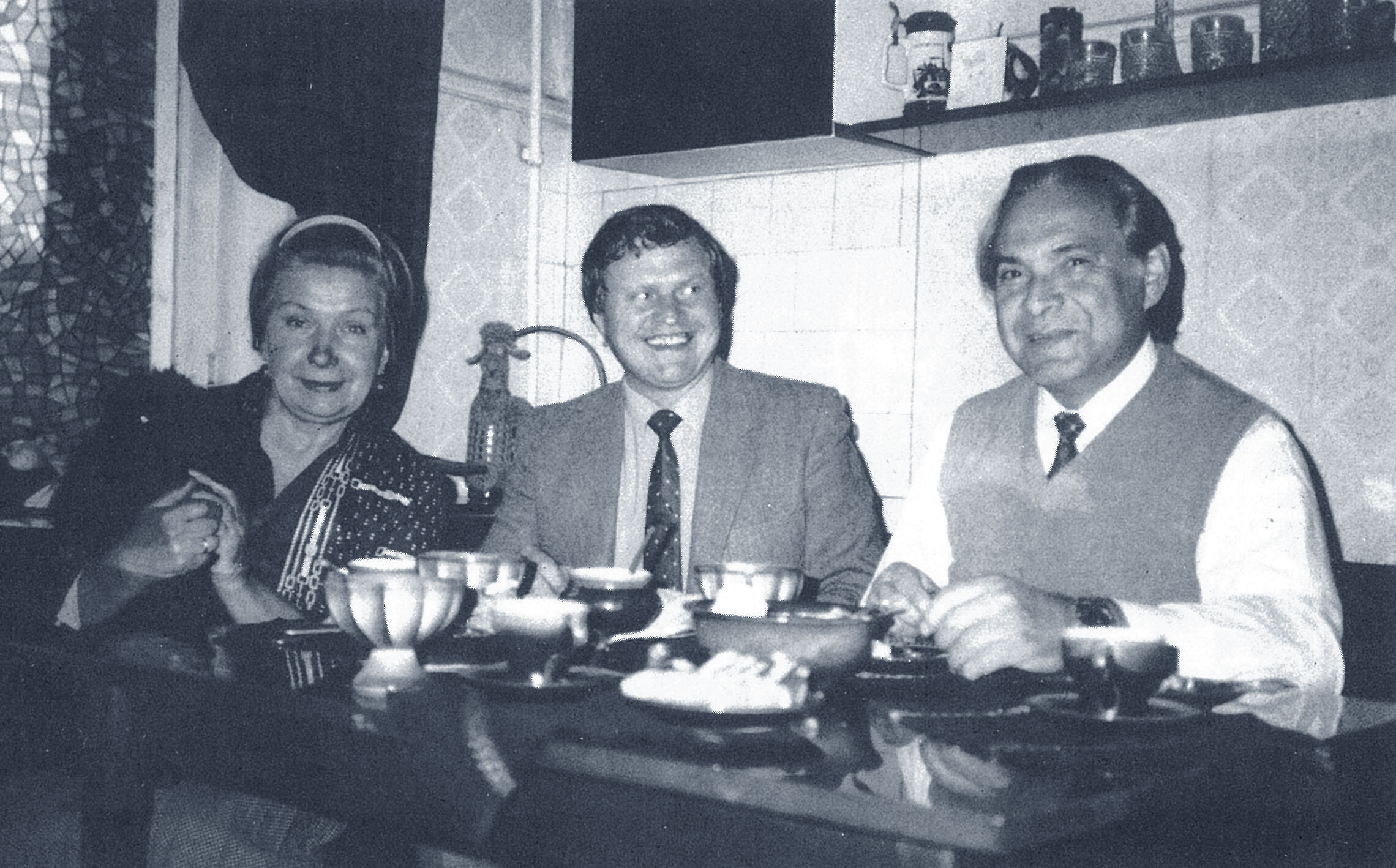
Photo with V. Prokopov and Mona
M.H. - What are the possibilities for a young person who wants to learn the trumpet in Russia?
T.D. - We have music schools spread throughout the country. Children between the ages of seven and ten can enter a music school where they will be trained exclusively by professionals. Instrumental subjects can be continued as far as the lower classes of secondary school. As a final choice there are always private teachers and self study.
M.H. - How does a gifted pupil obtain professional training?
T.D. - Entrance to music college is always by competition, which the candidate must win. These examinations are offered by schools throughout the country. Anyone who considers himself ready may apply.
M.H. - If I understand correctly, in each competition only one pupil will get a study place.
T.D. - No, that’s not quite true. There are also cases where there can be several “winners” in competitions like these.
M.H. - Is there an age limit for these entrance examinations?
T.D. - No, there is not. The pupil’s own ability sets the limit.
M.H. - What teaching material is used in Russia?
T.D. - We have our own good tutors for individual teaching and also for group playing. Those following professional training are generally taught according to the usual western tutors. We have all the well known tutors from America, France and Germany.
M.H. - How long does professional training last?
T.D. - The course lasts five years. Then you receive the diploma stating teacher, symphony-orchestra trumpeter and chamber musician.
M.H. - Are there any other opportunities, a soloist’s diploma, for example?
T.D. - Yes, that opportunity exists, but it is a very special distinction, entered on the diploma later in the case of someone with appropriate talent.
M.H. - Are there exams during the course?
T.D. - Yes, during the year the pupils must play four different programmes in exams. These tests include orchestral material, studies and solos. Only those who pass go ahead to the next semester. I might also mention that everything has to be played by heart.
M.H. - So far we have spoken about training. I am interested to know what the choice of instruments is like.
T.D. - That’s a problem here. We do not have enough instruments. They are distributed something like this: the good players mostly have instruments from France or America; the average ones, instruments from East and West Germany and Czechoslovakia; and the poor players, instruments from Russia (these are mostly our amateur players).
Brass Bulletin 49, I / 1985 pagine 73–79
Tutti i contenuti sono protetti dal diritto d’autore © Brass Bulletin 1985–2026