Ofrezca Brass Bulletin en su universidad, conservatorio o biblioteca Descubra el acceso institucional

10 min de lectura

Use of a spectral model in developing concepts of tuba timbre
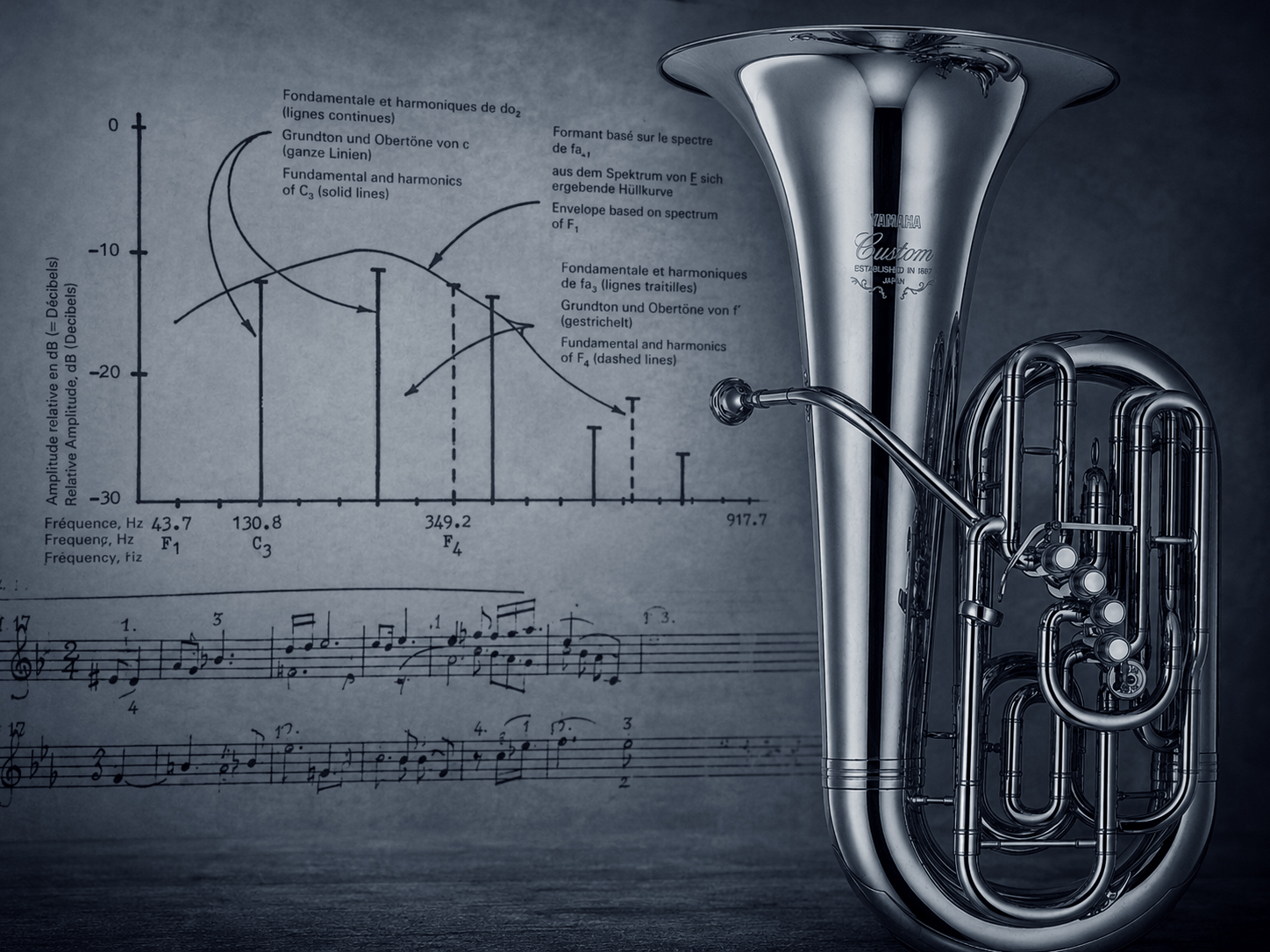
Can great tuba sound be measured? This groundbreaking study turns timbre into data — offering a visual model that could transform how players hear and shape their sound.
Use of a spectral model in developing concepts of tuba timbre

PREFACE Daniel D. Stancil is presently a graduate student at Massachusetts Institute of Technology working towards a Master of Science degree in Electrical Engineering. His undergraduate degree in Electrical Engineering was received from Tennessee Technological University. Mr. Stancil continued his musical education at Tenn Tech through private studies and playing euphonium (tenor tuba) for five years in the Tenn Tech Tuba Ensemble. It might be noted that Mr. Stancil is one of the very few nonmusic majors allowed to fully participate in the highly acclaimed Tech ensemble.

The brevity of the following report does not indicate the tremendous amount of work necessary to reach the conclusions contained therein. For example, the reader will read a simple sentence which says, "The waveforms were then digitized... and analyzed by a digital computer". This sentence represents a stack of computer print-out paper several inches thick! Mr. Stancil has spared us (musicians) the background and tried to present the picture. Perhaps the technical aspects of his research will be published in one of the scientific journals in the future.

This report is possibly a little premature as regards the practical applications possible. It may take several years to adequately judge the validity of these findings. In order to share this information as soon as possible, a decision was made to release this preliminary report.

From a practical point of view, one (the musician) must ask, "Will it help me be a better tuba player?!" If, as is the case with numerous (unfortunately perhaps most!) dissertations and theses, the work is merely a theoretical exercise with little or no actual practical application, then the value to the musician is nil.

As a teacher, one is constantly encountering students who lack a proper concept of how the tuba should sound. This does not relate so much to concepts of "dark" or "bright" (although it could — i.e.: "bright" being a harmonically "rich" sound, complex with partials versus "dark" being a very pure and simple sound lacking complexity of partials) but to problems subjectively described as "thin", "pinched", "airy" — these are problems that indicate a basic shift in timbre caused by physically forcing a sound out of the instrument based on "wrong" concepts.

Some students entering the university have "played" the tuba for five or six years. No one ever bothered to tell them that their basic sound was terrible because they were "stuck" in the back of the band with literature providing no solo opportunities. Or even worse, the director did not have sufficient knowledge of a proper tuba sound to instruct the student otherwise. At any rate, regardless of the cause, students do present themselves thinking that they produce a great sound when in fact they do not.

Continue reading

Accede a la edición digital completa.

Brass Bulletin 19, III / 1977 páginas 33–43

Todo el contenido está protegido por derechos de autor © Brass Bulletin 1977–2026

Compartir este artículo

Facebook LinkedIn
Cargando…

Preguntas y respuestas

Cómo funciona la edición digital

¿Qué incluye la edición digital?

La edición digital reúne los artículos ya digitalizados como textos legibles y consultables en línea —no simplemente como escaneos o archivos PDF— junto con sus ilustraciones originales, notas, autoría, información del número y traducciones disponibles. Las sugerencias de artículos relacionados incluyen actualmente solo este material digitalizado.

¿Los artículos digitales son idénticos a los originales?

Conservamos con la mayor fidelidad posible el texto original, el idioma, las ilustraciones, los pies de imagen, las notas y el contexto editorial. La presentación se adapta para facilitar la lectura en línea y pueden corregirse errores evidentes de transcripción o escaneado. El contenido y el carácter del artículo publicado permanecen inalterados.

¿Qué idiomas están disponibles?

Brass Bulletin se publicó en inglés, francés y alemán a lo largo de toda su historia. Las traducciones al italiano y al español se añadieron a partir del número 60. Por este motivo, en los sitios italiano y español los artículos de los números 1 a 59 se muestran en inglés de forma predeterminada.

¿Con qué frecuencia se añaden nuevos artículos?

Se añaden nuevos artículos casi a diario, con aproximadamente un número completo digitalizado cada semana. El ritmo puede variar según el trabajo de preparación, tratamiento de imágenes y revisión editorial necesario.

¿Por qué no están disponibles todos los artículos en formato digital?

La colección completa de Brass Bulletin contiene 1.246 artículos publicados entre 1971 y 2003. El índice completo ya está disponible en línea y permite descubrir todos los artículos de la colección, incluidos aquellos cuyo texto íntegro todavía no ha sido digitalizado.

La digitalización comenzó en febrero de 2026. Cada artículo se prepara cuidadosamente para la lectura en línea, se revisa y se vincula con su número, sus autores, sus temas y sus ilustraciones. Al ritmo actual de digitalización, se prevé que la colección completa esté disponible en línea en febrero de 2028.

¿Por qué algunas referencias mencionan artículos que todavía no están disponibles?

Las referencias de los artículos originales se conservan aunque el material al que remiten aún no haya sido digitalizado. De este modo se mantiene intacto el contexto histórico y editorial. A medida que se incorporen más números a la edición digital, un número creciente de estas referencias conducirá a artículos que podrán leerse en línea.

¿Puedo sugerir un artículo o informar de un error de transcripción?

Sí. Si hay algún artículo que le gustaría especialmente ver digitalizado, o si detecta un posible error de transcripción o algún dato que falta, póngase en contacto con nosotros. Los comentarios de los lectores nos ayudan a mejorar la edición digital y a establecer prioridades útiles dentro del archivo.

¿Cómo puedo apoyar a Brass Bulletin?

Su apoyo ayuda a financiar la preparación, verificación y publicación en línea de la colección completa.

Suscríbase a la Edición Digital

¿Prefiere apoyarnos sin suscribirse?

Haga una donación

¿Cómo avanza la digitalización?

Estamos poniendo Brass Bulletin a disposición de los lectores en línea, artículo por artículo. Pueden leer los artículos recién digitalizados en cuanto estén listos, incluso antes de que se complete un número entero.

Consulten nuestro calendario de digitalización para descubrir las últimas novedades y las fechas estimadas de disponibilidad de los próximos números. Estas estimaciones se basan en nuestro ritmo reciente y pueden cambiar.

Busca en Brass Bulletin.