Rendete Brass Bulletin disponibile nella vostra università, nel vostro conservatorio o nella vostra biblioteca Scoprite l’accesso istituzionale

2 min di lettura

Thoughts on the Bass Trombone

Thoughts on the Bass Trombone

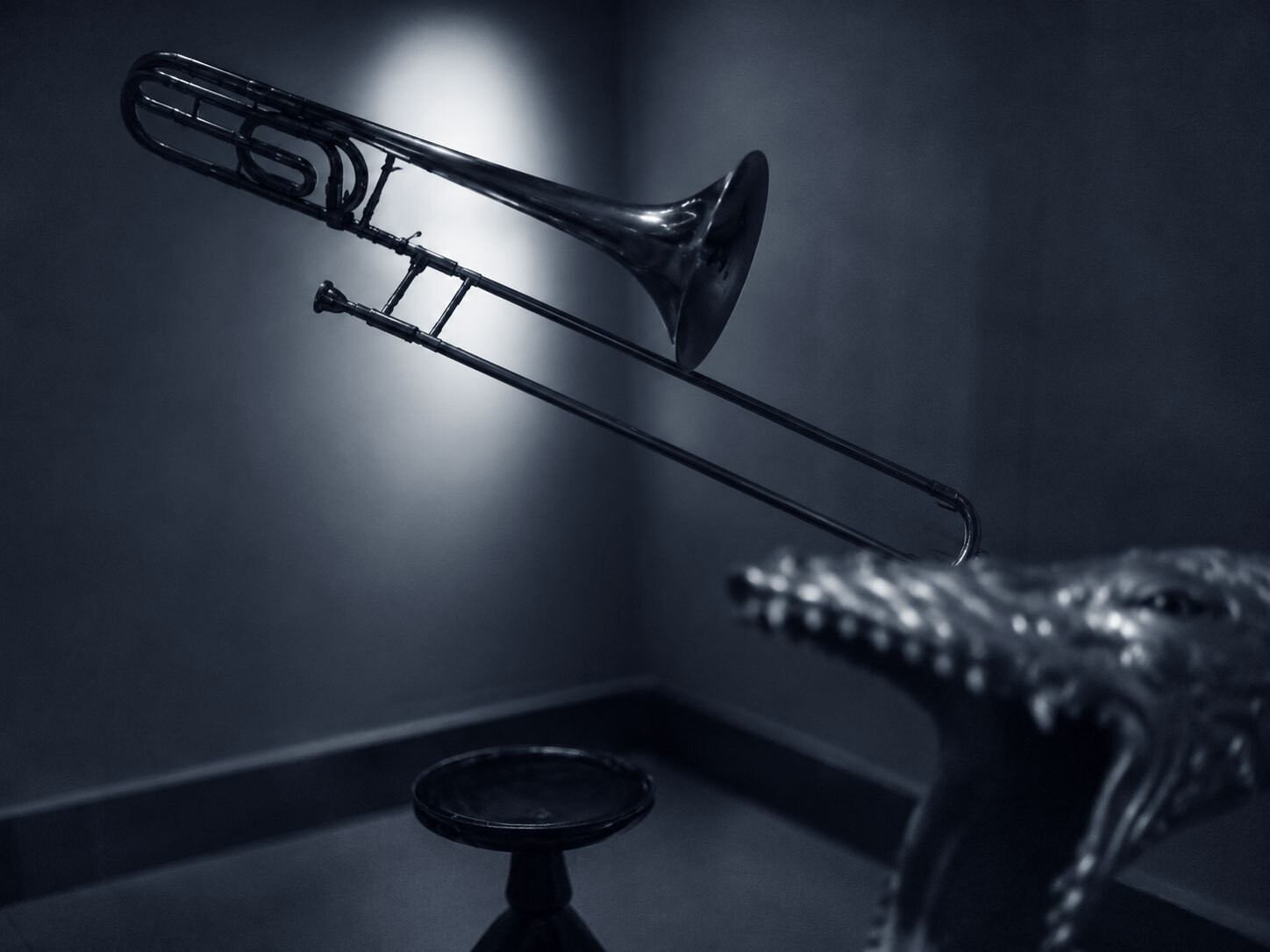
Formerly the bass trombone was fundamentally distinguished from the tenor by its basic pitch: E♭, F or G according to the period and the country. Its sound was therefore quite distinct as the player was playing on higher partials. Nowadays the bass is played in the same way as the tenor (generally the rotary valves are only used in the low register). The difference in sound is due entirely to the use of a deeper mouthpiece.

The modern instrument is distinguished by its bore (14.3 mm, 0.563″). But, since this criterion has evolved with time, it can hardly be retained as a definition; the tenors of today are the basses of yesterday. Furthermore there are tenors of several different bores in existence today and they are all called tenors. “What about the valves?” you may ask. But there are single-rotor bass trombones just like B♭ and F tenors and even a double-rotor alto (Thein)! The modern bass is therefore nothing more than a large-bore tenor and hardly seems to deserve the name!

At present the instrument seems to be searching for its proper form, for neither the rotor systems nor their pitches are standard. The latest independent-rotor (“in-line”) model (B♭/G♭/F/D or B♭/G/F/E♭) does not seem to have won universal approval. Some players prefer to put a D (or E♭) valve on the G (G♭) side; others, retaining the advantage of the second rotor in the major, prefer non-independent rotors (special model). The old double-rotor is still available (B♭/F/E, E♭, D or D♭ with the thumb) and of course the single rotor (F-E). The modern bass trombone thus has several variants, which must create some confusion for the composer!

There is also a problem with the music of the past. The classic trio (alto-tenor-bass) has been standardised — at least in France — to three tenors. Today the alto is being played again and its unique sound recognised. Why not reintroduce the F bass? (It is used in some countries.) As soon as there are four trombones a solid bass is necessary. (In France the tuba is often still used in certain works in defiance of the orchestration.) There are currently available bass/contrabass trombones in F (Thein, Alexander) with double rotors (F/D or E♭/B♭/A♭ or, alternatively, F/D/C/B♭), with or without a slide handle (six or seven positions in F), and valve bass trombones in F (Miraphone, Thein). These instruments, commonly known as contrabass trombones, permit faithful performances benefiting from modern manufacturing standards. In his own day, indeed, each composer had at his disposal a great variety of instruments which we have now abandoned because manufacturing has failed to keep up but also in order to simplify things (what a word to use when we are talking about art!) and which we are rediscovering with advantage today. Thus the F bass/contrabass is perfect for the fourth part in Wagner, Verdi, Puccini, Richard Strauss and Berg, with an ordinary bass trombone on third. Remember that these parts are marked contrabass trombone, cimbasso, bass trombone or just trombone 4. Some of them, too difficult to play with the slide, can be played on the valve bass trombone in F (Othello, Falstaff). But just think what composers like Debussy or Ravel might have written for these instruments… and did Berlioz not regret the passing of the bass trombone in France?

So we cannot define a bass trombone simply as something that can play low E♭, nor low B (only a straight tenor is incapable of this). I think it is silly to try and create a black-and-white distinction between tenor and bass. On the contrary I think we should preserve all the shades of grey in between, as a painter uses every shade of a colour. We should beware of making hasty judgements on instruments described as “special” (the ear has difficulty in accepting sounds it is not used to). Let us be objective and just think about the music.

In conclusion, let us hope that trombones preserve their range and variety and are not further reduced in the name of some simplification incompatible with art. And we bass trombonists should take advantage of our specialised knowledge to adapt our equipment to the music we play, maintaining a balance between the parts. Let us also appeal to tuba players to take an interest in the valve bass trombone and also to the double-slide contrabass trombone, which seem to be intended for them.

P.S. I would be happy to correspond on this subject.

Literature

Bevan Cliff, On the cimbasso trail, in Sounding Brass, vol. VIII n.II.

Flandrin Gaston, Le trombone, in Encyclopédie de la Musique Lavignac.

Flor Gloria, The contrabass trombone, in Woodwind World, Brass and Percussion, May-June 1978.

Lewy Rudolf, Trombone basso, in Journal ITA, vol. V.

Streeter Thomas W., The historical and musical aspects of the 19th century bass trombone, in Journaux ITA, vol. III, IV, V.

Thein Heinrich, Die Kontrabassposaune, in BRASS BULLETIN n.22.

Catalogues Miraphone, Thein, Alexander.

Brass Bulletin 39, III / 1982 pagine 49–51

Tutti i contenuti sono protetti dal diritto d’autore © Brass Bulletin 1982–2026

Condividi questo articolo

Facebook LinkedIn
Loading…

Domande e risposte

Come funziona l’edizione digitale

Che cosa comprende l’edizione digitale?

L’edizione digitale riunisce gli articoli già digitalizzati sotto forma di testi leggibili e ricercabili online — non semplicemente come scansioni o file PDF — insieme alle illustrazioni originali, alle note, agli autori, alle informazioni sul numero della rivista e alle traduzioni disponibili. I suggerimenti di articoli correlati comprendono attualmente solo questo materiale digitalizzato.

Gli articoli digitali sono identici agli originali?

Conserviamo il più fedelmente possibile il testo originale, la lingua, le illustrazioni, le didascalie, le note e il contesto editoriale. La presentazione viene adattata per una lettura confortevole online e gli evidenti errori di trascrizione o scansione possono essere corretti. Il contenuto e il carattere dell’articolo pubblicato rimangono invariati.

Quali lingue sono disponibili?

Brass Bulletin è stato pubblicato in inglese, francese e tedesco nel corso di tutta la sua storia. Le traduzioni italiane e spagnole sono state aggiunte a partire dal numero 60. Sui siti italiano e spagnolo, gli articoli dei numeri da 1 a 59 vengono quindi mostrati in inglese per impostazione predefinita.

Con quale frequenza vengono aggiunti nuovi articoli?

Nuovi articoli vengono aggiunti quasi ogni giorno, con circa un numero completo digitalizzato ogni settimana. Il ritmo può variare in base al lavoro di preparazione, elaborazione delle immagini e verifica editoriale necessario.

Perché non tutti gli articoli sono disponibili in formato digitale?

La collezione completa di Brass Bulletin comprende 1.246 articoli pubblicati tra il 1971 e il 2003. L’indice completo è già disponibile online e consente di scoprire tutti gli articoli della collezione, compresi quelli il cui testo integrale non è ancora stato digitalizzato.

La digitalizzazione è iniziata nel febbraio 2026. Ogni articolo viene accuratamente preparato per la lettura online, verificato e collegato al relativo numero, agli autori, agli argomenti e alle illustrazioni. Al ritmo attuale di digitalizzazione, la collezione completa dovrebbe essere disponibile online entro febbraio 2028.

Perché alcuni riferimenti citano articoli che non sono ancora disponibili?

I riferimenti presenti negli articoli originali vengono conservati anche quando il materiale a cui rimandano non è ancora stato digitalizzato. In questo modo si preserva l’integrità storica ed editoriale della rivista. Man mano che nuovi numeri vengono aggiunti all’edizione digitale, un numero crescente di questi riferimenti condurrà ad articoli leggibili online.

Posso suggerire un articolo o segnalare un errore di trascrizione?

Sì. Se desiderate che un determinato articolo venga digitalizzato, oppure se notate un possibile errore di trascrizione o un’informazione mancante, contattateci. I riscontri dei lettori ci aiutano a migliorare l’edizione digitale e a stabilire priorità utili all’interno dell’archivio.

Come posso sostenere Brass Bulletin?

Il vostro sostegno contribuisce a finanziare la preparazione, la verifica e la pubblicazione online dell’intera collezione.

Abbonati all’Edizione digitale

Preferite sostenerci senza abbonarvi?

Fate una donazione

Come procede la digitalizzazione?

Stiamo rendendo Brass Bulletin disponibile online gradualmente, articolo per articolo. Potete leggere gli articoli appena digitalizzati non appena sono pronti, anche prima che un intero numero sia completato.

Consultate il nostro calendario di digitalizzazione per scoprire le ultime aggiunte e le date di disponibilità stimate dei prossimi numeri. Le stime si basano sul nostro ritmo recente e possono cambiare.

Cerca in Brass Bulletin.