Las traducciones originales al español de Brass Bulletin comienzan con el n.º 60.

3 min de lectura

On the Cornett and Serpent

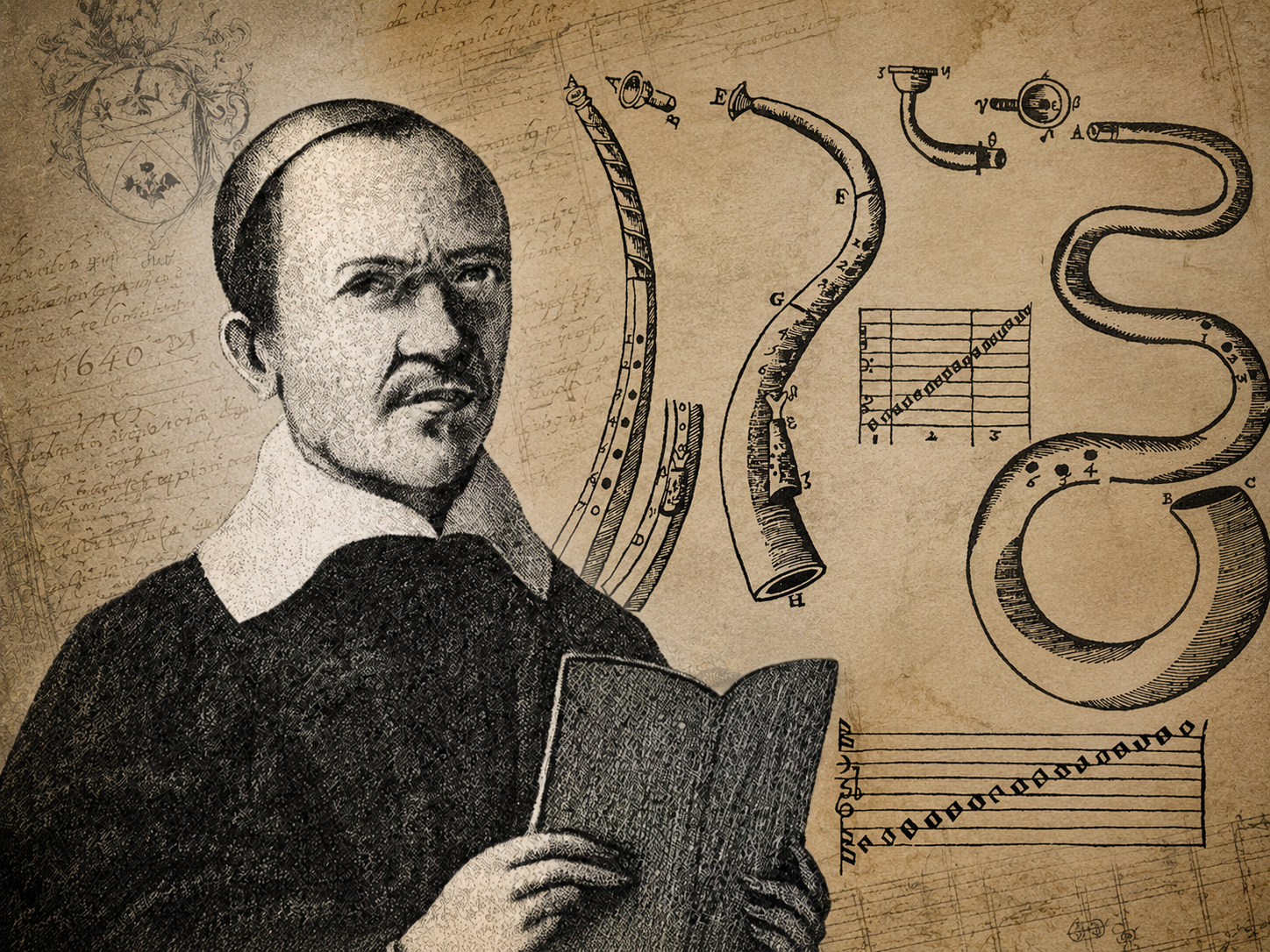
From Pierre Trichet’s Traité des Instruments de Musique (c. 1640)

Written around 1640, Pierre Trichet’s Traité des Instruments de Musique preserves a firsthand account of the cornett and serpent in musical life and construction.
On the Cornett and Serpent

In his commentaries on Philostratus’ Amphion Vigenere explains obliqua tibia (which is to be found in Pliny) as a cornett; but later, in the commentaries on Hyacinthus, he changes his mind and calls it a German flute. He says Midas invented the German flute, which the Italians call transverse, in Phrygia, in imitation of the Roman obliqua tibia. This explanation is less to my liking than the first, since all that is transverse is not oblique. It is more probable that the cornett is the flute called by the Greeks elymos, photinx, plagios or plagiaulos and by the Romans, in imitation of them, tibia curva, obliqua, phrygia, berecynthia or cornu berecyntium.

I think that I have said sufficient to clarify these difficulties. I must now pass on and say something about the modern use of the cornett, which is in high fashion today, being used both when kings and great lords enter fine towns and also at public celebrations. It is accepted not only amongst the laity but also among ecclesiastics in many churches¹ both in France and elsewhere, where principally the treble and bass are used to make music at holy worship. Loyer, whom I have already quoted, says that the treble cornett, combined with the lyre and with voices, has been accepted in some Italian churches but that cannot be since, as he says, the fashions appropriate there are those which prompt devotion. If the ancient philosophers, even before the time of Seneca, wove the playing of flutes into the concerts of music in various parts, which they held, why should the Christians not use cornetts? Do you not see, says Seneca, of how many voices the chorus of philosophers was composed? Yet out of all these sounds only one results: here is heard a high voice, here a low, and here a medium; men and women sing together, flutes are introduced, singly the voices are hidden, and generally they all appear.

I wish to say here that, beside the ordinary shape of cornetts, which is curved, they sometimes make them also in another way, all straight and all in one piece, unlike the others which are made out of two pieces of good dry wood covered with leather, which is more accepted and more in the fashion.

Among the others the treble is a foot and a half in length and has six or seven holes. The reason why it is used more in concerts of vocal music than the others is that it is more striking and more charming when it rises above the other parts like a brilliant light shining in the darkness, provided it has encountered some excellent person to take charge of it.

Continue reading

Accede a la edición digital completa.

Brass Bulletin 46, II / 1984 páginas 12–15

Todo el contenido está protegido por derechos de autor © Brass Bulletin 1984–2026

Compartir este artículo

Facebook LinkedIn
Cargando…

Preguntas y respuestas

Cómo funciona la edición digital

¿Qué incluye la edición digital?

La edición digital reúne los artículos ya digitalizados como textos legibles y consultables en línea —no simplemente como escaneos o archivos PDF— junto con sus ilustraciones originales, notas, autoría, información del número y traducciones disponibles. Las sugerencias de artículos relacionados incluyen actualmente solo este material digitalizado.

¿Los artículos digitales son idénticos a los originales?

Conservamos con la mayor fidelidad posible el texto original, el idioma, las ilustraciones, los pies de imagen, las notas y el contexto editorial. La presentación se adapta para facilitar la lectura en línea y pueden corregirse errores evidentes de transcripción o escaneado. El contenido y el carácter del artículo publicado permanecen inalterados.

¿Qué idiomas están disponibles?

Brass Bulletin se publicó en inglés, francés y alemán a lo largo de toda su historia. Las traducciones al italiano y al español se añadieron a partir del número 60. Por este motivo, en los sitios italiano y español los artículos de los números 1 a 59 se muestran en inglés de forma predeterminada.

¿Con qué frecuencia se añaden nuevos artículos?

Se añaden nuevos artículos casi a diario, con aproximadamente un número completo digitalizado cada semana. El ritmo puede variar según el trabajo de preparación, tratamiento de imágenes y revisión editorial necesario.

¿Por qué no están disponibles todos los artículos en formato digital?

La colección completa de Brass Bulletin contiene 1.246 artículos publicados entre 1971 y 2003. El índice completo ya está disponible en línea y permite descubrir todos los artículos de la colección, incluidos aquellos cuyo texto íntegro todavía no ha sido digitalizado.

La digitalización comenzó en febrero de 2026. Cada artículo se prepara cuidadosamente para la lectura en línea, se revisa y se vincula con su número, sus autores, sus temas y sus ilustraciones. Al ritmo actual de digitalización, se prevé que la colección completa esté disponible en línea en febrero de 2028.

¿Por qué algunas referencias mencionan artículos que todavía no están disponibles?

Las referencias de los artículos originales se conservan aunque el material al que remiten aún no haya sido digitalizado. De este modo se mantiene intacto el contexto histórico y editorial. A medida que se incorporen más números a la edición digital, un número creciente de estas referencias conducirá a artículos que podrán leerse en línea.

¿Puedo sugerir un artículo o informar de un error de transcripción?

Sí. Si hay algún artículo que le gustaría especialmente ver digitalizado, o si detecta un posible error de transcripción o algún dato que falta, póngase en contacto con nosotros. Los comentarios de los lectores nos ayudan a mejorar la edición digital y a establecer prioridades útiles dentro del archivo.

¿Cómo puedo apoyar a Brass Bulletin?

Su apoyo ayuda a financiar la preparación, verificación y publicación en línea de la colección completa.

Suscríbase a la Edición Digital

¿Prefiere apoyarnos sin suscribirse?

Haga una donación

Busca en Brass Bulletin.