On the Cornett and Serpent
From Pierre Trichet’s Traité des Instruments de Musique (c. 1640)
Por Pierre Trichet
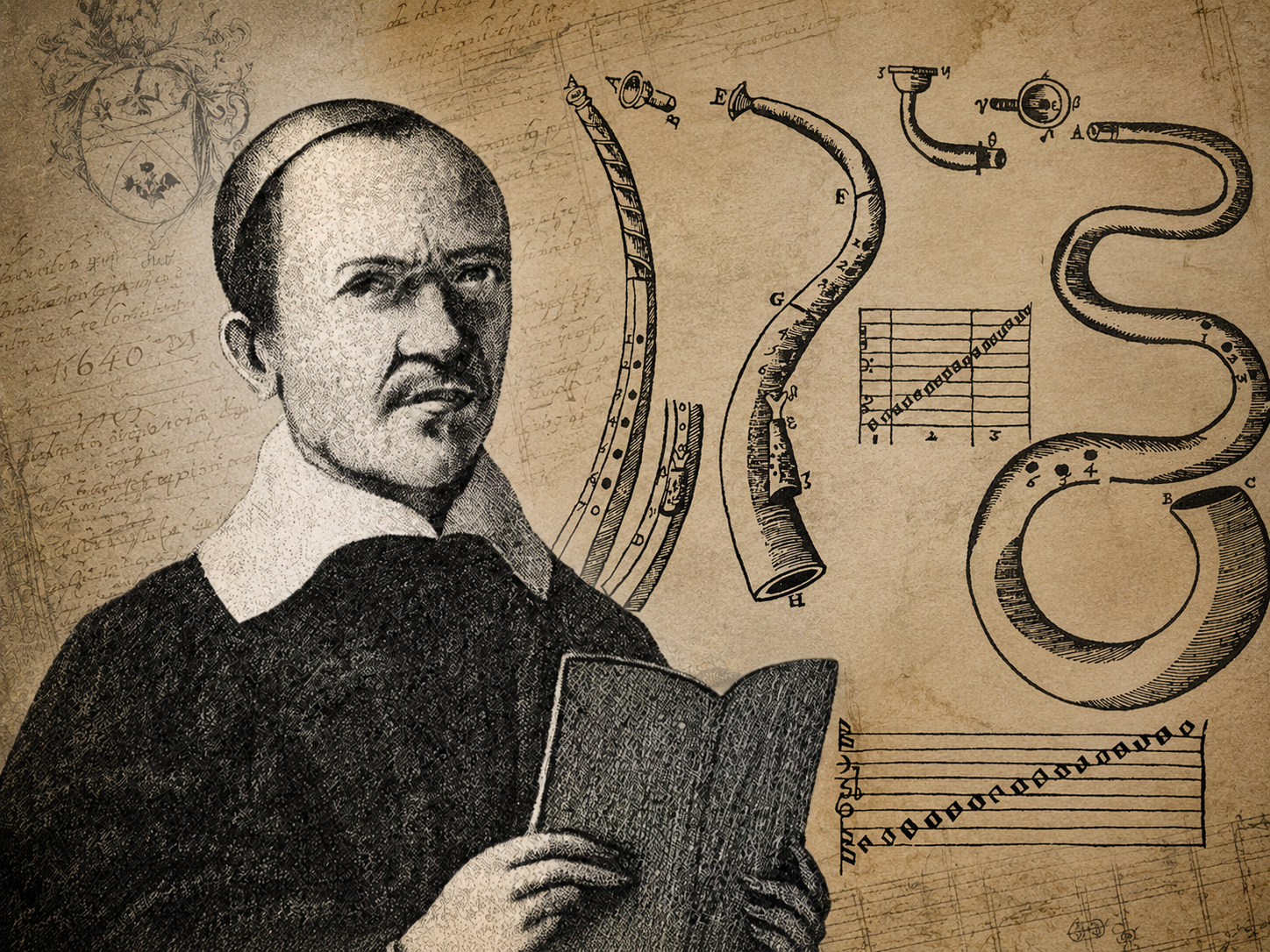
In his commentaries on Philostratus’ Amphion Vigenere explains obliqua tibia (which is to be found in Pliny) as a cornett; but later, in the commentaries on Hyacinthus, he changes his mind and calls it a German flute. He says Midas invented the German flute, which the Italians call transverse, in Phrygia, in imitation of the Roman obliqua tibia. This explanation is less to my liking than the first, since all that is transverse is not oblique. It is more probable that the cornett is the flute called by the Greeks elymos, photinx, plagios or plagiaulos and by the Romans, in imitation of them, tibia curva, obliqua, phrygia, berecynthia or cornu berecyntium.
I think that I have said sufficient to clarify these difficulties. I must now pass on and say something about the modern use of the cornett, which is in high fashion today, being used both when kings and great lords enter fine towns and also at public celebrations. It is accepted not only amongst the laity but also among ecclesiastics in many churches¹ both in France and elsewhere, where principally the treble and bass are used to make music at holy worship. Loyer, whom I have already quoted, says that the treble cornett, combined with the lyre and with voices, has been accepted in some Italian churches but that cannot be since, as he says, the fashions appropriate there are those which prompt devotion. If the ancient philosophers, even before the time of Seneca, wove the playing of flutes into the concerts of music in various parts, which they held, why should the Christians not use cornetts? Do you not see, says Seneca, of how many voices the chorus of philosophers was composed? Yet out of all these sounds only one results: here is heard a high voice, here a low, and here a medium; men and women sing together, flutes are introduced, singly the voices are hidden, and generally they all appear.
I wish to say here that, beside the ordinary shape of cornetts, which is curved, they sometimes make them also in another way, all straight and all in one piece, unlike the others which are made out of two pieces of good dry wood covered with leather, which is more accepted and more in the fashion.
Among the others the treble is a foot and a half in length and has six or seven holes. The reason why it is used more in concerts of vocal music than the others is that it is more striking and more charming when it rises above the other parts like a brilliant light shining in the darkness, provided it has encountered some excellent person to take charge of it.
Continue reading
Access the full Brass Bulletin Digital Archive. CHF 5.00 / month • Cancel anytime
Todo el contenido está protegido por derechos de autor © Brass Bulletin 1984–2026