Rendete Brass Bulletin disponibile nella vostra università, nel vostro conservatorio o nella vostra biblioteca Scoprite l’accesso istituzionale

3 min di lettura

The Horn is my instrument

The Horn is my instrument

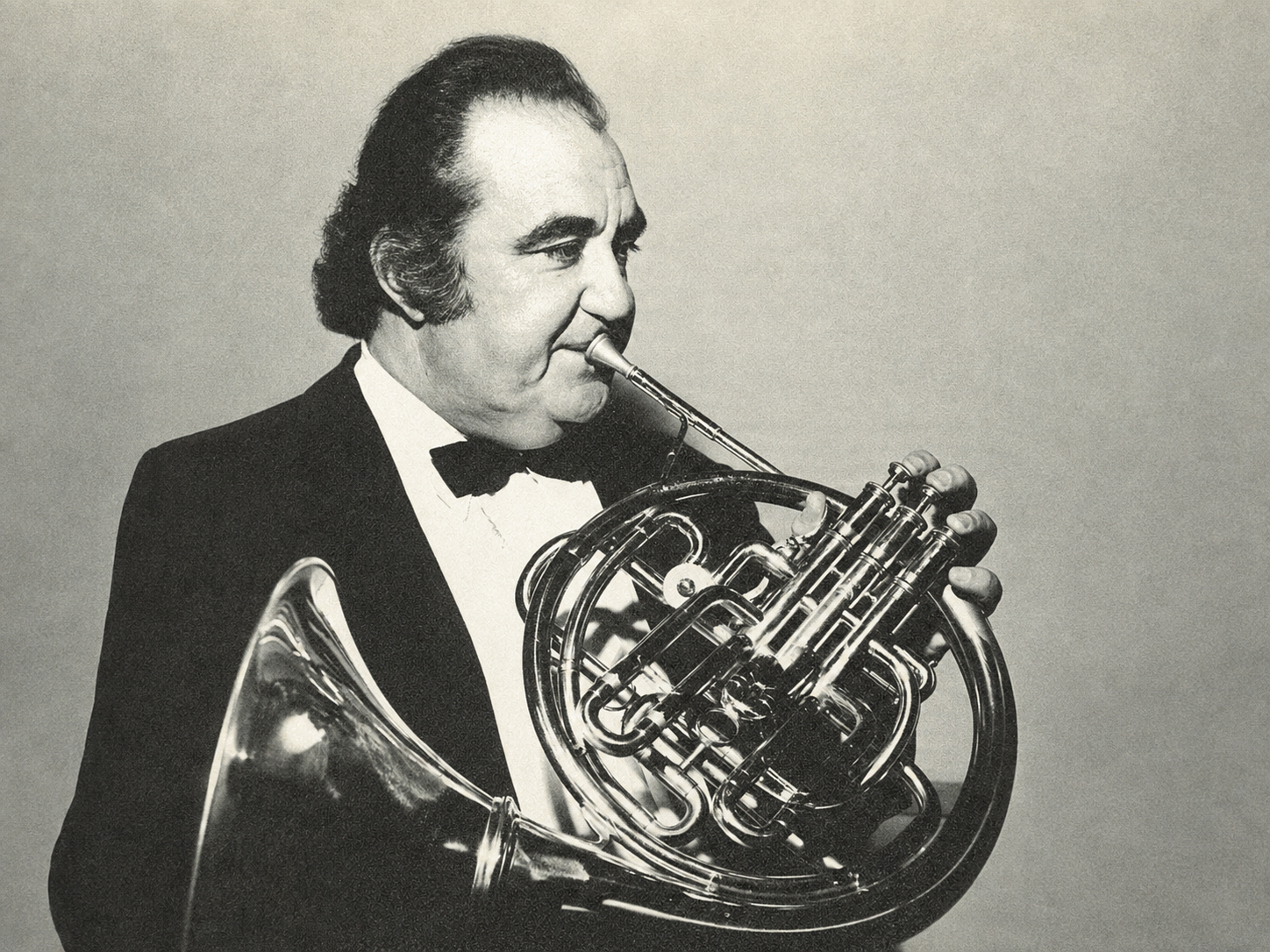
George Barboteu

Ever since childhood I was surrounded by music : there was singing, there were rehearsals, lessons and courses as far back as I can remember. Still a small boy, I was taught to play the horn by my father, then solo horn at the Opéra, later on in the orchestra of Radio Algiers, where he also taught at the conservatory. At the early age of twelve I won my First Prize ! From then on I played in orchestras, where professional musicians (even boys !) were much in demand, since most musicians at that time were more or less amateurs.

One of the great joys in my life of those years was the engagement to play in the orchestra of the Grand Casino in Biarritz for two seasons (1938 and 1939) together with my father ! From there I had the opportunity to explore France and its capital and to hear excellent soloists, orchestras and conductors. Just about to become the pupil of Mr. Devémy at the Conservatoire national supérieur in Paris, I was alas forced to return to Algiers by the outbreak of the war. I became second horn at the radio orchestra, where my father generously let me play the solo parts, so that after three more years I could take his place officially.

I then decided to enlarge my knowledge of music and studied harmony, counterpoint and fugue. Also I began playing double bass, which enabled me to find my way into jazz music, an exciting experience, especially rhythmically. I made musical arrangements and started composing, which still is one of my most cherished hobbies : it is fascinating to discover and make use of the innumerable possibilities my instrument, the Horn, offers me!

In 1948 I was at last able to go to Paris and to enter the ORTF orchestra, with which I made my first concert tours in Canada and the US, under the baton of Charles Munch. Later on it was Europe and its festivals with the Orchestre de la Société des Concerts du Conservatoire. And finally in 1950 my great wish to become a pupil at the Paris Conservatoire National Supérieur was fulfilled and I won my Prix d'Honneur in the same year, followed next year by the (unanimous) First Prize at the international competition of music in Geneva. It is here, after hearing the different styles of playing the horn, that I realized how imminent it was for us hornists to find a synthesis of the different methods, for the benefit of our own technique and interpretation.

In France at the time it was the great fashion to play « vibrato », so that when we heard f.i. German and Austrian hornists, who had no continuous vibrato, we thought their way of playing rather curious ! It is the great hornist and teacher Edmond Leloir, Geneva, who helped me to face and solve this problem and who made me see that to find the synthesis we, French hornists, had to break with the vibrato habit, as a solution that is too artificial and too simple. It is really the English with Denis Brain as their leader, who were the first to find a synthesis, combining their own style with the best of the French and German method.

For recording it became indispensable to have the full and round tone that was internationally recognized, yes, it even became a « must » to own a German valve horn !

In spite of the excellent qualities of that horn and its great success in France, I still am convinced that it is not so much the make of the horn that matters as the way one plays it. I myself have always played a French instrument, as well in concerts as for recording, as well as a soloist as in orchestras or smaller groups, as well in classical as in « light » music. I have made recordings with Duke Ellington ! It is the hornist's special luck that he can play any kind of music, from baroque to avant-garde, from folksong to pop, without having to change his style or technique and even if specialized in one kind, he can at any time switch over to another.

As a professor at the conservatory in Paris and a member of the Ars Nova group, I have the opportunity to meet many great artists and teachers of all countries and feel that an important change is taking place in the brass world : with the help of contemporary music the brass player rises from group player to soloist and his instrument becomes what it is entitled to be : a solo instrument ! Is it not true that the brass instrument is the only one whose tone and deeply moving expression can be compared with the human voice ?

Brass Bulletin 4, I / 1973 pagine 13–19

Tutti i contenuti sono protetti dal diritto d’autore © Brass Bulletin 1973–2026

Condividi questo articolo

Facebook LinkedIn
Loading…

Domande e risposte

Come funziona l’edizione digitale

Che cosa comprende l’edizione digitale?

L’edizione digitale riunisce gli articoli già digitalizzati sotto forma di testi leggibili e ricercabili online — non semplicemente come scansioni o file PDF — insieme alle illustrazioni originali, alle note, agli autori, alle informazioni sul numero della rivista e alle traduzioni disponibili. I suggerimenti di articoli correlati comprendono attualmente solo questo materiale digitalizzato.

Gli articoli digitali sono identici agli originali?

Conserviamo il più fedelmente possibile il testo originale, la lingua, le illustrazioni, le didascalie, le note e il contesto editoriale. La presentazione viene adattata per una lettura confortevole online e gli evidenti errori di trascrizione o scansione possono essere corretti. Il contenuto e il carattere dell’articolo pubblicato rimangono invariati.

Quali lingue sono disponibili?

Brass Bulletin è stato pubblicato in inglese, francese e tedesco nel corso di tutta la sua storia. Le traduzioni italiane e spagnole sono state aggiunte a partire dal numero 60. Sui siti italiano e spagnolo, gli articoli dei numeri da 1 a 59 vengono quindi mostrati in inglese per impostazione predefinita.

Con quale frequenza vengono aggiunti nuovi articoli?

Nuovi articoli vengono aggiunti quasi ogni giorno, con circa un numero completo digitalizzato ogni settimana. Il ritmo può variare in base al lavoro di preparazione, elaborazione delle immagini e verifica editoriale necessario.

Perché non tutti gli articoli sono disponibili in formato digitale?

La collezione completa di Brass Bulletin comprende 1.246 articoli pubblicati tra il 1971 e il 2003. L’indice completo è già disponibile online e consente di scoprire tutti gli articoli della collezione, compresi quelli il cui testo integrale non è ancora stato digitalizzato.

La digitalizzazione è iniziata nel febbraio 2026. Ogni articolo viene accuratamente preparato per la lettura online, verificato e collegato al relativo numero, agli autori, agli argomenti e alle illustrazioni. Al ritmo attuale di digitalizzazione, la collezione completa dovrebbe essere disponibile online entro febbraio 2028.

Perché alcuni riferimenti citano articoli che non sono ancora disponibili?

I riferimenti presenti negli articoli originali vengono conservati anche quando il materiale a cui rimandano non è ancora stato digitalizzato. In questo modo si preserva l’integrità storica ed editoriale della rivista. Man mano che nuovi numeri vengono aggiunti all’edizione digitale, un numero crescente di questi riferimenti condurrà ad articoli leggibili online.

Posso suggerire un articolo o segnalare un errore di trascrizione?

Sì. Se desiderate che un determinato articolo venga digitalizzato, oppure se notate un possibile errore di trascrizione o un’informazione mancante, contattateci. I riscontri dei lettori ci aiutano a migliorare l’edizione digitale e a stabilire priorità utili all’interno dell’archivio.

Come posso sostenere Brass Bulletin?

Il vostro sostegno contribuisce a finanziare la preparazione, la verifica e la pubblicazione online dell’intera collezione.

Abbonati all’Edizione digitale

Preferite sostenerci senza abbonarvi?

Fate una donazione

Come procede la digitalizzazione?

Stiamo rendendo Brass Bulletin disponibile online gradualmente, articolo per articolo. Potete leggere gli articoli appena digitalizzati non appena sono pronti, anche prima che un intero numero sia completato.

Consultate il nostro calendario di digitalizzazione per scoprire le ultime aggiunte e le date di disponibilità stimate dei prossimi numeri. Le stime si basano sul nostro ritmo recente e possono cambiare.

Cerca in Brass Bulletin.