Rendete Brass Bulletin disponibile nella vostra università, nel vostro conservatorio o nella vostra biblioteca Scoprite l’accesso istituzionale

3 min di lettura

Being a woman brass player... So what?

Being a woman brass player... So what?

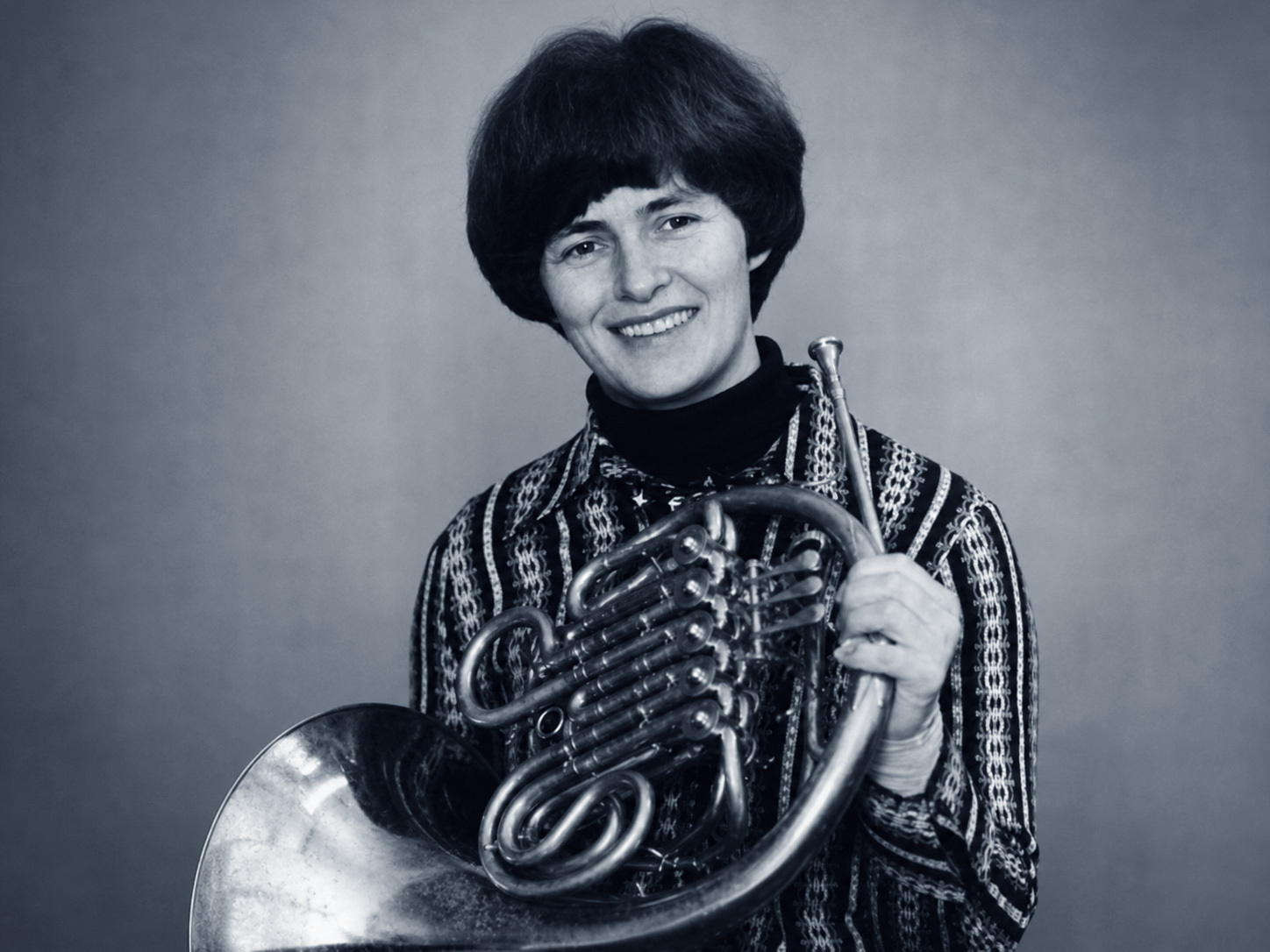
Frøydis Ree Wekre (b. 1941) has been co-principal in the horn section of the Oslo Philharmonic Orchestra since 1965. She started on violin at the age of six, but turned to horn at the age of seventeen. Her studies have been in Oslo, Stockholm (with Wilhelm Lansky-Otto) and Leningrad (with Vitali Boujanovsky). She won a national prize in 1965, and has appeared as a soloist in the Scandinavian countries as well as in Germany, Belgium, Switzerland, Canada and USA. Her first appearance in USA was at the International Horn Workshop in 1973, and since then she has been there about once a year. Frøydis Ree Wekre is active as a chamber musician — member of the Norwegian Chamber Soloists and of the Norwegian Brass Quintet. She is teaching at the Music Conservatory of Oslo.

When first asked by the Brass Bulletin to write an article on any aspect of "women and brass playing", I was tempted to reply by just sending the title and signing it — sincerely yours.

However, since there are some definite and interesting differences between the sexes in general, I felt that there might be some interesting, if not so definite differences in the approaches to brass playing. This prompted me to think further. Since there are so many fine woman pianists, violinists, cellists, and singers in the world today, we can probably agree that many women have a good ear, intelligence, and the ability to express themselves artistically. If there is opposition toward women brass players, it probably questions women's ability to meet the demands for extremely loud dynamics, high range, and endurance. From my own playing experience, and from what I have heard over many years (from brass players of both sexes), I have found that psychological factors are overwhelmingly important. For example, we all know that a male, though small in size, can sound surprisingly loud, while on the other hand, a large man can sound surprisingly timid. In addition, we know that the inability to control nerves will turn out bad results even for a man who might be so-called "perfectly well suited" physically, for playing a brass instrument. It is my opinion that a good ear, a good brain, efficient working methods, and faith in one's own potential are the necessary elements for satisfactory playing. Then, in addition, the presence of physical features such as good teeth, strong facial and abdominal muscles; and artistic qualities such as creative imagination, a love for music, and the willingness to share this love with any audience will help to produce the very best results. Anyway, let us have a look at a few questions which are likely to be asked:

  1. Can women play loudly?
    The ability to play loudly, among other things depends on an active temperament. Also, one must be willing to exert much effort in the full use of the body, and have courage to accept that while playing loudly, the sound does not always seem so "nice". Many women do have this temperament, will and courage. However, the frail image of women, never doing hard physical work, is unfortunately still a common picture in people's minds. For this reason, women should be consciously aware of this attitude and work on overcoming it. After all, this problem is not so big for men, since most of them are brought up to be more "noisy". I can admit that a small woman might not be able to play loudly for the same amount of time as a large man. Nonetheless, it is possible to diminish this problem through an intelligent approach. The small woman must learn "how to lie to the audience" (sic Arnold Jacobs, famous tuba player with very reduced lung capacity due to illness).
  2. Can women play high notes?
    To play high is not only dependent on raw power, but also on cleverness, technique, and intelligent work. I know several women players who are especially good in the high range.
  3. Can women really play the heavy music?
    Playing heavy music is a problem shared by both sexes. Endurance again is very much a question of intelligence, of knowing how to play with a flexible embouchure, and of knowing where and how to rest quickly while playing. Self-confidence is also important... "The art of believing that one can make it"... a good title for some article.
  4. What about arm strength — endurance in holding the instrument?
    Normally strong women who are conscious of static use of muscles, can hold their instrument up as long as the music requires. But the strain on the arms, caused by the static muscle situation, may be a problem, and I have seen more girl students having trouble with arm and neck tensions than boy students. The teacher should be aware of this tendency, and at an early point encourage the students — and especially the girls — to expand their strength through swimming, arm exercises, and other physical activities. Also... "The art of frequent rests while playing"...
  5. Can women play well during menstruation?
    This is an individual matter. A few women are really sick for one or two days each month, but most of us are able to work anyhow. I have often played difficult parts on these "days"; and maybe because I did not over-estimate my possibilities, the results were often surprisingly (to myself, at least) good.
  6. Can women play well during pregnancy or after giving birth?
    The best example I know of concerns the first hornist in the Norwegian Radio Orchestra, who has two small children. She played up to 14 days before giving birth in both instances. The last 2 months of pregnancy, she played third horn instead of first, but then she was back to her regular routine 3 months after each birth.
  7. Can a woman function well professionally in a group of men?
    Definitely, yes. It would be unfair to pass judgement after experiencing a few bad examples among women players. There are arrogant and difficult personalities among male musicians too!

After all this "thinking", I still feel able to ask the same question: Being a woman brass player... so what?

Brass Bulletin 26, II / 1979 pagine 51–54

Tutti i contenuti sono protetti dal diritto d’autore © Brass Bulletin 1979–2026

Condividi questo articolo

Facebook LinkedIn
Loading…

Domande e risposte

Come funziona l’edizione digitale

Che cosa comprende l’edizione digitale?

L’edizione digitale riunisce gli articoli già digitalizzati sotto forma di testi leggibili e ricercabili online — non semplicemente come scansioni o file PDF — insieme alle illustrazioni originali, alle note, agli autori, alle informazioni sul numero della rivista e alle traduzioni disponibili. I suggerimenti di articoli correlati comprendono attualmente solo questo materiale digitalizzato.

Gli articoli digitali sono identici agli originali?

Conserviamo il più fedelmente possibile il testo originale, la lingua, le illustrazioni, le didascalie, le note e il contesto editoriale. La presentazione viene adattata per una lettura confortevole online e gli evidenti errori di trascrizione o scansione possono essere corretti. Il contenuto e il carattere dell’articolo pubblicato rimangono invariati.

Quali lingue sono disponibili?

Brass Bulletin è stato pubblicato in inglese, francese e tedesco nel corso di tutta la sua storia. Le traduzioni italiane e spagnole sono state aggiunte a partire dal numero 60. Sui siti italiano e spagnolo, gli articoli dei numeri da 1 a 59 vengono quindi mostrati in inglese per impostazione predefinita.

Con quale frequenza vengono aggiunti nuovi articoli?

Nuovi articoli vengono aggiunti quasi ogni giorno, con circa un numero completo digitalizzato ogni settimana. Il ritmo può variare in base al lavoro di preparazione, elaborazione delle immagini e verifica editoriale necessario.

Perché non tutti gli articoli sono disponibili in formato digitale?

La collezione completa di Brass Bulletin comprende 1.246 articoli pubblicati tra il 1971 e il 2003. L’indice completo è già disponibile online e consente di scoprire tutti gli articoli della collezione, compresi quelli il cui testo integrale non è ancora stato digitalizzato.

La digitalizzazione è iniziata nel febbraio 2026. Ogni articolo viene accuratamente preparato per la lettura online, verificato e collegato al relativo numero, agli autori, agli argomenti e alle illustrazioni. Al ritmo attuale di digitalizzazione, la collezione completa dovrebbe essere disponibile online entro febbraio 2028.

Perché alcuni riferimenti citano articoli che non sono ancora disponibili?

I riferimenti presenti negli articoli originali vengono conservati anche quando il materiale a cui rimandano non è ancora stato digitalizzato. In questo modo si preserva l’integrità storica ed editoriale della rivista. Man mano che nuovi numeri vengono aggiunti all’edizione digitale, un numero crescente di questi riferimenti condurrà ad articoli leggibili online.

Posso suggerire un articolo o segnalare un errore di trascrizione?

Sì. Se desiderate che un determinato articolo venga digitalizzato, oppure se notate un possibile errore di trascrizione o un’informazione mancante, contattateci. I riscontri dei lettori ci aiutano a migliorare l’edizione digitale e a stabilire priorità utili all’interno dell’archivio.

Come posso sostenere Brass Bulletin?

Il vostro sostegno contribuisce a finanziare la preparazione, la verifica e la pubblicazione online dell’intera collezione.

Abbonati all’Edizione digitale

Preferite sostenerci senza abbonarvi?

Fate una donazione

Come procede la digitalizzazione?

Stiamo rendendo Brass Bulletin disponibile online gradualmente, articolo per articolo. Potete leggere gli articoli appena digitalizzati non appena sono pronti, anche prima che un intero numero sia completato.

Consultate il nostro calendario di digitalizzazione per scoprire le ultime aggiunte e le date di disponibilità stimate dei prossimi numeri. Le stime si basano sul nostro ritmo recente e possono cambiare.

Cerca in Brass Bulletin.