Rendete Brass Bulletin disponibile nella vostra università, nel vostro conservatorio o nella vostra biblioteca Scoprite l’accesso istituzionale

11 min di lettura

Brass instrument research at Surrey University

Acoustics, materials, bore design, and player perception meet in Surrey research linking laboratory measurements with the realities of brass performance.
Brass instrument research at Surrey University

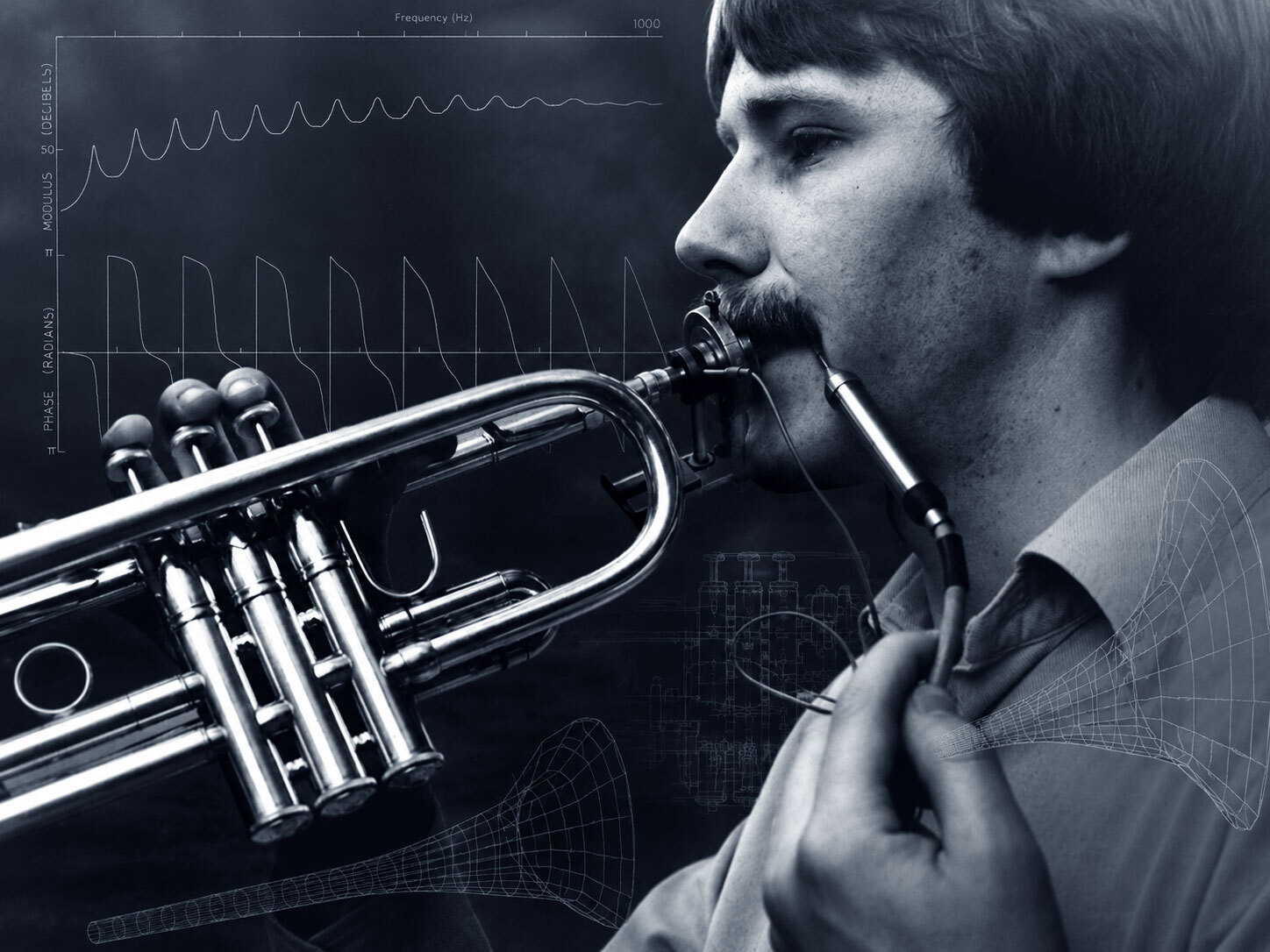
The author with probe microphones during a lip-motion experiment

The Musical Acoustics group at Surrey University was formed in 1974 and is the only group of its kind in the country. In collaboration with industrial sponsors such as Boosey and Hawkes Ltd., Paxmans Ltd., and the Science Research Council, we are at present investigating the acoustics of French Horns, Trumpets and Trombones.

The group, at present 5 in number, is split between the Physics and Psychology departments, and is by no means a set of "Back room boys", as we are keen players too; Dr. John Bowsher is a bass trombonist who has played professionally in Canada and, as well as co-ordinating the work of the group and teaching at the University, somehow finds time to play in many semi-professional and other orchestras. Peter Watkinson is a cornet player who is involved in local Brass Banding. I am a trumpet player involved in orchestral, ensemble, and pit work with professional ballet orchestras, and can be found in a big band on the odd occasion!

Dr. Peter Simpson and Dr. Richard Shepherd are working in the Psychology department on the perception of musical sound and players' assessment of instruments. Many past members have also been involved in playing in one way or another.

Making sense of the relationship between a player's skill and instrument quality demands a combination of the two disciplines. Understanding the acoustic behaviour of the brass instrument family, for example, involves investigating the effects of shape, material of construction, and the air flow within the tubing. Psychological factors enter when we investigate how the player develops and evaluates his own performance, and how he appraises an instrument.
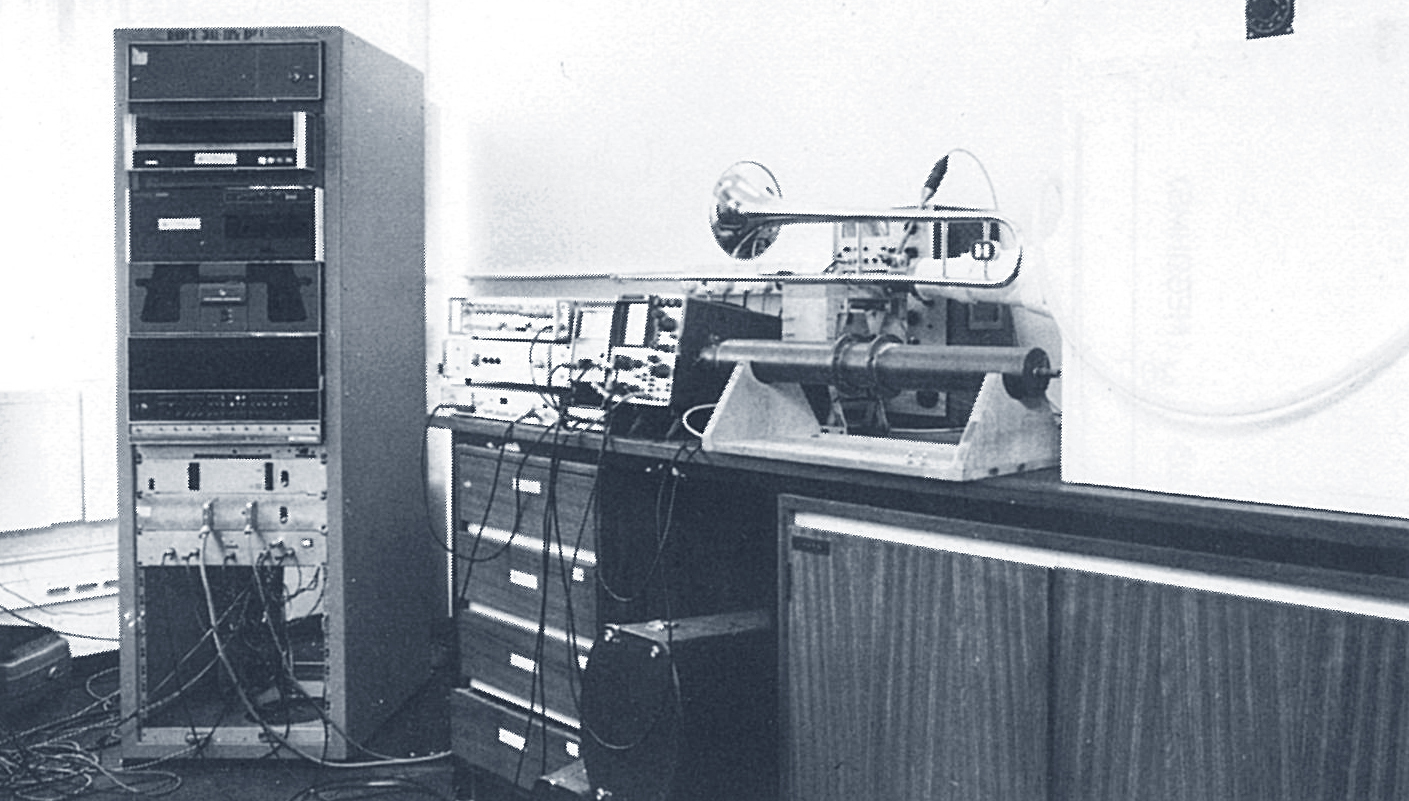
Part of the computer-controlled instrument measurement device

Part of the computer-controlled instrument measurement device

The amount of research already done is considerable. One of the first things that was done was to send a questionnaire to every trombonist in the London area. This gave us valuable insight into the type and numbers of the different makes of instrument being used in the different spheres of music-making. Many players contributed useful comments about their own instruments.

Following up the information sent back to us, tests were devised and tried using professional players as subjects. For these, we had to ask the "victim" to wear a blindfold and thick gloves so that his preconceptions about an instrument would not colour his judgement about the things we were interested in — the "feel" and the sound. Similar work, based on our ideas, is just being started in Czechoslovakia.

From these tests, a set of rating scales evolved which enabled us to describe the characteristics of an instrument in a scientific way.

From a scientific viewpoint, the group also wanted to know about the instruments as an acoustic system, without the player attached. Was there anything repeatably measurable about the instrument? Some work by Conn Ltd., and others, in the 1940's and 1950's suggested that the measurement of the acoustic input impedance could be useful as far as intonation, sound and feel were concerned. This work was severely limited by the technology available at the time, and the results were fairly crude.

The group at Surrey decided that if any useful work was to be done, a great number of instruments had to be measured far more accurately than ever before.

The concept of acoustic input impedance was first introduced in 1919 by A. G. Webster, who originally used it to study the properties of the air column inside phonograph horns. It is a useful measurement, as it gives precise information about the resonance frequencies of the instrument, which in turn can be used to calculate the frequencies (or pitches) that the instrument plays at.

Continue reading

Accedi all’edizione digitale completa.

Brass Bulletin 36, IV / 1981 pagine 8–17

Tutti i contenuti sono protetti dal diritto d’autore © Brass Bulletin 1981–2026

Condividi questo articolo

Facebook LinkedIn
Loading…

Domande e risposte

Come funziona l’edizione digitale

Che cosa comprende l’edizione digitale?

L’edizione digitale riunisce gli articoli già digitalizzati sotto forma di testi leggibili e ricercabili online — non semplicemente come scansioni o file PDF — insieme alle illustrazioni originali, alle note, agli autori, alle informazioni sul numero della rivista e alle traduzioni disponibili. I suggerimenti di articoli correlati comprendono attualmente solo questo materiale digitalizzato.

Gli articoli digitali sono identici agli originali?

Conserviamo il più fedelmente possibile il testo originale, la lingua, le illustrazioni, le didascalie, le note e il contesto editoriale. La presentazione viene adattata per una lettura confortevole online e gli evidenti errori di trascrizione o scansione possono essere corretti. Il contenuto e il carattere dell’articolo pubblicato rimangono invariati.

Quali lingue sono disponibili?

Brass Bulletin è stato pubblicato in inglese, francese e tedesco nel corso di tutta la sua storia. Le traduzioni italiane e spagnole sono state aggiunte a partire dal numero 60. Sui siti italiano e spagnolo, gli articoli dei numeri da 1 a 59 vengono quindi mostrati in inglese per impostazione predefinita.

Con quale frequenza vengono aggiunti nuovi articoli?

Nuovi articoli vengono aggiunti quasi ogni giorno, con circa un numero completo digitalizzato ogni settimana. Il ritmo può variare in base al lavoro di preparazione, elaborazione delle immagini e verifica editoriale necessario.

Perché non tutti gli articoli sono disponibili in formato digitale?

La collezione completa di Brass Bulletin comprende 1.246 articoli pubblicati tra il 1971 e il 2003. L’indice completo è già disponibile online e consente di scoprire tutti gli articoli della collezione, compresi quelli il cui testo integrale non è ancora stato digitalizzato.

La digitalizzazione è iniziata nel febbraio 2026. Ogni articolo viene accuratamente preparato per la lettura online, verificato e collegato al relativo numero, agli autori, agli argomenti e alle illustrazioni. Al ritmo attuale di digitalizzazione, la collezione completa dovrebbe essere disponibile online entro febbraio 2028.

Perché alcuni riferimenti citano articoli che non sono ancora disponibili?

I riferimenti presenti negli articoli originali vengono conservati anche quando il materiale a cui rimandano non è ancora stato digitalizzato. In questo modo si preserva l’integrità storica ed editoriale della rivista. Man mano che nuovi numeri vengono aggiunti all’edizione digitale, un numero crescente di questi riferimenti condurrà ad articoli leggibili online.

Posso suggerire un articolo o segnalare un errore di trascrizione?

Sì. Se desiderate che un determinato articolo venga digitalizzato, oppure se notate un possibile errore di trascrizione o un’informazione mancante, contattateci. I riscontri dei lettori ci aiutano a migliorare l’edizione digitale e a stabilire priorità utili all’interno dell’archivio.

Come posso sostenere Brass Bulletin?

Il vostro sostegno contribuisce a finanziare la preparazione, la verifica e la pubblicazione online dell’intera collezione.

Abbonati all’Edizione digitale

Preferite sostenerci senza abbonarvi?

Fate una donazione

Come procede la digitalizzazione?

Stiamo rendendo Brass Bulletin disponibile online gradualmente, articolo per articolo. Potete leggere gli articoli appena digitalizzati non appena sono pronti, anche prima che un intero numero sia completato.

Consultate il nostro calendario di digitalizzazione per scoprire le ultime aggiunte e le date di disponibilità stimate dei prossimi numeri. Le stime si basano sul nostro ritmo recente e possono cambiare.

Cerca in Brass Bulletin.